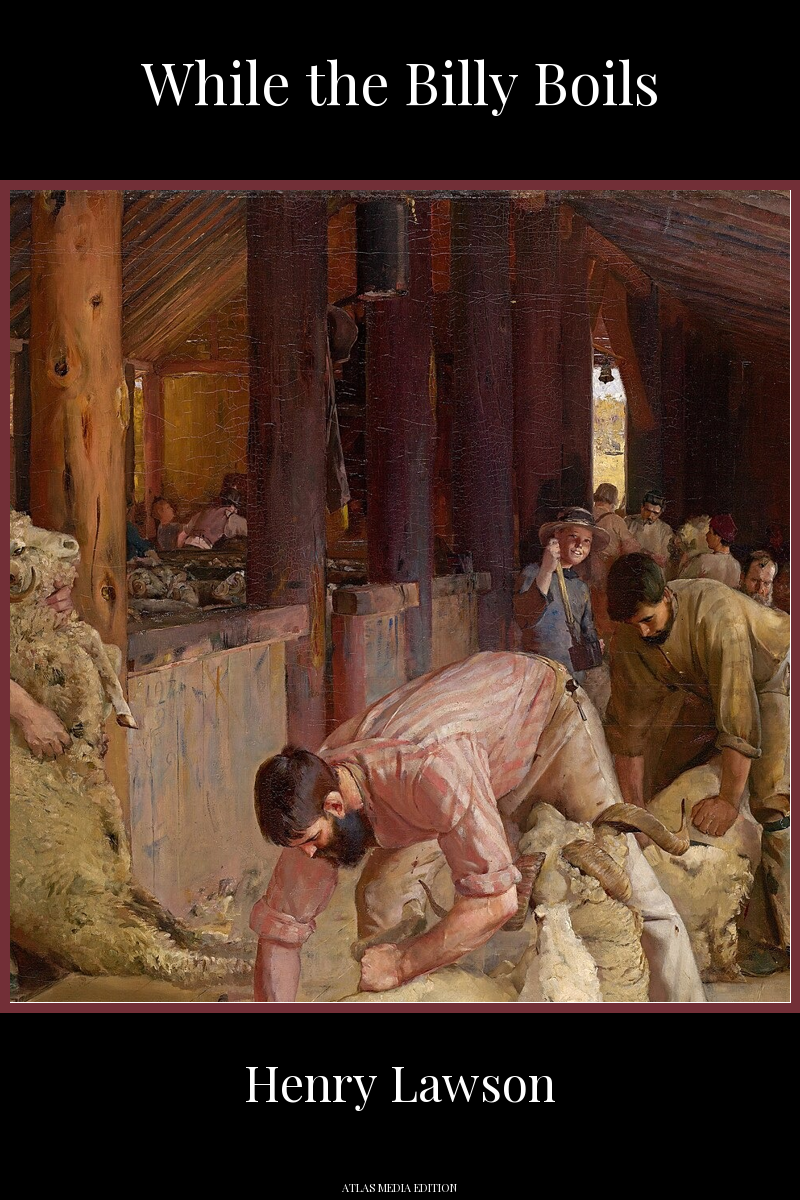
- Novel
While the Billy Boils
- Published: 1896
- Atlas edition: V1.3 ·
- Language: English
ABOUT THE AUTHOR
Henry Lawson
1867–1922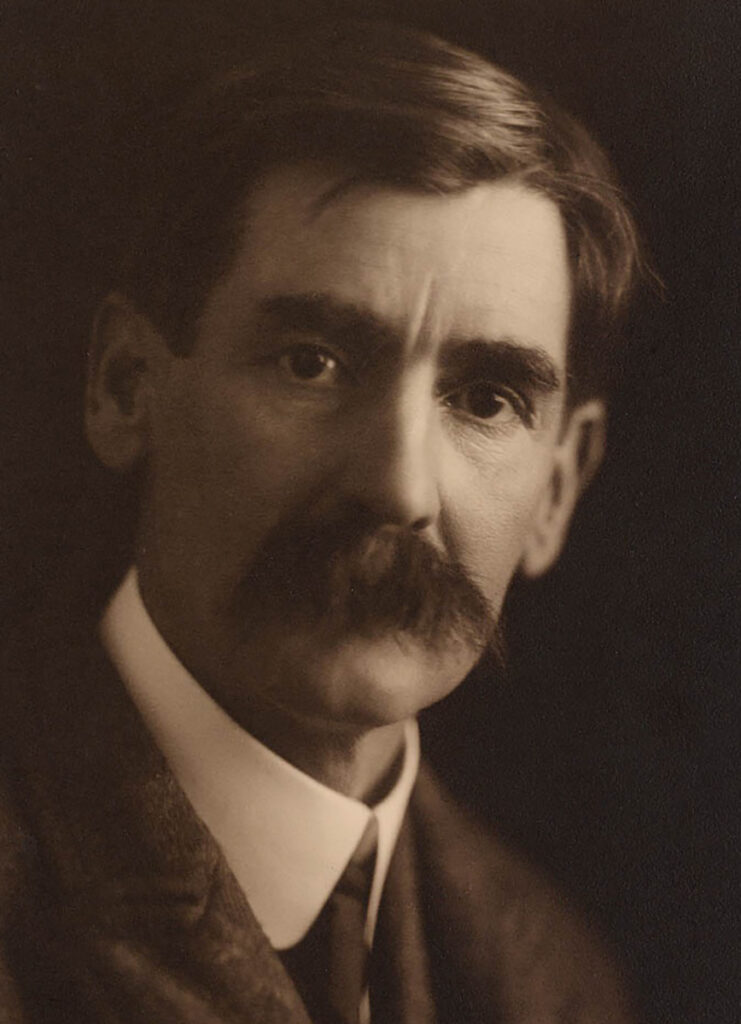
Henry Lawson was an Australian writer, born in 1867 and died in 1922. The evidence supplied identifies him as the author of While the Billy Boils, a collection of short stories published by Angus and Robertson in 1896. According to the publishers’ preface of that year, he was then resident in Western Australia, and most of the stories had first appeared in the Sydney Bulletin and other Australian and New Zealand newspapers.
ABOUT THE WORK
While the Billy Boils
While the Billy Boils is a collection of short stories and sketches by the Australian writer Henry Lawson, published by Angus and Robertson in 1896. Its setting is the Australian bush, the diggings and the selections of the late nineteenth century, and its people are diggers, selectors, swagmen and their families.
Most pieces first appeared in the Sydney Bulletin and other newspapers, as the publishers’ preface records. The opening sketch, “An Old Mate of Your Father’s”, shows the method: yarns, humour and a sudden quiet turn toward loss. If you are searching for classic Australian short stories or bush realism, this is a foundation text.
WHY IT MATTERS
Why read it
This is a book about how ordinary people in a hard country talk, joke and endure.
It gives a reader something rare: the sound of a place. Lawson writes the bush as the people in it spoke it, with its “shilluns”, its “blanky blank” and its habit of saying less than it means. The stories are short, often only a few pages, yet they hold whole lives.
They are also funny, which is what surprises newcomers. The humour sits beside poverty, failed farms and broken hopes, and neither cancels the other.
If you want to understand why Australians still argue about mateship, the bush and the myth of the pioneer, you can start here and meet the source rather than the slogan.
Reading it closely
The opening sketch shows how Lawson builds his effects from small, concrete things.
The narrator recalls a bearded visitor, and the details accumulate: horny hands, a speckled handkerchief, “five dusty skeletons of cows” and “one shocking piece of equine scenery”. The comedy is dry and exact. Beneath it runs a second story the children cannot read. The two men talk low about Eureka, their eyes brighten, they look “away over sunset”, and a woman’s name is turned aside with a quick answer. Lawson lets the child’s puzzlement stand in for the reader’s, so that what is withheld becomes the subject.
His most memorable line is a piece of compressed analysis: old mates “had each three pasts behind them. The two they told each other when they became mates, and the one they had shared.” It is an aphorism, but it arrives inside anecdote, not above it.
The ending turns on the narrator himself. A last paragraph of gentle reminiscence becomes a charge against “the rising generation”, and the doubt is “painfully on the wrong side”. Tone shifts from yarn to reproach in a sentence. The next piece, “Settling on the Land”, opens with a brisk, ironic complaint about bores, and shows the same plain, sceptical, vernacular voice.
Then and now
The collection reached readers as a gathering of work already known from the press.
The preface, dated Sydney, 14th August, 1896, notes that most stories first appeared in the Sydney Bulletin, with others in the Worker, the New Zealand Mail and further papers, while two were new. It was signed by the publishers, since the author was by then living in Western Australia.
That newspaper origin explains much of its character: brevity, immediacy, a reader assumed to know the bush. Over time the book has come to be treated as a founding text of Australian short fiction, and Lawson as a defining voice of the bush tradition. Today it is freely available in public domain editions, including the Standard Ebooks text, which keeps it easy to find and read.
A way in
Start with “An Old Mate of Your Father’s”, the first piece, which is short and shows Lawson’s whole manner.
Watch what the characters do not say, especially around Eureka and the unnamed woman. Notice how a joke often sits right before a sadness. Then read on in any order, as the pieces are self-contained. Reading aloud helps, because the dialect carries the humour.
Edition Record
- First publication
- 1896
- Textual basis
- Source text: Standard Ebooks, https://standardebooks.org/ebooks/henry-lawson/while-the-billy-boils
- Atlas edition
- V1.3 ·
- Language
- English
Prepared from the recorded source and the reviewed Atlas working edition.
Accessibility: EPUB and PDF are offered where approved; accessibility features have not been independently certified.
Source & Rights
- Text source
- Standard Ebooks

While the Billy Boils by Henry Lawson. Source text prepared from the Standard Ebooks edition (https://standardebooks.org/ebooks/henry-lawson/while-the-billy-boils).