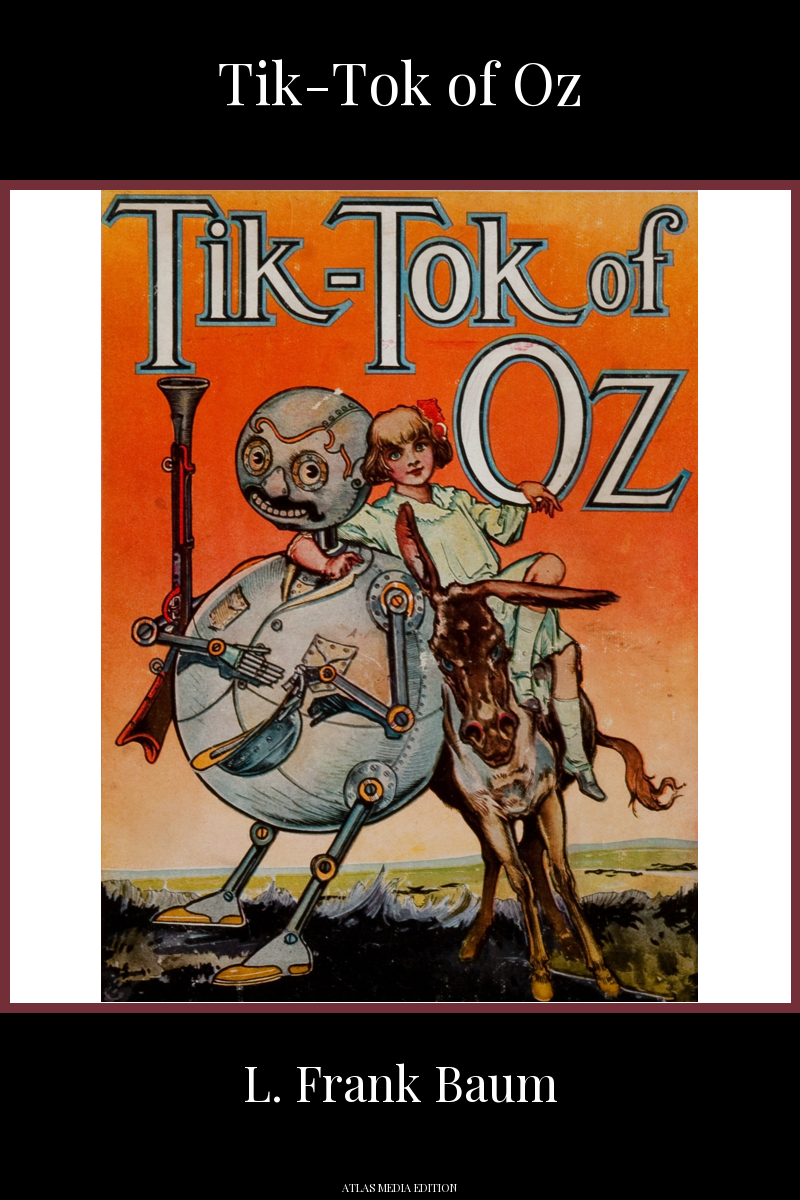
- Novel
Tik-Tok of Oz
- Published: 1914
- Atlas edition: V1.8 ·
- Language: English
ABOUT THE AUTHOR
L. Frank Baum
1856–1919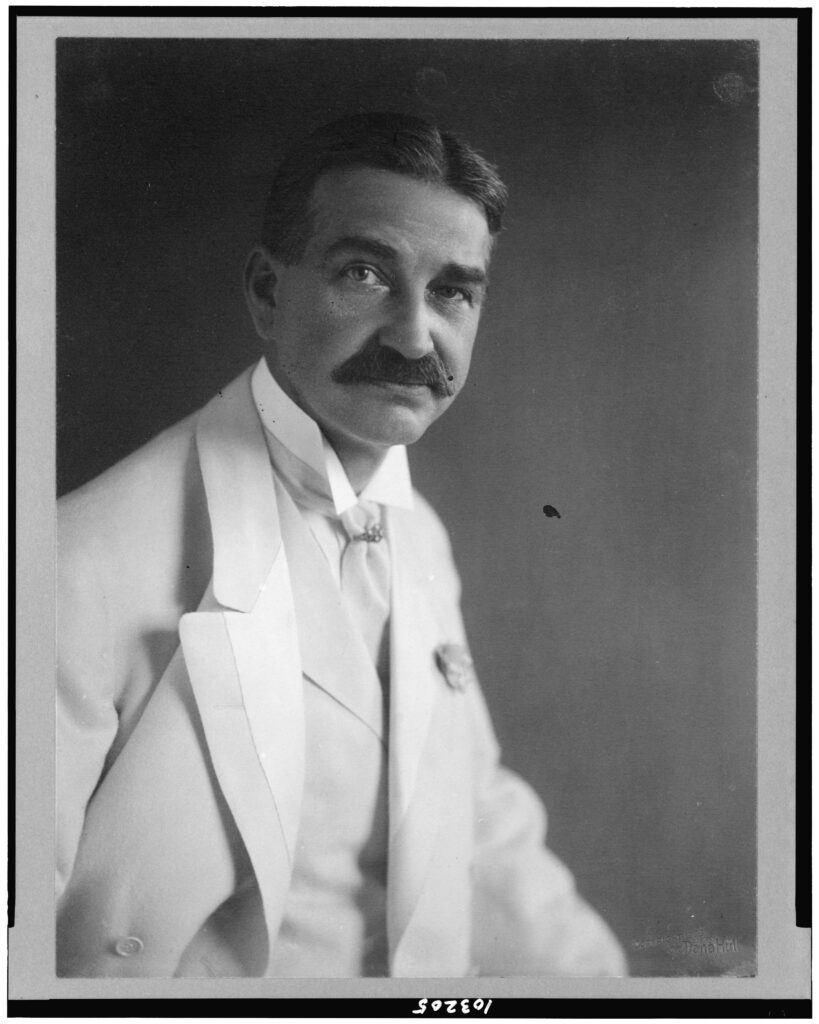
L. Frank Baum was an American author best known for creating the land of Oz. Before finding lasting success in children’s literature, he worked in theatre, journalism, retail and publishing, experiences that helped shape his interest in performance, popular entertainment and the possibilities of a distinctly American fairy tale.
The Wonderful Wizard of Oz appeared in 1900 with illustrations and colour design by W. W. Denslow. Baum returned to Oz across a long sequence of books, expanding its geography and characters while responding to generations of young readers. His work helped move children’s fantasy away from inherited European settings toward modern machinery, prairie landscapes and self-invented heroes. Baum’s legacy is also complicated by racist newspaper editorials attributed to him in the 1890s; those writings should be acknowledged rather than hidden when his life and cultural influence are discussed.
ABOUT THE WORK
Tik-Tok of Oz
Tik-Tok of Oz is a children’s fantasy novel by L. Frank Baum, the eighth book in his Oz series, illustrated by John R. Neill. It begins in Oogaboo, the smallest and poorest corner of the Land of Oz, where Queen Ann Soforth, bored with sweeping floors, decides to raise an army and conquer Oz and then the wider world.
Her army has eighteen men and nearly as many officers. The journey brings in the mechanical man Tik-Tok, the Nome King, and Betsy Bobbin, a girl who finally reaches the Emerald City.
WHY IT MATTERS
Why read it
This is the Oz book that opens with a comic coup. Its would-be conqueror is a woman who will not sweep.
Baum’s fairyland was never only a place of wonders. It is also a place where ordinary vanity, ambition and bad temper walk about in fancy dress. Here he lets them march. A reader gets a satire of militarism small enough for a child to grasp and sly enough for an adult to enjoy.
The pleasure is in the particulars. Orchards grow ice-cream cones, clocks and graham buns. A man agrees to fight only if his wife is left behind. Few stories turn the lust for conquest into such a domestic joke.
Nothing else in the series is quite like Ann’s army, and its absurdity is the reason to read it.
Reading it closely
The opening chapter shows how Baum works: plain speech, brisk dialogue and a deadpan narrator.
Ann begins with a quarrel over a chore. “I won’t sweep the floor. It is beneath my dignity,” she cries. Her dignity is the engine of the plot. Salye’s jeering suggestion that she raise an army to conquer Oz sets the whole book moving, so a sisterly taunt becomes an invasion.
The comedy rests on repetition. Ann visits one man after another with nearly the same words: “I am going to conquer the world.” Each protests, and each is won over by a rank. Generals, Colonels, Majors and Captains multiply until she has more officers than soldiers. Baum thus mocks military vanity with simple arithmetic.
The names do similar work. Jo Apple, Jo Bunn, Jo Cone and Jo Clock are each named for the strange crop of their orchard, so the valley’s economy is also its joke.
The narrator keeps a mild irony. Ann is “old enough to make jelly,” and the narrator lets it go at that. Oz is a peaceable country whose army has twenty-seven officers and no weapons, so her scheme meets almost nothing to fight.
The contrast is the book’s method: great ambition set against a tiny, gentle world.
Then and now
Baum’s Author’s Note says that the success of The Patchwork Girl of Oz convinced him that readers liked the Oz stories best of all. He wrote this book in answer to that demand. It was published on June 19, 1914, as the eighth Oz book, and he mentions a stage play, The Tik-Tok Man of Oz, whose adventures overlap with it.
The note also shows how closely he listened to children’s letters. They asked for particular characters to meet, and he promised to try.
Today the book is read mainly by Oz enthusiasts and in the context of the series. Its place in the public domain has made it freely available, including through Wikisource.
Its reputation rests on its humor and on the first appearance of Betsy Bobbin in the series.
A way in
Start with the first chapter, Ann’s Army, which can be read alone and sets the tone. Watch how each recruitment repeats the last with a small change. Notice the narrator’s dry asides, the orchard names and the Author’s Note, where Baum speaks to children as friends.
Edition Record
- First publication
- 1914
- Textual basis
- Source text: Wikisource, https://en.wikisource.org/wiki/Tik-Tok_of_Oz
- Atlas edition
- V1.8 ·
- Language
- English
Prepared from the recorded source and the reviewed Atlas working edition.
Accessibility: EPUB and PDF are offered where approved; accessibility features have not been independently certified.
Source & Rights
- Text source
- Wikisource

Tik-Tok of Oz by L. Frank Baum. Source text transcribed by Wikisource contributors (https://en.wikisource.org/wiki/Tik-Tok_of_Oz).