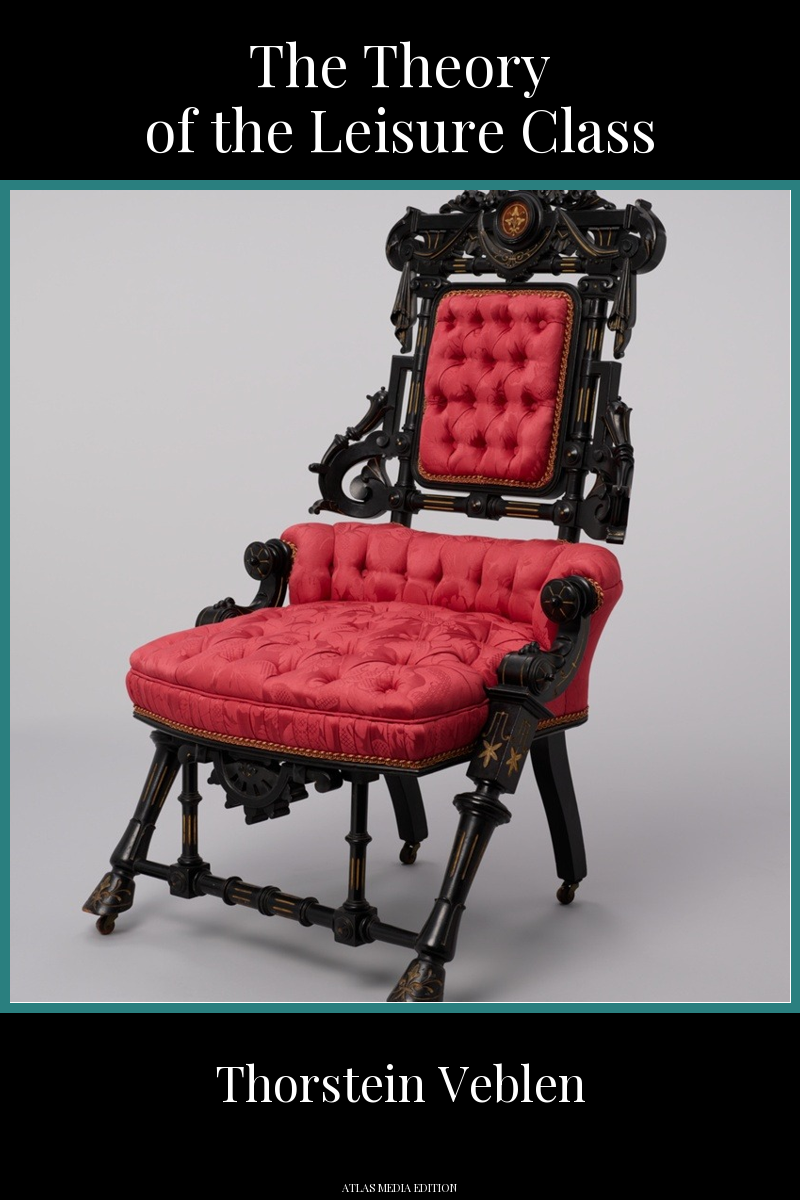
- Novel
The Theory of the Leisure Class
- Published: 1899
- Atlas edition: V1.3 ·
- Language: English
ABOUT THE AUTHOR
Thorstein Veblen
1857–1929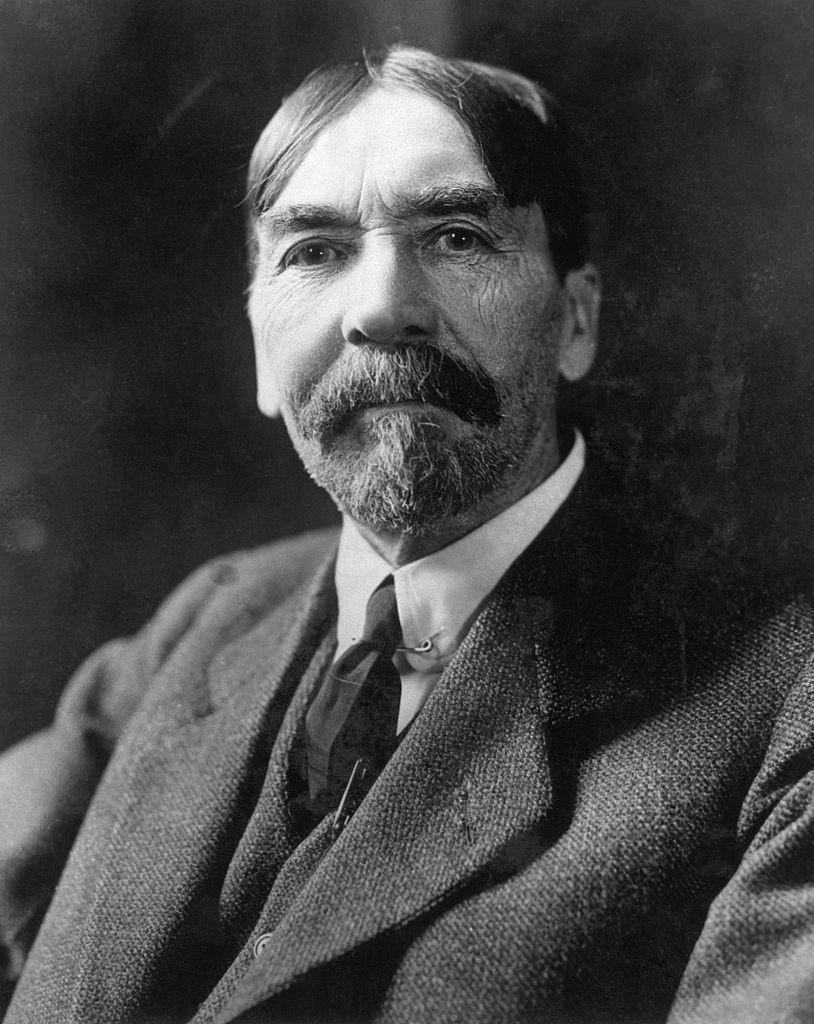
Thorstein Veblen (1857 to 1929) was an American economist and sociologist. His best known work is The Theory of the Leisure Class, published in 1899. In its preface he refers to a series of papers he published in Volume IV of the American Journal of Sociology, including “The Barbarian Status of Women.”
ABOUT THE WORK
The Theory of the Leisure Class
This is a treatise of economics and sociology, subtitled An Economic Study of Institutions, by the American economist Thorstein Veblen. It asks what place the leisure class holds in modern economic life, and it traces the institution back through feudal Europe, feudal Japan, Brahmin India and the Icelandic sagas to hunting tribes.
Its central claim is that status is displayed through conspicuous leisure and conspicuous consumption. Veblen draws his evidence from everyday life, and the book remains a classic critique of consumerism and social class.
WHY IT MATTERS
Why read it
Few books teach you to see a shop window, a lawn or a dinner party quite so differently. This one does.
Veblen takes things people think of as taste or comfort and asks what they announce about rank. Once you have read him, expensive idleness, useless ornament and the display of wealth look like signals rather than pleasures. The book gives a reader a vocabulary for status that has outlived its century, and it does so with a dry, ironical relish that is rare in economics.
It is also a history of how honour became attached to not working. That story is stranger and more unsettling than a simple complaint about the rich.
Reading it closely
The argument is about how an economic idea is built from observation.
Veblen opens with a developmental sketch. The leisure class, he says, is best developed in the higher barbarian culture, as in feudal Europe or feudal Japan. There the upper classes are by custom exempt from industrial work and reserved for government, warfare, religious observances and sports. Exemption from labour becomes the economic expression of superior rank.
He traces the root further back, to a division between the occupations of men and women among hunting tribes. The hunter’s work, he argues, is not felt to be labour at all, because it is thought to rest on excellence rather than drudgery. Honour and work are set against each other from the start.
His method is notable. The preface says the data are drawn by preference from everyday life, by direct observation or common notoriety, and that citation of sources was deliberately not followed. It also admits that some generalisations are in part novel and says the argument should not collapse if they fail.
The tone is a mock-detached anthropology applied to his own society. Words such as invidious and vulgar are used as instruments. The weakness is that the evidence is loosely sourced and the early stages are speculative. The strength is that the central insight does not depend on them.
Then and now
The book appeared in 1899 and has been read as both economics and social criticism.
Its reach has outrun its discipline. It is now described as a critique of conspicuous consumption and consumerism, and the phrase conspicuous consumption passed into common speech. Economists, sociologists and general readers have all claimed it.
Its standing has shifted with how its method is judged. Some readers value it as a founding work of institutional economics and of the sociology of consumption. Others treat its anthropology as dated. What persists is the question it poses about why people spend to be seen.
A way in
Start with the preface, which is short and states the method plainly. Then read the first chapter slowly.
Watch how Veblen uses words that seem neutral or rude, and notice where he lets irony do the work of argument. Test his claims against your own surroundings, and skim the ethnographic passages if they drag. The point survives.
Edition Record
- First publication
- 1899
- Textual basis
- Source text: Standard Ebooks, https://standardebooks.org/ebooks/thorstein-veblen/the-theory-of-the-leisure-class
- Atlas edition
- V1.3 ·
- Language
- English
Prepared from the recorded source and the reviewed Atlas working edition.
Accessibility: EPUB and PDF are offered where approved; accessibility features have not been independently certified.
Source & Rights
- Text source
- Standard Ebooks
The Theory of the Leisure Class by Thorstein Veblen. Source text prepared from the Standard Ebooks edition (https://standardebooks.org/ebooks/thorstein-veblen/the-theory-of-the-leisure-class).