- Novel
Two Treatises of Government
- Published: 1689
- Atlas edition: V1.3 ·
- Language: English
ABOUT THE AUTHOR
John Locke
1632–1704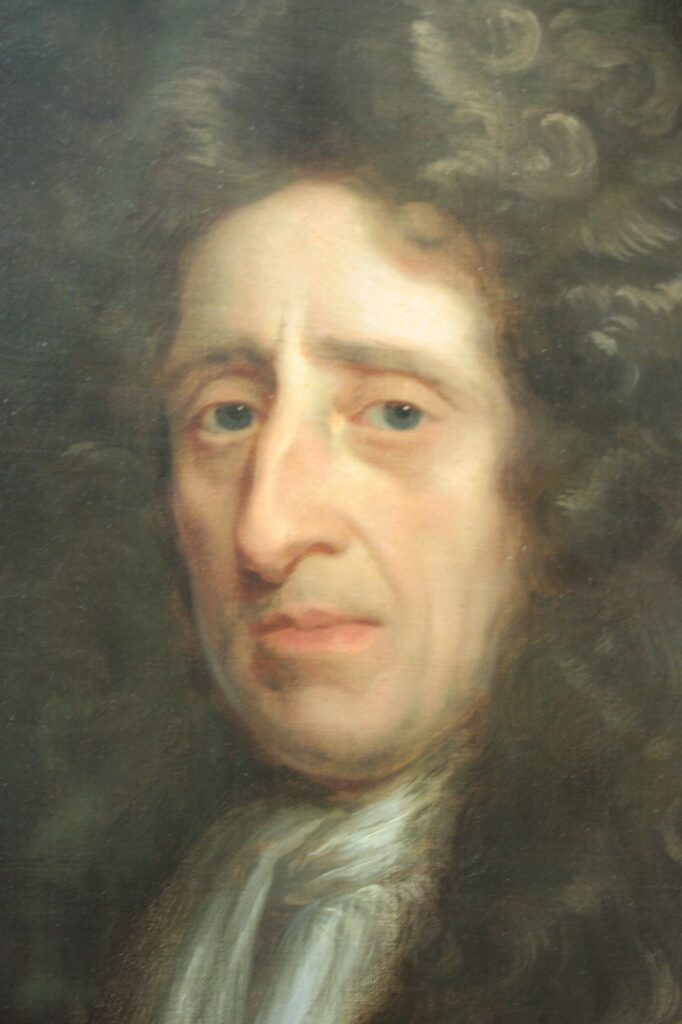
John Locke (1632 to 1704) was an English philosopher. He wrote Some Thoughts Concerning Education for his friend Edward Clarke of Chipley, drawing on letters about the upbringing of Clarke’s son. His dedication to Clarke is dated March 7, 1692, and the treatise was published the following year.
ABOUT THE WORK
Two Treatises of Government
Two Treatises of Government is a work of political philosophy by the English thinker John Locke. The First Treatise is a point-by-point demolition of Sir Robert Filmer’s Patriarcha, which argued that all government is absolute monarchy and that no man is born free. The Second Treatise is an essay concerning the true original, extent and end of civil government.
It argues that people are naturally free and equal, that legitimate government rests on consent, and that its purpose is to protect life, liberty and property. It is a founding text of liberalism, social contract theory and the right of resistance.
WHY IT MATTERS
Why read it
Few books explain so plainly why anyone should obey anyone else.
Locke asks what gives one person the right to rule another, and he refuses the easy answers of birth, scripture and custom. The result is an argument with a long afterlife. Its vocabulary of natural rights, consent of the governed and a government held to account is the common furniture of modern political debate. Reading it, you meet that furniture when it was still new, and you see the quarrel it was built to win.
It also gives you a rare pleasure: a great thinker losing patience. The prose is brisk, angry and funny, and it shows political theory as a fight with real stakes.
Reading it closely
The argument opens by attacking a rival, and that shapes everything.
The first Treatise is polemic. Locke follows Filmer through his own pages, quoting him and citing the Patriarcha by page. He reduces Filmer’s system to two claims, “That all government is absolute monarchy” and “That no man is born free.” His method is to pull on the foundation until the building falls. In his words, “if this foundation fails, all his fabric falls with it.”
The imagery is vivid and physical. Filmer’s book is “a rope of sand” meant to supply “chains for all mankind,” and chains, Locke jeers, are “but an ill wearing” however well polished. Slavery is the master image, and freedom is set against it.
The positive case then rests on a few moves: a state of nature governed by reason, the idea that men make governments by “contrivance, and the consent of men,” and the claim that rulers hold power as a trust. Locke argues from scripture as well as reason, because his opponent claimed scripture as his own ground. That doubleness is worth watching.
The form is also odd. The Preface admits that the middle of the work is lost, so the book announces itself as a fragment, confident that what remains is enough.
Then and now
The book appeared in 1689 and was published anonymously, after the Glorious Revolution. The Preface presents it as a defence of King William’s title in the consent of the people. Evidence suggests it was likely drafted in 1680 to 1681, during the Exclusion Crisis, so it may be older than the revolution it was used to justify.
Its reputation grew over the following century, and its ideas of natural rights and limited government were taken up widely in later political thought. Today it is read less as a settled doctrine than as a source of questions about consent, property and legitimacy.
Controversies
Historians and critics dispute how the book should be read. Some stress its dating, and the question of whether it was written to justify resistance before 1688 rather than the settlement after it. Others debate how far its theory of property and consent fits the colonial and economic world around Locke, and how his arguments sit alongside slavery and colonization in his own time. These are live scholarly disagreements, not settled verdicts.
A way in
Start with the Second Treatise if you want the constructive theory, then return to the First for its context. Read the Preface first, since it explains the missing middle and the stakes. Watch for how often Locke answers an opponent, and for the words consent, trust and natural freedom.
Edition Record
- First publication
- 1689
- Textual basis
- Source text: Standard Ebooks, https://standardebooks.org/ebooks/john-locke/two-treatises-of-government
- Atlas edition
- V1.3 ·
- Language
- English
Prepared from the recorded source and the reviewed Atlas working edition.
Accessibility: EPUB and PDF are offered where approved; accessibility features have not been independently certified.
Source & Rights
- Text source
- Standard Ebooks

Two Treatises of Government by John Locke. Source text prepared from the Standard Ebooks edition (https://standardebooks.org/ebooks/john-locke/two-treatises-of-government).