
The Art of War
Few texts have travelled further or been read more widely than this one. Written by a Chinese military strategist sometime around the 5th century BCE, The Art of War has shaped the thinking of generals, politicians, philosophers and business leaders across twenty-five centuries and every corner of the world. It is the oldest surviving strategic treatise in existence, and remarkably, not one word feels wasted.
Sun Tzu (Sunzi)
~544-496 BCE
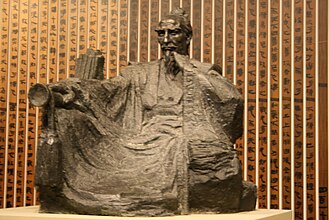
Sun Tzu — or Sunzi, meaning “Master Sun” — was a Chinese military general and strategist who lived during the turbulent Spring and Autumn period of ancient China, traditionally dated to around 544–496 BCE.
Beyond his authorship of The Art of War, almost nothing about his life can be stated with certainty. Ancient accounts describe him serving the King of Wu, demonstrating his theories of discipline and command with striking results, but historians continue to debate whether he was a single historical figure or a composite of several strategists whose wisdom was gathered under one name over generations.
The uncertainty hardly matters. The ideas attributed to him have proven more durable than almost any biography could.
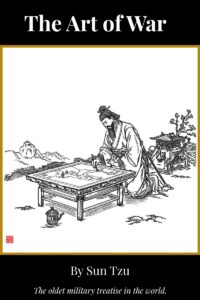
A Warning from the Past. A Mirror of the Present.
The Art of War is thirteen short chapters.
It covers terrain, tactics, espionage, morale, leadership, deception, and the fundamental nature of conflict.
It was written for military commanders but has been applied sometimes brilliantly, sometimes absurdly, to business strategy, sports coaching, political campaigning, and personal development for decades.
The Lionel Giles translation presented here, first published by Luzac and Company in London in 1910, remains the gold standard English edition, scholarly, precise, and accompanied by Giles’ extensive commentary that places each passage in its historical and strategic context. This is not a summary or an adaptation.
This is the complete text, exactly as Giles rendered it.
Why It Matters:
The Art of War has never been out of print. That alone should tell you something.
It was studied by Napoleon, quoted by Mao Zedong, read by every serious military academy on earth, and adopted wholesale by corporate strategists who recognised that Sun Tzu understood something about competition, information, and decision-making that transcends any particular battlefield. What makes it endure is not its age but its precision. Sun Tzu understood that victory is decided before the battle begins through preparation, intelligence, positioning, and the capacity to act decisively when the moment arrives.
In an age of information overload, algorithmic noise, and reactive decision-making, that clarity is not historical. It is urgent. Read it slowly. Read it more than once. The chapters are short. The ideas are not.
This text is sourced from Project Gutenberg — the world’s largest collection of free public domain books.