- Novel
The Odyssey
- Published: c. 700 BC
- Atlas edition: V1.5 ·
- Language: Ancient Greek
ABOUT THE AUTHOR
Homer
c. 8th century BC (traditional dating; historicity and dates contested)Homer is the name the ancient Greeks gave to the poet of the Iliad and the Odyssey, the two oldest surviving works of Greek literature. Later tradition pictured him as a blind singer from Ionia, on the coast of what is now Turkey, but nothing certain is known of his life.
Most scholars think the poems took shape around the late eighth or early seventh century BC from a long tradition of oral poetry, and they still debate whether one poet, several, or generations of singers created them. Whoever made them, the poems became the foundation of Greek education and of much of the literature that followed.
ABOUT THE WORK
The Odyssey
The Odyssey follows Odysseus, king of Ithaca, on his ten-year struggle to return home after the fall of Troy. While he is held captive and driven off course by gods and monsters, his son Telemachus searches for news of him and his wife Penelope holds off the suitors who have taken over their house.
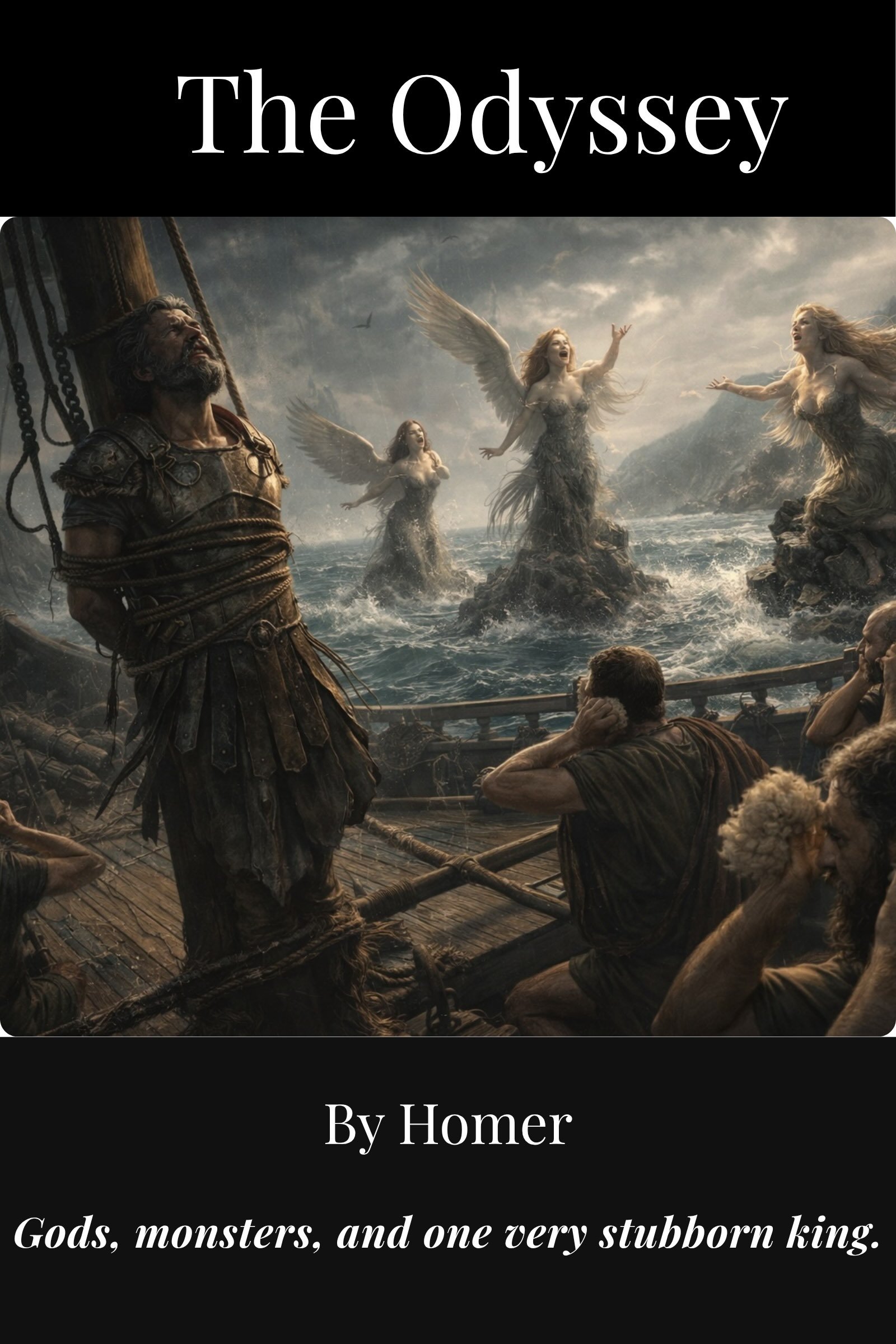
Odysseus tells of the Cyclops, the enchantress Circe, the Sirens, Scylla and Charybdis and the land of the dead, then comes home in disguise to test his household and reclaim it. This Atlas edition presents Samuel Butler’s clear English prose translation of 1900.
WHY IT MATTERS
Why The Odyssey Matters
The Odyssey matters because it is one of the first great stories about coming home, and almost every journey story since has borrowed from it. Its name has become an ordinary English word for a long and testing voyage, and one of its minor characters, Mentor, gave us a word for a trusted guide.
How The Odyssey Was Made
The Odyssey grew out of a long tradition of oral poetry in early Greece, where singers performed stories of gods and heroes from memory. It is traditionally credited to Homer, also named as the poet of the Iliad, but nothing certain is known about him, and scholars still debate how, when and by whom the poems were shaped.
What is clear is that the poem was composed for listeners. Repeated phrases, such as the dawn with rosy fingers, helped performers hold a long work in memory and helped audiences follow it. The story is also told out of order: we meet Odysseus only after his son has set out to find him, and he tells most of his wanderings himself, as a guest at a foreign court.
What The Odyssey Asks About Home and Identity
The Odyssey is less a tale of conquest than of endurance and cleverness. Odysseus survives by disguise, patience and quick thinking as much as by strength, and the poem keeps asking what makes a person recognisable: a name, a scar, a story, or the people who wait for us.
It is also a poem about hospitality. Again and again, the way a household treats strangers reveals its character, from the generous Phaeacians to the greedy suitors who devour Odysseus’s estate. Penelope, who outwits the suitors for years, is as much a hero of the story as her husband.
The Odyssey has shaped writers from Virgil to James Joyce, whose novel Ulysses retells it in a single day in Dublin, and it still sits at the heart of how stories of exile, return and belonging are told.
Samuel Butler, the English novelist best known for Erewhon, published this prose translation in 1900. He aimed for plain, readable English rather than imitation verse, and gave the gods their Roman names, such as Jove and Minerva, as many readers of his time expected. Butler also argued, provocatively, that the poem was written by a woman, a reminder that questions about its authorship have long been part of its life.
Edition Record
- First publication
- c. 700 BC
- Textual basis
- Samuel Butler's 1900 English prose translation of The Odyssey, using the transcription distributed as Project Gutenberg ebook 1727.
- Atlas edition
- V1.5 ·
- Language
- Ancient Greek
This Atlas edition presents Samuel Butler’s 1900 prose translation. The poem is traditionally attributed to Homer; its authorship and date are uncertain and debated. Cover design: Atlas Media. Principal artwork created using Canva AI.
Accessibility: Reflowable EPUB with semantic navigation and reader-controlled typography, and a checked A5 PDF.
Source & Rights
- Text source
- Project Gutenberg
The Odyssey, traditionally attributed to Homer, translated into English prose by Samuel Butler. Source text prepared from Project Gutenberg ebook 1727.