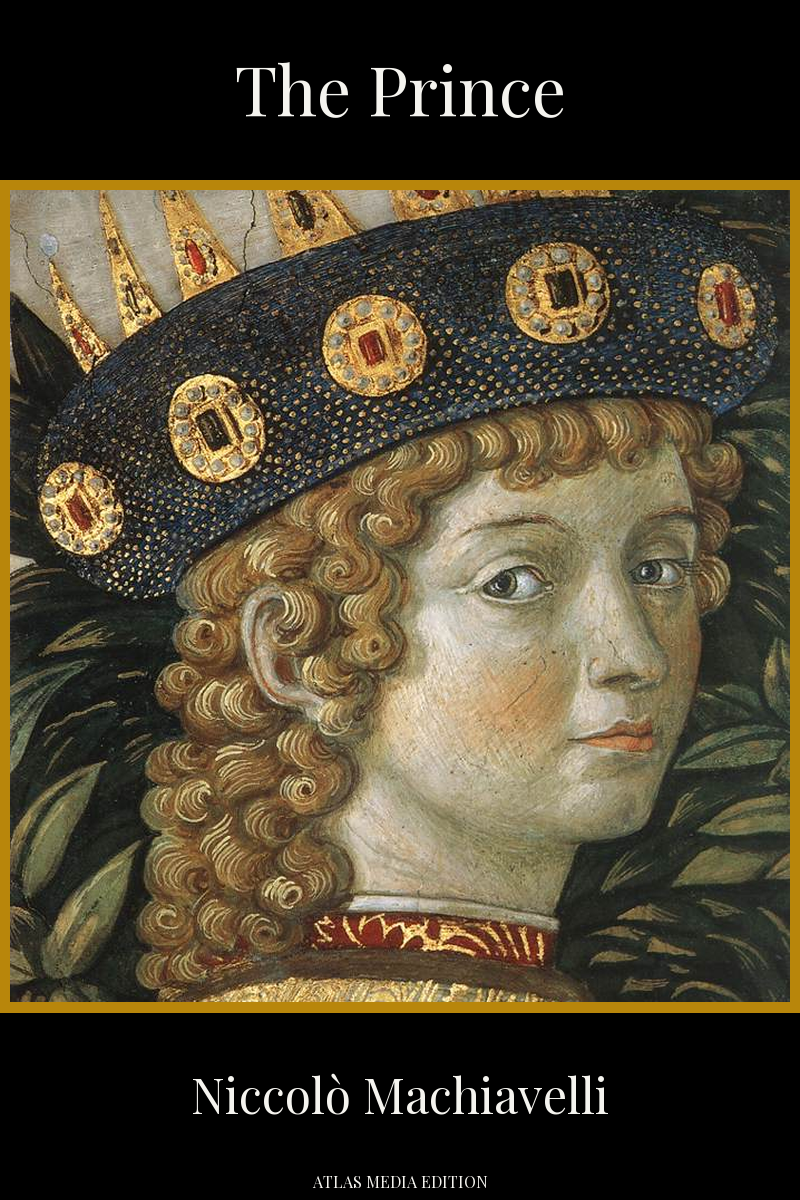
- Novel
The Prince
- Published: 1532
- Atlas edition: V1.3 ·
- Language: Italian
ABOUT THE AUTHOR
Niccolò Machiavelli
1469–1527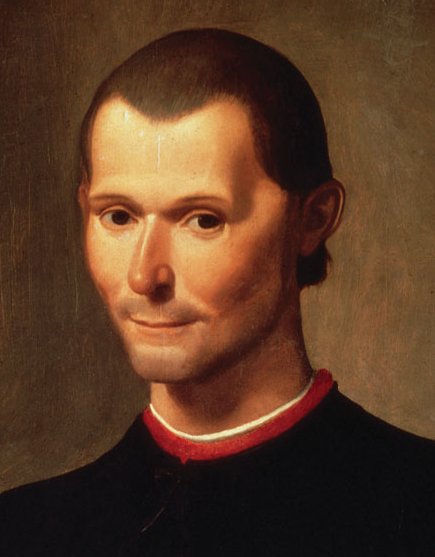
Niccolò Machiavelli (1469 to 1527) was a Florentine diplomat, political writer and historian of the Italian Renaissance. From 1498 to 1512 he served as secretary to the second chancery of the Republic of Florence, with responsibilities in diplomatic and military affairs.
When the Medici returned to power in 1512 he lost his office, and he was soon suspected of conspiracy, imprisoned and tortured, then released after three weeks. In the years that followed he turned to writing, producing The Prince, the Discourses on Livy and other works of history, politics and drama.
ABOUT THE WORK
The Prince
The Prince is Niccolò Machiavelli’s short treatise on how power is gained, held and lost. Written in Florence around 1513, after the Medici family returned to power and Machiavelli lost his post in the city’s government, it circulated in manuscript for years. It was printed in 1532, five years after his death. This Atlas Media edition uses W. K. Marriott’s English translation.
The book opens with a dedication to Lorenzo de’ Medici, Duke of Urbino. Machiavelli writes that among his possessions he values nothing more than his knowledge of the actions of great men, learned through long experience of affairs and continual study of ancient history. The gesture matters, because the author was a former official seeking favour from the family that had removed him.
The first chapters sort states into kinds. Hereditary principalities, Machiavelli argues, are comparatively easy to keep, because subjects are used to the ruling family. The real difficulty lies with new principalities, and with territories added to an existing state. Here he weighs practical choices: whether a ruler should live in a conquered land, plant colonies, or govern through local allies, and why the kingdom of Darius was easier to hold after Alexander’s conquest than France would have been.
A central contrast runs through the book: virtù and fortuna. Virtù is the ruler’s own capacity, skill and resolve; fortuna is chance and circumstance. Machiavelli praises founders who rose by their own ability and studies those who rose through fortune or the arms of others. His long account of Cesare Borgia shows a ruler who used his opportunity with great energy, yet was undone by events he could not control.
Middle chapters turn to armies. Machiavelli distrusts mercenaries and auxiliary troops, arguing that a state is secure only when it relies on its own forces. Military matters, he insists, are the first concern of a prince. This reflects his own work organising a Florentine militia during his years in office.
The most famous chapters examine the ruler’s reputation. Is it better to be loved or feared? Machiavelli answers that it is best to be both, but if one must be chosen, it is safer to be feared, while avoiding hatred. He argues that a prince should appear merciful, faithful, humane, upright and religious, but must be ready to act otherwise when the safety of the state requires it. Keeping promises, generosity and cruelty are judged by their effects rather than by moral ideals.
The closing chapters return to Italy. Machiavelli asks why its princes lost their states, considers how far fortune governs human affairs, and ends with an appeal to the Medici to free Italy from foreign armies, quoting Petrarch’s call to arms.
Marriott’s edition includes an introduction tracing Machiavelli’s life through youth, public office, and the years of writing that followed his removal from office. Together they give readers both the treatise and the career that shaped it.
WHY IT MATTERS
Why The Prince matters
The Prince matters because it changed the questions people ask about politics. Earlier advice books for rulers usually described the ideal prince, measured against virtues such as justice and piety. Machiavelli set out instead to describe how rulers actually behave, and what follows from their choices. That shift toward observation and consequence is one reason the book is often placed at the beginning of modern political thought.
Reading The Prince today
The book also gave English a word. “Machiavellian” came to mean cunning, ruthless and deceptive, and many readers have treated the treatise as a manual for tyrants. Others read it as a sober description of power in a violent age, or even as a warning addressed to citizens of a republic. Machiavelli’s longer Discourses on Livy, which praises republican government, complicates any simple verdict. Reading The Prince in full lets readers test these interpretations against the text itself.
The Prince and the language of the state
Scholars have also traced in The Prince an early use of “state” (stato) in something close to its modern sense: a structure of power that outlasts any one ruler. The book’s examples from Rome, the Bible and Renaissance Italy show how a single author tried to draw lasting rules from history.
Its central dilemma remains open. When, if ever, can leaders justify actions that would be wrong for private persons? Students of government, history, ethics and leadership still return to the treatise for that question, whether they finish it as admirers or critics.
Edition Record
- First publication
- 1532
- Textual basis
- Source text: Project Gutenberg, https://www.gutenberg.org/ebooks/1232
- Atlas edition
- V1.3 ·
- Language
- Italian
Prepared from the recorded source and the reviewed Atlas working edition.
Accessibility: EPUB and PDF are offered where approved; accessibility features have not been independently certified.
Source & Rights
- Text source
- Project Gutenberg

The Prince by Machiavelli, Niccolò; translated by Marriott, W. K. (William Kenaz). Source text prepared from Project Gutenberg ebook 1232.