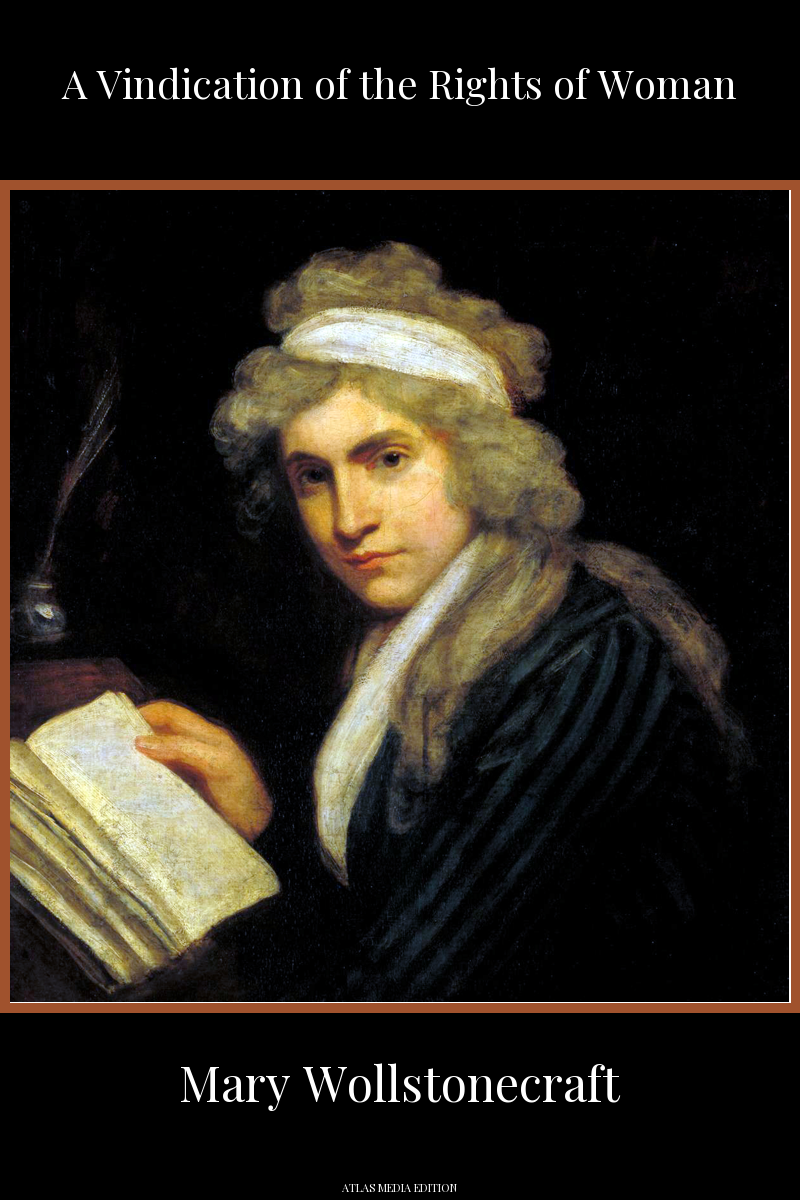
- Novel
- Philosophy
A Vindication of the Rights of Woman
- Published: 1792
- Atlas edition: V1.3 ·
- Language: English
ABOUT THE AUTHOR
Mary Wollstonecraft
1759–1797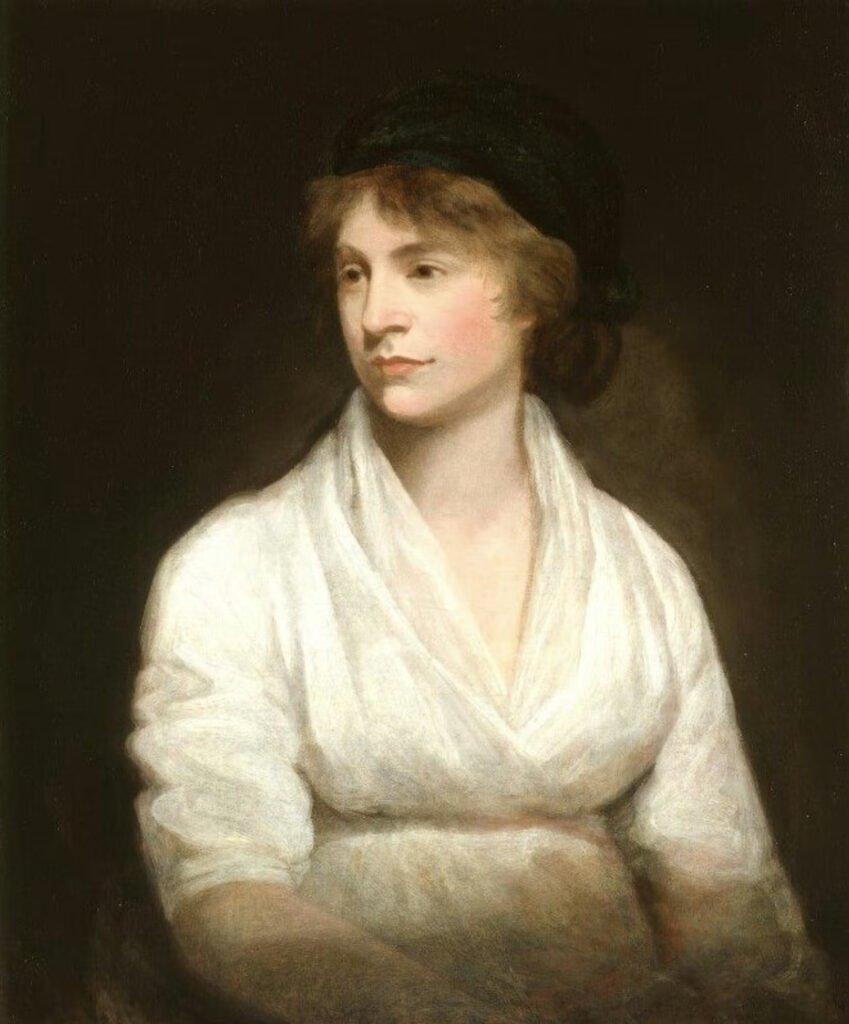
Mary Wollstonecraft (1759 to 1797) was an English writer and philosopher best known for her advocacy of women’s rights. She is regarded as one of the founding feminist philosophers.
In a short career she wrote novels, treatises, a travel narrative, a history of the French Revolution, a conduct book and a children’s book. She is best known for A Vindication of the Rights of Woman (1792), which argues that women appear inferior to men only because they lack education.
ABOUT THE WORK
A Vindication of the Rights of Woman
A Vindication of the Rights of Woman is Mary Wollstonecraft’s argument that women are rational beings who deserve the same education and moral respect as men. Published in 1792, during the French Revolution, it is one of the founding works of feminist philosophy.
Wollstonecraft wrote in direct response to the political debates of her time. Revolutionary France was redesigning its institutions, including education, and a report to the French National Assembly had proposed that girls receive only a domestic education. Wollstonecraft dedicated her book to its author, Talleyrand, and asked him to think again.
Her central claim is that women appear weaker and less rational than men not by nature but because of how they are raised. Girls are taught to value beauty, delicacy and the art of pleasing, and are denied serious learning. They are then blamed for the very faults their education has produced.
She takes aim at writers who defended this state of affairs. Her sharpest criticism falls on Jean-Jacques Rousseau, whose influential book Émile described an ideal woman educated only to please and serve her husband. Wollstonecraft also criticises popular conduct books that taught young women modesty as a form of display.
Against this, she argues that virtue must rest on reason, and that reason must be developed by education. A woman who is merely obedient cannot be truly virtuous, because she has never been allowed to judge for herself. Women should be educated as rational companions, not ornaments.
Wollstonecraft connects this to the good of society. Mothers raise the next generation of citizens, she argues, so a nation that keeps women ignorant harms its own future. She proposes a national system of co-educational day schools, where girls and boys would learn together.
The book also criticises the effects of rank and wealth. Wollstonecraft argues that idleness and dependence corrupt the rich of both sexes, and she favours independence earned through useful work. She even suggests, carefully, that women might one day study medicine, run businesses and have a voice in government.
Throughout, she insists that the issue is not a contest between the sexes but a question of human dignity. She does not want women to have power over men, she writes, but over themselves.
The writing is passionate and sometimes digressive, the work of an author who believed the argument was urgent.
WHY IT MATTERS
Why A Vindication of the Rights of Woman matters
A Vindication of the Rights of Woman matters because it made a clear, reasoned case for women’s equality at a moment when the rights of man were being loudly debated and women were largely left out of them.
Education and equality in A Vindication of the Rights of Woman
The book’s focus on education remains its most influential idea. Wollstonecraft saw that differences blamed on nature were often the result of upbringing, and that changing education could change what people became. That argument has shaped debates about girls’ schooling ever since.
Reading A Vindication of the Rights of Woman today
Modern readers will find Wollstonecraft both strikingly modern and very much of her time. She is cautious about political rights such as the vote, and much of her argument is framed around women’s roles as wives and mothers. Scholars still debate how to describe her: the word feminist did not exist until decades after her death.
Her argument also reaches beyond gender. Wollstonecraft criticises any system that keeps a group dependent and then calls its dependence natural, a pattern of reasoning that later reformers applied to class, race and empire.
For a long time her life, including her unconventional relationships, attracted more attention than her writing. Since the late twentieth century, her ideas have been taken more seriously, and she is now widely regarded as one of the first feminist philosophers.
Reading the book alongside Paine’s Rights of Man shows two responses to the same revolutionary moment, and how far the language of universal rights was, and was not, extended to women.
Edition Record
- First publication
- 1792
- Textual basis
- Source text: Project Gutenberg, https://www.gutenberg.org/ebooks/3420
- Atlas edition
- V1.3 ·
- Language
- English
Prepared from the recorded source and the reviewed Atlas working edition.
Accessibility: EPUB and PDF are offered where approved; accessibility features have not been independently certified.
Source & Rights
- Text source
- Project Gutenberg

A Vindication of the Rights of Woman by Wollstonecraft, Mary. Source text prepared from Project Gutenberg ebook 3420.