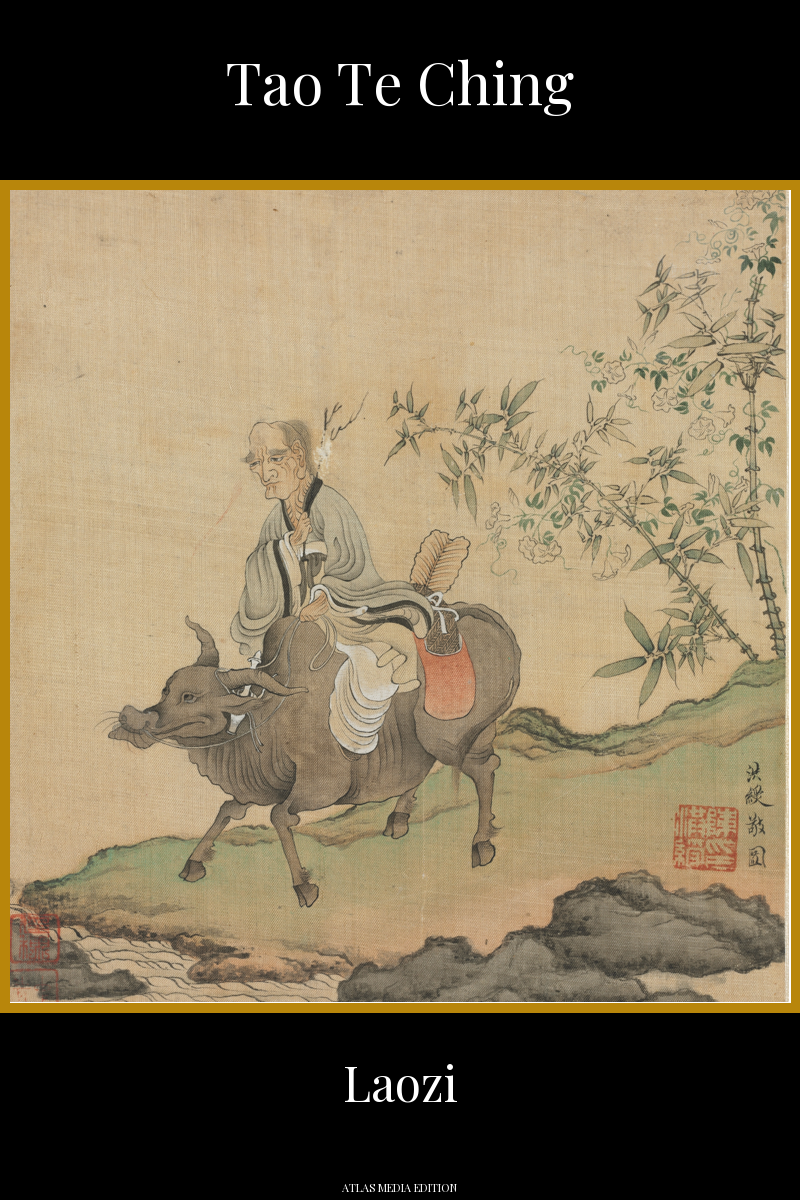
- Novel
Tao Te Ching
- Published: c. 300 BC
- Atlas edition: V1.3 ·
- Language: Classical Chinese
ABOUT THE AUTHOR
Laozi
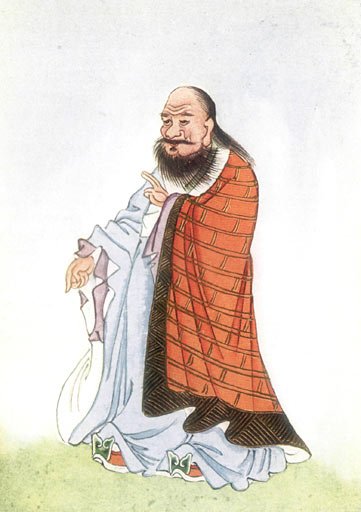
Laozi is the name traditionally given to an ancient Chinese philosopher, also identified as Li Er or Lao Dan, regarded as the author or originating teacher of the Tao Te Ching.
Traditional accounts place him in the sixth century BC as a keeper of archives at the Zhou court and an elder contemporary of Confucius. Modern scholars remain divided over his identity and dates, and some regard him as largely legendary.
ABOUT THE WORK
Tao Te Ching
Tao Te Ching is the ancient Chinese classic of the Tao, or Way, traditionally attributed to the sage Laozi. A short book of 81 brief chapters, it is a foundational text of Taoism and one of the most translated works in world literature. This Atlas Media edition uses James Legge’s English translation, published as The Tao Teh King.
The book’s dating and authorship are debated. Tradition places Laozi in the sixth century BC, as an older contemporary of Confucius, but many scholars regard him as partly or wholly legendary. The oldest surviving manuscript fragments, found in a tomb at Guodian, date to around 300 BC.
The first chapter sets the tone. The Tao that can be named, it says, is not the enduring Tao. The Way that underlies all things cannot be captured in words, and the book proceeds by paradox, image and suggestion rather than argument.
A central idea is wu wei, often translated as non-action or effortless action. The sage does not force things, but acts in harmony with the natural course of events. Water is a favourite image: soft and yielding, it nevertheless wears away the hardest stone and settles in the low places others avoid.
The text praises simplicity, humility and contentment. It warns against ambition, display and the endless pursuit of possessions. Those who know when they have enough are rich; those who know others are clever, but those who know themselves are wise.
Many chapters are addressed to rulers. The Tao Te Ching advises a light hand in government: the more laws and prohibitions, the more thieves and poverty. The best ruler, it suggests, is one whose people barely know he exists, and who governs a great state as one would cook a small fish, gently and without too much stirring.
It also speaks against war. Weapons are instruments of ill omen, and victory should be mourned rather than celebrated. The text counsels restraint, compassion and frugality as the sage’s treasures.
Its style is part of its meaning. Lines are short and balanced, often setting opposites side by side: the hard and the soft, the full and the empty, being and non-being. Each depends on the other, and the sage learns to see them together.
The second half of the book, traditionally called the Te, or Virtue, turns more to the practical power that flows from living in accord with the Way.
WHY IT MATTERS
Why Tao Te Ching matters
Tao Te Ching matters because, in a few thousand characters, it offers a way of seeing the world that has shaped Chinese philosophy, religion, art and medicine for more than two thousand years, and that continues to find readers across the world.
The Way in the Tao Te Ching
The text’s central teaching, that the deepest truths cannot be put into words and that strength can lie in softness and yielding, runs against many assumptions about power and success. Its short, memorable chapters invite slow reading and reflection rather than quick conclusions.
Reading the Tao Te Ching in translation
Because the original is terse and open to many readings, translations differ widely. Legge, a Scottish scholar and the first professor of Chinese at Oxford, aimed for close accuracy and added explanatory words in brackets. Comparing his version with others shows how much interpretation any translation involves.
The text first reached European readers through a French translation in the early nineteenth century. Since then it has been translated more often than almost any book except the Bible, and it has influenced writers, artists and thinkers far from China.
The book’s ideas were later reinterpreted by Confucian, Legalist and Buddhist thinkers, and it remains central to both philosophical and religious Taoism.
For readers interested in leadership, ecology, simplicity or the nature of knowledge, the Tao Te Ching offers a short but inexhaustible text. Its famous lines, such as the journey of a thousand li beginning with a single step, are quoted far beyond their original context.
Edition Record
- First publication
- c. 300 BC
- Textual basis
- Source text: Project Gutenberg, https://www.gutenberg.org/ebooks/216
- Atlas edition
- V1.3 ·
- Language
- Classical Chinese
Prepared from the recorded source and the reviewed Atlas working edition.
Accessibility: EPUB and PDF are offered where approved; accessibility features have not been independently certified.
Source & Rights
- Text source
- Project Gutenberg
Tao Te Ching by Laozi; translated by Legge, James. Source text prepared from Project Gutenberg ebook 216.