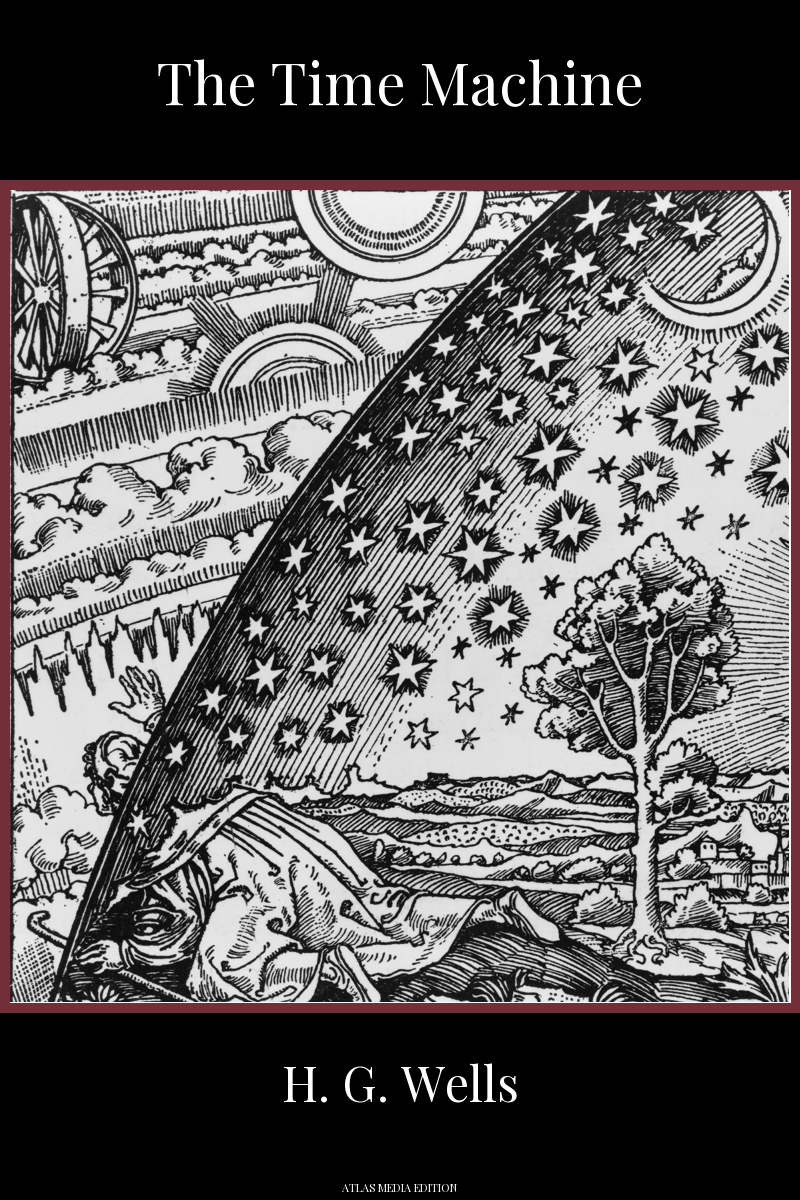
- Novel
The Time Machine
- Published: 1895
- Atlas edition: V1.3 ·
- Language: English
ABOUT THE AUTHOR
H. G. Wells
1866–1946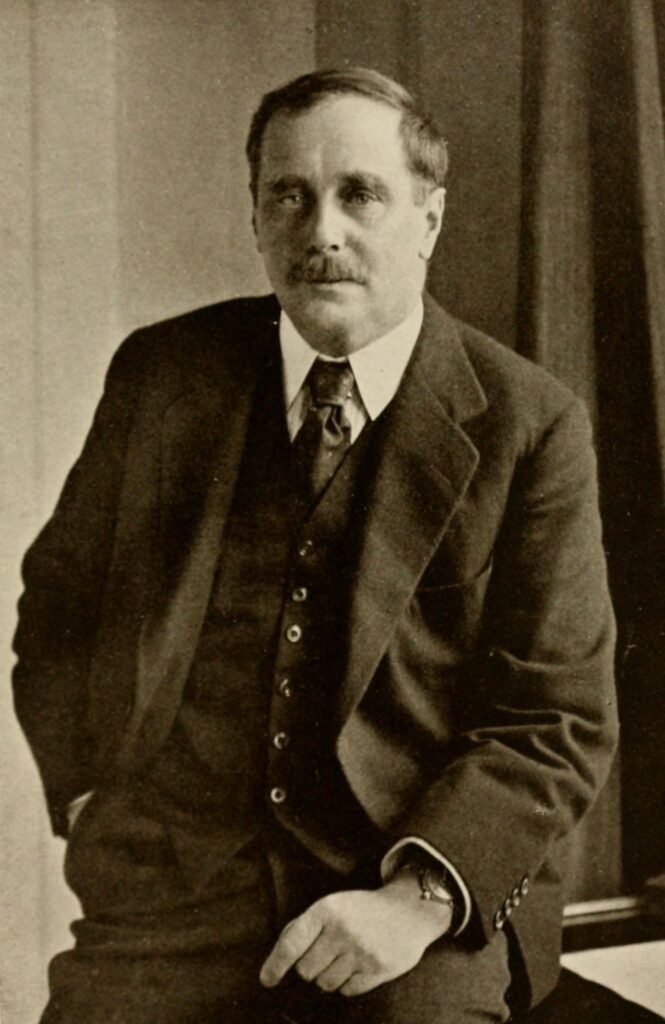
H. G. Wells (1866 to 1946) was an English writer who worked in many genres, producing more than forty novels and dozens of short stories alongside social commentary, history and popular science.
He is best known for science fiction novels such as The Time Machine, and has sometimes been called a father of science fiction. In his lifetime he was also a prominent social critic with a progressive vision, writing utopian works and imagining technologies before they existed.
ABOUT THE WORK
The Time Machine
The Time Machine is H. G. Wells’s short novel about a Victorian inventor who travels far into the future and finds humanity divided into two strange species. Published in 1895, it popularised the idea of travelling through time by machine, and the phrase “time machine” itself.
The story is told within a frame. At a dinner in his house in Richmond, a scientist known only as the Time Traveller explains to sceptical guests that time is a fourth dimension, and shows them a small model machine that vanishes. A week later he staggers in, dusty and limping, and tells them what has happened.
He has travelled to the year 802,701. At first the future seems a gentle paradise. The Eloi, small and graceful people, live in ruined palaces among gardens, eating fruit and playing, with no apparent work or worry. But they are childlike and incurious, and they fear the dark.
When his machine disappears, the Traveller discovers the reason for their fear. Beneath the ground live the Morlocks, pale, ape-like creatures who tend machinery in the dark and come up at night. He realises that humanity has split: the Eloi are descended from a leisured upper class and the Morlocks from labourers driven underground, and the Morlocks now feed on the Eloi.
He befriends Weena, an Eloi woman he saves from drowning, and explores a vast abandoned museum, the Palace of Green Porcelain, in search of weapons. After a terrifying night in a forest, he recovers his machine and escapes further forward.
In a final journey he sees the far future of the Earth: a dying red sun, a cold shore, giant crabs and, at last, near silence and darkness. He returns home to tell his story, offers two strange flowers as proof, and then sets off again. Three years later, the narrator says, he has not come back.
Wells keeps the science light. He explains the machine only in outline and spends his effort on the experience of travel, the strangeness of the future and the Traveller’s own changing theories. The Traveller guesses, revises and admits when he is wrong, so the reader shares his discovery.
The story’s frame matters too. The dinner guests, a doctor, a journalist, a psychologist and others, doubt every word. Their scepticism invites readers to ask whether the tale is true, a hoax or a parable.
WHY IT MATTERS
Why The Time Machine matters
The Time Machine matters because it turned the idea of time travel into a lasting part of storytelling, and because it used a scientific romance to ask hard questions about society.
Class and evolution in The Time Machine
The Eloi and the Morlocks are Wells’s picture of where the class divisions of his own time might lead. Readers have long interpreted the book as a commentary on inequality: a leisured class that loses its strength and curiosity, and a working class pushed out of sight. Wells combines this with ideas about evolution, asking what happens to a species when struggle disappears.
The influence of The Time Machine
The book is credited with popularising the concept of a vehicle for travelling deliberately through time. Countless later stories, films and television series draw on its basic premise. Its final vision of a dying Earth also shows Wells’s interest in deep time and the long future of the planet.
The novella is short and fast-moving, yet it raises questions about progress, comfort and the cost of other people’s labour. The Traveller’s first reading of the future is optimistic, and he is wrong. That reversal is one of the book’s lessons: a comfortable surface may hide the work that keeps it running, and the people who do it.
Reading The Time Machine alongside other utopias and dystopias shows how a single imagined journey can challenge confident ideas about the future. Wells later wrote that he admired Jonathan Swift, and the book shares Swift’s habit of using an impossible journey to reflect on real society.
Edition Record
- First publication
- 1895
- Textual basis
- Source text: Project Gutenberg, https://www.gutenberg.org/ebooks/35
- Atlas edition
- V1.3 ·
- Language
- English
Prepared from the recorded source and the reviewed Atlas working edition.
Accessibility: EPUB and PDF are offered where approved; accessibility features have not been independently certified.
Source & Rights
- Text source
- Project Gutenberg

The Time Machine by Wells, H. G. (Herbert George). Source text prepared from Project Gutenberg ebook 35.