- Novel
Don Quixote
- Published: 1605
- Atlas edition: V1.3 ·
- Language: Spanish
ABOUT THE AUTHOR
Miguel de Cervantes
1547–1616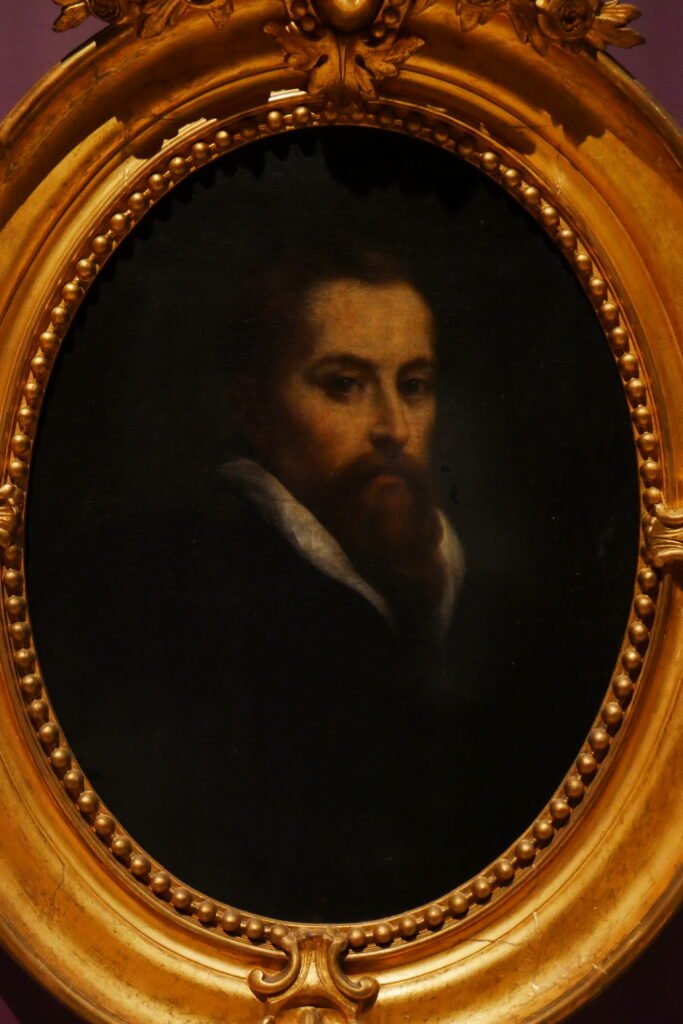
Miguel de Cervantes Saavedra (1547 to 1616) was a Spanish writer widely regarded as the greatest writer in the Spanish language and one of the world’s pre-eminent novelists.
Much of his life was spent in relative poverty and obscurity. He is best known for his two-part novel Don Quixote, published in 1605 and 1615, which is often considered the first modern novel.
ABOUT THE WORK
Don Quixote
Don Quixote is Miguel de Cervantes’s comic novel about a country gentleman who reads so many tales of chivalry that he sets out to become a knight errant himself. Published in two parts, in 1605 and 1615, it is often called the first modern novel. This Atlas Media edition uses John Ormsby’s English translation.
The hero is Alonso Quijano, a minor nobleman of La Mancha in central Spain. Lost in his books, he renames himself Don Quixote de la Mancha, puts on his great-grandfather’s old armour, renames his bony horse Rocinante, and chooses a local farm girl, whom he calls Dulcinea del Toboso, as the lady to whom he will dedicate his deeds.
On his first outing he takes an inn for a castle and the innkeeper for its lord, who humours him and dubs him a knight. He returns home battered. His friends, the priest and the barber, burn many of his books, hoping to cure him, but he sets out again.
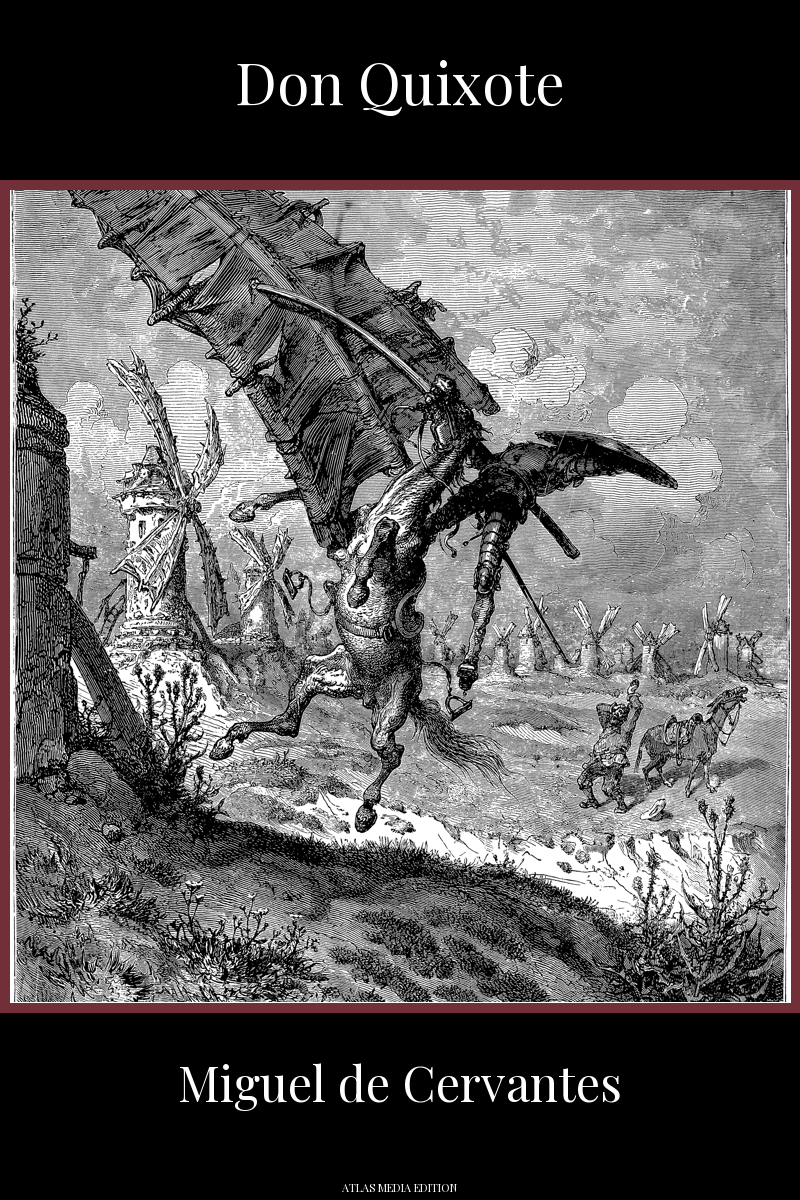
This time he takes a squire, Sancho Panza, a practical and talkative labourer who is promised the governorship of an island. Their adventures follow one another quickly. Don Quixote charges windmills he believes are giants, attacks flocks of sheep he takes for armies, and frees a line of convicts who then stone him.
Much of the comedy comes from the contrast between the two. Don Quixote speaks in the lofty style of the romances; Sancho answers with proverbs, appetite and common sense. Yet as the book goes on, each takes on something of the other, and their friendship becomes its heart.
The first part also includes stories told by people the pair meet on the road, love stories and tales of captivity, which show Cervantes experimenting with many kinds of narrative.
In the second part, published ten years later, Don Quixote and Sancho discover that they are famous: people have read the first part. A duke and duchess entertain them with elaborate pranks, and Sancho is finally given his island to govern, ruling more wisely than anyone expected. Cervantes also mocks a false sequel written by another author.
At last Don Quixote is defeated in combat by a neighbour disguised as a knight and made to return home. He falls ill, recovers his reason, renounces the books of chivalry, and dies as Alonso Quijano the Good, with Sancho at his bedside.
WHY IT MATTERS
Why Don Quixote matters
Don Quixote matters because it opened possibilities that the novel has explored ever since. It mixes comedy and sorrow, high style and low, and makes the gap between how people imagine the world and how it really is into its subject.
Fiction and reality in Don Quixote
Cervantes plays constantly with the nature of storytelling. He claims to be translating the work of a Moorish historian, interrupts the narrative, and in the second part lets his characters discuss their own book. Many later writers, from the eighteenth century to the present, have drawn on this playful self-awareness.
The idealist in Don Quixote
Don Quixote is mocked, beaten and deceived, yet readers have long found him admirable as well as absurd. He tries to defend the weak and keep his word in a world that does neither. The word “quixotic”, meaning impractically idealistic, comes from him, and the question he raises, whether it is foolish or noble to act on ideals the world does not share, remains open.
Cervantes wrote with deep knowledge of the society he mocked. He had been a soldier, was wounded at the battle of Lepanto, and spent five years as a captive in Algiers, experiences that echo in the novel’s tales of war and captivity.
The book’s influence has been enormous. It is among the most translated and best-selling books in history, and it has been described by some as the greatest work ever written. Its images, especially the tilt at windmills, are part of everyday language.
Reading the full novel, rather than a summary of its famous scenes, shows its range: the long conversations between knight and squire, the inset stories, and the gradual deepening of a comic premise into a portrait of two unforgettable people.
Edition Record
- First publication
- 1605
- Textual basis
- Source text: Project Gutenberg, https://www.gutenberg.org/ebooks/996
- Atlas edition
- V1.3 ·
- Language
- Spanish
Prepared from the recorded source and the reviewed Atlas working edition.
Accessibility: EPUB and PDF are offered where approved; accessibility features have not been independently certified.
Source & Rights
- Text source
- Project Gutenberg

Don Quixote by Cervantes Saavedra, Miguel de; translated by Ormsby, John. Source text prepared from Project Gutenberg ebook 996.