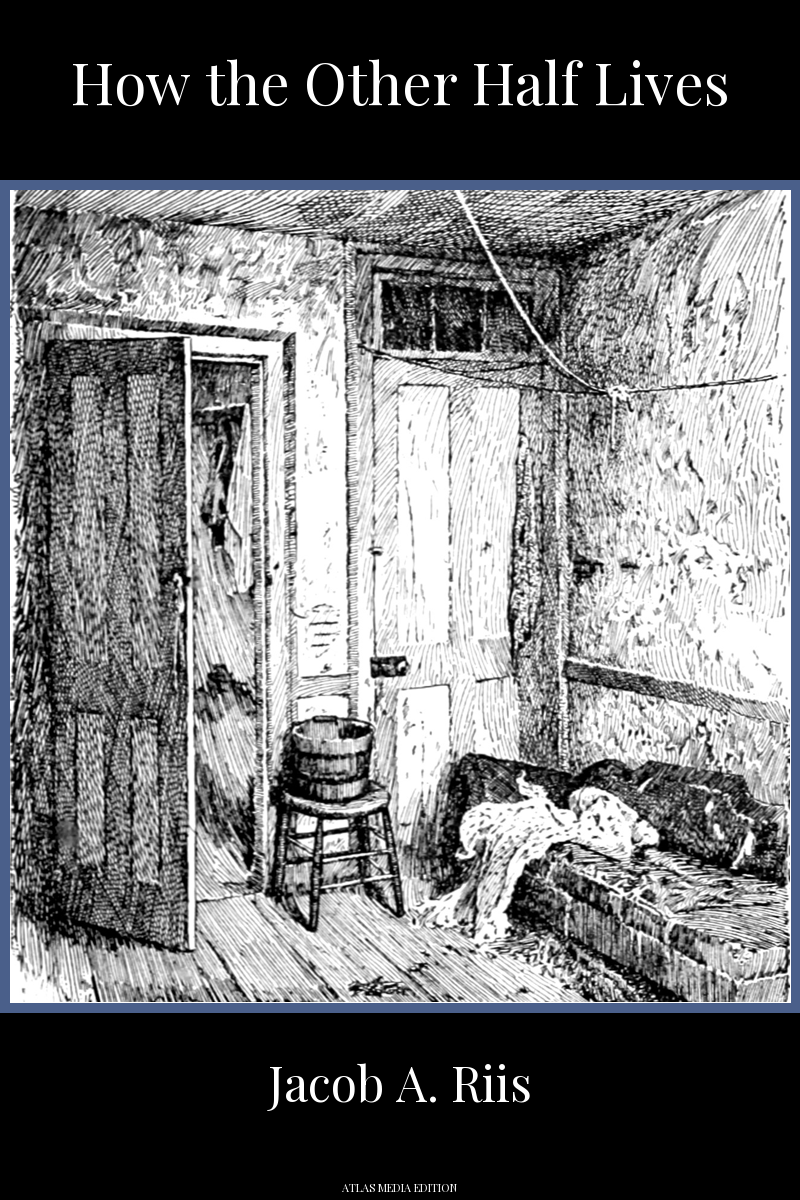
- Novel
How the Other Half Lives
- Published: 1890
- Atlas edition: V1.3 ·
- Language: English
ABOUT THE AUTHOR
Jacob A. Riis
1849–1914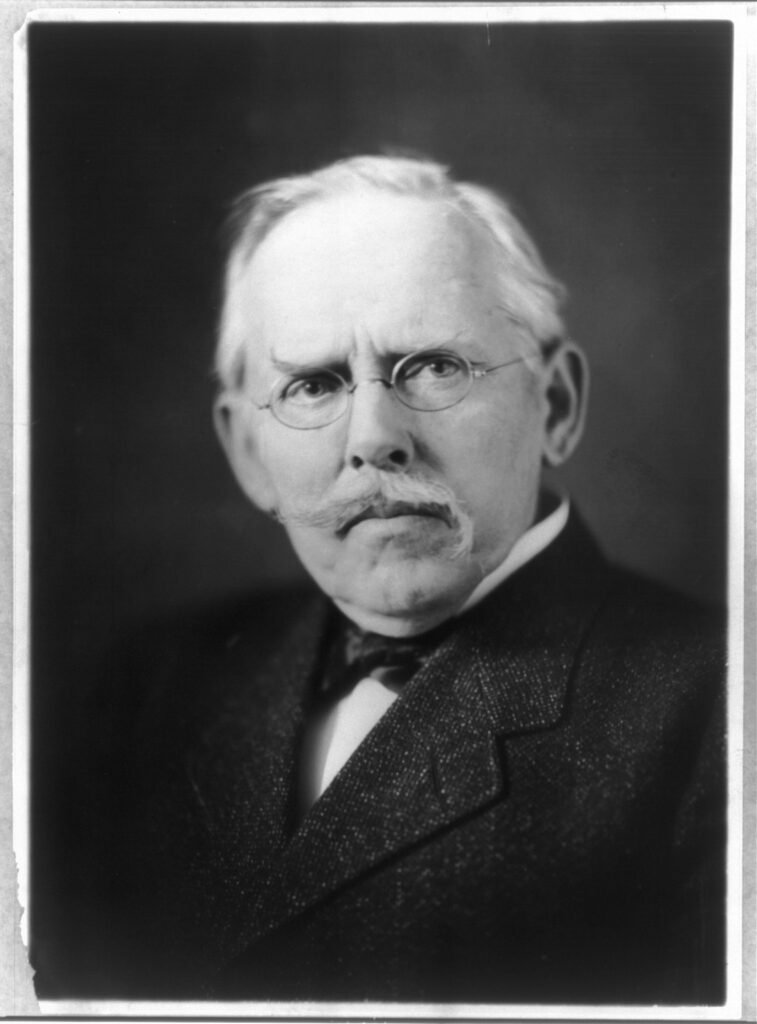
Jacob A. Riis (Jacob August Riis) was born in 1849 and died in 1914. The supplied evidence describes him as a newspaper man whose duties were demanding, and as the author of How the Other Half Lives, published in 1890. The book is described as an early work of photojournalism documenting squalid living conditions in the slums of New York City in the 1880s. Its title page notes that its illustrations are chiefly from photographs taken by the author.
ABOUT THE WORK
How the Other Half Lives
How the Other Half Lives: Studies Among the Tenements of New York is a work of documentary reporting by Jacob A. Riis, issued by Charles Scribner’s Sons of New York with illustrations chiefly from photographs taken by the author. The title of the book comes from an old saying, quoted in the introduction, that one half of the world does not know how the other half lives. Riis argues that this ignorance was once true because the half on top did not care, and that it could no longer be sustained once the crowding and upheaval below became too violent to ignore.
In the preface Riis explains that he began the book out of a belief that every man’s experience, if gleaned through decent and honest work, ought to be worth something to the community. He thanks officials of the Board of Health and the police, and the Registrar of Vital Statistics, Dr. Roger S. Tracy, whose help with tables and statistics he calls essential. He also thanks his wife.
The introduction sets out the central claim. The boundary line of the Other Half, Riis says, runs through the tenements. He states that three-fourths of New York’s people now live in them, that fifteen thousand tenant houses of the previous generation have swelled to thirty-seven thousand, and that more than twelve hundred thousand persons call them home. He calls the tenement system the evil offspring of public neglect and private greed, and concludes that nothing is left but to make the best of a bad bargain. He draws on testimony about the 1863 riot and on legislative inquiries linking crime, drunkenness and pauperism to bad housing.
The contents page shows how the book is organized. It opens with the genesis of the tenement and the awakening of public concern, then moves through the city’s districts and peoples. Chapters cover the downtown back alleys, the Italians, the notorious Bend, stale-beer dives, cheap lodging houses, Chinatown, Jewtown and its sweatshops, Bohemian cigarmakers in their tenements, and the color line in New York. Later chapters turn to social problems: the common herd, children, waifs and street arabs, the reign of rum, working girls, pauperism, and the wrecks and waste of city life.
The final chapters, titled What Has Been Done and How the Case Stands, shift from description to the question of remedies. The list of illustrations promises images such as Gotham Court, Bandits’ Roost, Bottle Alley, a sweater’s shop on Ludlow Street, and the evolution of the tenement over twenty years. It also lists floor plans of model buildings in Brooklyn.
The book opens with verses by James Russell Lowell in which Christ shows the comfortable the images of himself they have made in the poor. That epigraph signals the moral tone. Riis presents his account as drawn from plain public records, dark enough to chill any heart, and he says that if the sufferings and sins of the other half appear a just punishment on the community that gave it no other choice, it is because that is the truth.
WHY IT MATTERS
Why How the Other Half Lives matters
This book belongs to the early history of photojournalism and of American housing reform. Its method is a mix of reporting, official statistics and photographs taken by the author, joined in a single argument that private suffering has public causes. Readers can see in it an early attempt to make comfortable citizens look directly at conditions they preferred not to see.
The introduction shows the strategy. Riis does not simply appeal to pity. He tells his readers that the tenements carry death to rich and poor alike, that they breed pauperism and crime that fill the jails, and that they damage family life. The argument rests on shared self-interest as much as on charity, and that mixture of moral appeal and civic prudence became a durable pattern in reform writing.
The book also deserves a careful modern reading. Its chapter titles and descriptions of immigrant and minority communities reflect the categories and prejudices of its time, and a present-day reader will meet language that sits uneasily with the book’s humane aims. Treating the work as both a document of reform and an example of the assumptions of its period gives a fuller picture than either praise or dismissal.
The closing chapters on what has been done and how the case stands show that Riis meant the book to prompt action. His claim that the tenement is the product of neglect and greed, and not of the poor themselves, places responsibility on landlords, officials and the public. That framing still shapes debates about housing, density and inequality in cities.
For a general reader, the book offers a vivid view of New York in the 1880s and a lesson in how evidence, images and argument can be combined to change what a society is willing to notice. Its question, what are you going to do about it, remains the one the book leaves with its audience.
Edition Record
- First publication
- 1890
- Textual basis
- Source text: Project Gutenberg, https://www.gutenberg.org/ebooks/45502
- Atlas edition
- V1.3 ·
- Language
- English
Prepared from the recorded source and the reviewed Atlas working edition.
Accessibility: EPUB and PDF are offered where approved; accessibility features have not been independently certified.
Source & Rights
- Text source
- Project Gutenberg

How the Other Half Lives by Riis, Jacob A. (Jacob August). Source text prepared from Project Gutenberg ebook 45502.