- Novel
Nationalism
- Published: 1917
- Atlas edition: V1.3 ·
- Language: English
ABOUT THE AUTHOR
Rabindranath Tagore
1861–1941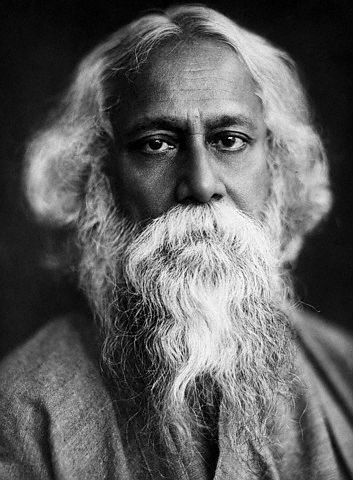
Rabindranath Tagore (1861 to 1941) was the author of Nationalism. The supplied record lists him as creator of the work. The Macmillan edition in the evidence carries a list of his other titles, including Gitanjali with an introduction by W. B. Yeats, The Crescent Moon, The Gardener, Stray Birds, Chitra, The Post Office, My Reminiscences and Sadhana. The title page styles him Sir Rabindranath Tagore.
ABOUT THE WORK
Nationalism
Nationalism, by Rabindranath Tagore, is a set of lectures on what the modern Nation does to human life. The book is arranged in four parts: Nationalism in the West, Nationalism in Japan, Nationalism in India, and The Sunset of the Century. The opening section, which the supplied text reproduces, sets out the argument that guides the rest.
Tagore begins with a general claim about history. Man’s history, he says, is shaped by the difficulties it meets, and different peoples are distinguished by how they overcome them. He offers the Scythians as an example of a people who chose the easiest path, organizing whole populations into bands of robbers. He argues that this path is not man’s truest one, because human nature is too complex to be satisfied by simple success that may become a death-trap.
He then turns to India. In his account, India’s problem from the beginning of history has been the race problem, since ethnologically different peoples came into close contact there. Her history, he says, has been one of continual social adjustment rather than of organized power for defence and aggression. He describes India as a hostess who must make room for many guests with different habits, a task that demands sympathy and a real sense of the unity of man. He credits a line of spiritual teachers, from the Upanishads onward, with working toward that unity. He does not present this record as flawless. He admits that India built her boundary walls between races too rigidly and sometimes crippled her children’s minds to fit them into social forms.
Against this he sets the West. Its national machinery of commerce and politics, he writes, turns out neatly compressed bales of humanity, bound in iron hoops and labelled with scientific care. He doubts that the Creator could recognize such a product as a creature of spirit. He says that neither the colourless vagueness of cosmopolitanism nor the fierce self-idolatry of nation-worship is the goal of human history.
The key distinction in the opening lecture is between society and the Nation. Society, for Tagore, is an end in itself, a spontaneous self-expression of man as a social being, in which people develop ideals through cooperation. Its political side exists only for self-preservation. A nation, in the sense of a political and economic union, is the aspect a population assumes when organized for a mechanical purpose. When science and organization make power yield wealth, he argues, that power crosses its boundaries. It goads neighbours with greed and fear, competition sharpens, and selfishness gains supremacy until power becomes society’s ruling force.
He says the Nation arrived in India differently from earlier conquerors. The Mughals and Pathans, he says, were known as human races with their own religions and customs, and Indians shared a language and a share in governing with them. This time India faced a nation, driving machinery deep into the soil, and Indians, who are no nation themselves, are called as witnesses to its effects. As a sign of the breakdown of living social bonds he points to a war between man and woman, where professionalism and competition intrude on what should be natural cooperation.
The supplied text ends mid-sentence, with elements that have lost their living bond of reality losing the meaning of their existence.
WHY IT MATTERS
Why Nationalism matters
Tagore’s book matters because it challenges the assumption that the nation is the natural and highest form of human organization. He does not treat it as a neutral container for culture. He treats it as a mechanism that grows by feeding greed and fear, and that gradually displaces the older, more humane work of society. That framing remains useful for readers who want to ask what national loyalty costs as well as what it protects.
The book also matters for who is speaking. Tagore addresses the West from within a colonized country, and he claims a particular authority: Indians, he says, are called as witnesses to what the Nation has been to humanity. His critique rests on lived experience of being governed by a nation, which gives the argument an edge that abstract political theory lacks.
His picture of India deserves careful reading. He praises a tradition of social adjustment and spiritual recognition of unity, yet he does not claim perfection for it. His admission that India built rigid walls between races and narrowed her children’s lives shows that he is not offering a simple contrast of a virtuous East with a corrupt West. Readers should still notice that his portrait of India is idealized and is an interpretation, not a neutral history.
His image of humanity packed into labelled bales is memorable because it connects economic organization to the loss of personal and spiritual life. The same concern runs through his remarks on competition entering the relations between men and women. For him the issue is the quality of human relationships under mechanical systems.
Finally, the book rejects both extremes. He refuses nation-worship, and he also refuses a bland cosmopolitanism. That middle position, a unity that respects difference, is why the lectures are still read in debates about nationalism, empire and global ethics.
Edition Record
- First publication
- 1917
- Textual basis
- Source text: Project Gutenberg, https://www.gutenberg.org/ebooks/40766
- Atlas edition
- V1.3 ·
- Language
- English
Prepared from the recorded source and the reviewed Atlas working edition.
Accessibility: EPUB and PDF are offered where approved; accessibility features have not been independently certified.
Source & Rights
- Text source
- Project Gutenberg
Nationalism by Tagore, Rabindranath. Source text prepared from Project Gutenberg ebook 40766.