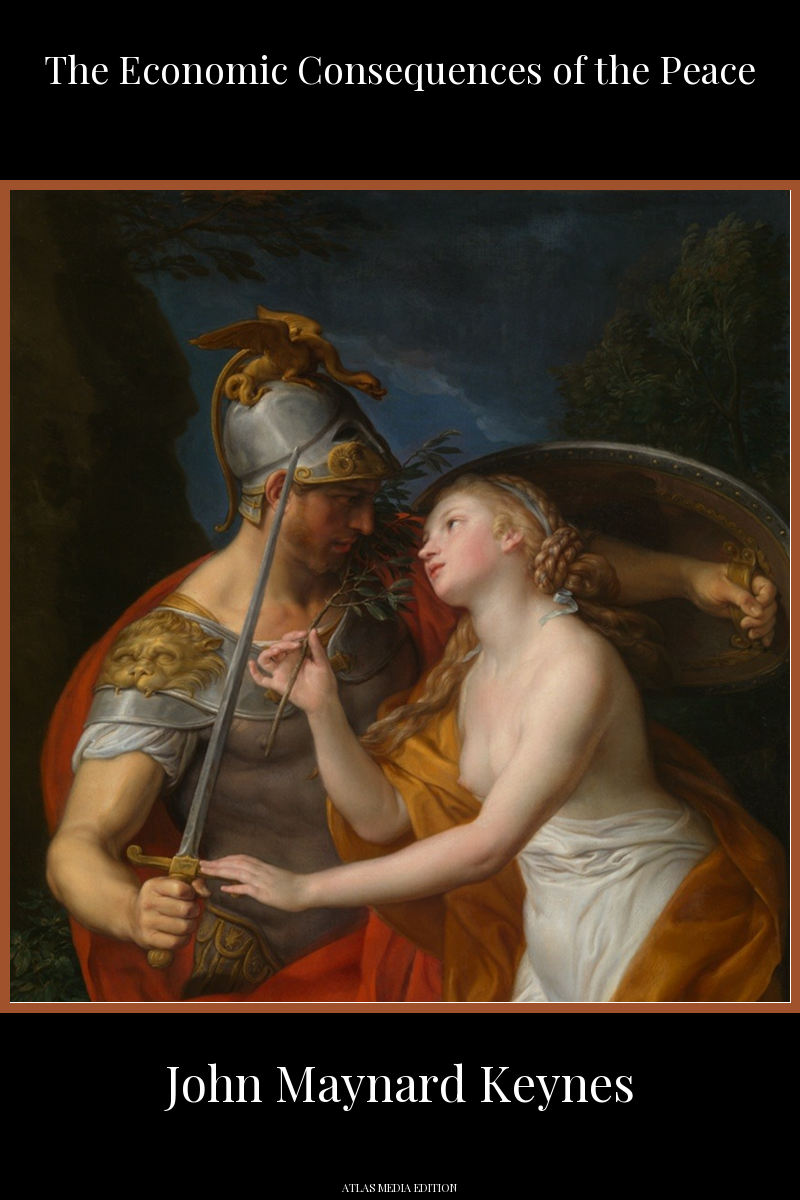
- Novel
The Economic Consequences of the Peace
- Published: 1919
- Atlas edition: V1.3 ·
- Language: English
ABOUT THE AUTHOR
John Maynard Keynes
1883–1946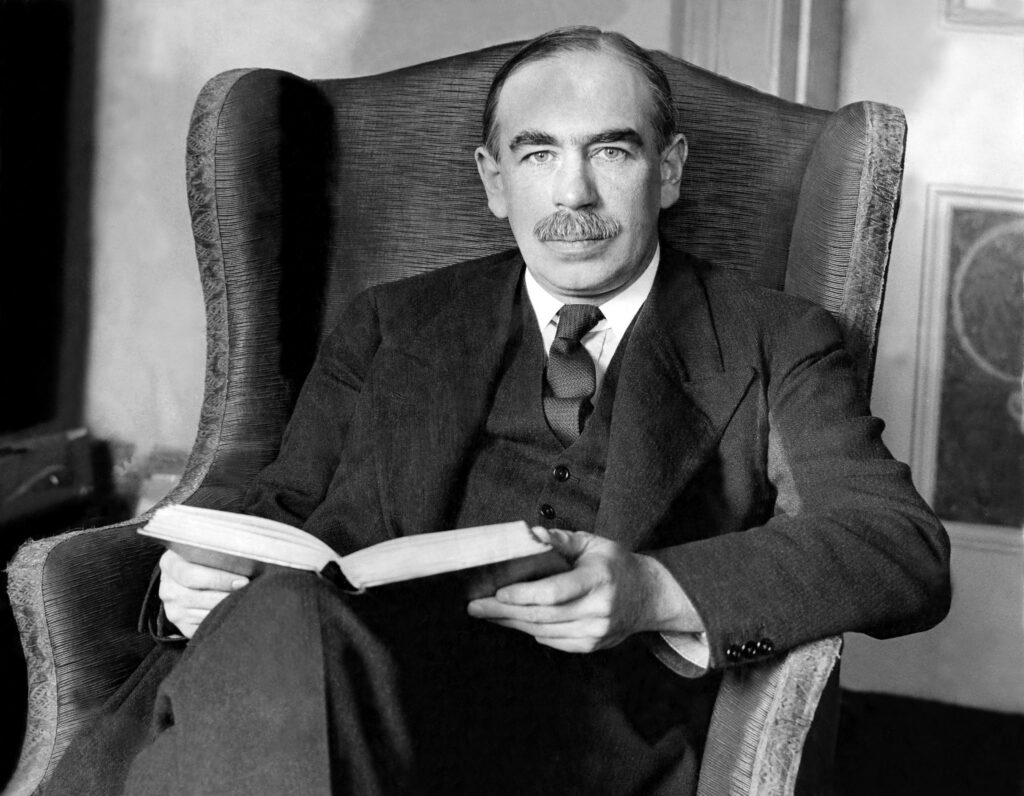
John Maynard Keynes (1883 to 1946) was a British economist and Fellow of King’s College, Cambridge. The evidence states that during the war he was temporarily attached to the British Treasury and was its official representative at the Paris Peace Conference up to June 7, 1919. He also sat as deputy for the Chancellor of the Exchequer on the Supreme Economic Council, and resigned from these positions when hope of substantial change to the draft peace terms faded.
ABOUT THE WORK
The Economic Consequences of the Peace
The Economic Consequences of the Peace is a book by John Maynard Keynes, Fellow of King’s College, Cambridge, and the edition in the evidence carries a New York imprint of Harcourt, Brace and Howe, dated 1920. In the preface Keynes explains his position. He was temporarily attached to the British Treasury during the war and served as its official representative at the Paris Peace Conference up to June 7, 1919. He also sat as deputy for the Chancellor of the Exchequer on the Supreme Economic Council. He resigned when it became clear that no substantial change to the draft Terms of Peace could be hoped for. His objection, he says, is to the Treaty and more broadly to the whole policy of the Conference towards the economic problems of Europe. He adds that his grounds are public and rest on facts known to everyone.
The contents list seven chapters: Introductory, Europe before the War, The Conference, The Treaty, Reparation, Europe after the Treaty, and Remedies. The supplied text covers the opening chapter and the start of the second.
In the first chapter Keynes argues that people grow so used to their surroundings that they fail to see how unusual and fragile the economic order of Western Europe has been for the last half century. We treat temporary advantages as permanent and build our plans on a sandy foundation. He says the German people, moved by delusion and self-regard, overturned that foundation. But he warns that the French and British spokesmen risk completing the ruin by a Peace that would damage further the complicated organization through which the European peoples live.
He contrasts England, which seems unaware that an age has ended, with continental Europe, where the earth heaves and the question is one of starvation and survival. Europe, he says, is solid with herself, and its countries flourished together and may fall together. If France and Italy abuse their momentary victory to destroy Germany and Austria-Hungary, they invite their own destruction, since they are bound to their victims by economic and psychic ties.
Keynes also gives a vivid picture of Paris during the conference. He calls it a nightmare, full of a sense of impending catastrophe, with decisions that seemed at once momentous and unreal. He pictures Wilson and Clemenceau as figures in a puppet show, and he compares events to those in Tolstoy’s War and Peace and Hardy’s The Dynasts, marching on regardless of the statesmen. He notes that the British people received the Treaty without reading it, and that his book was written under the influence of Paris, not London, by an Englishman who feels himself also a European.
The second chapter begins to build the case from history. Before 1870 Europe was largely self-subsistent. After 1870 an unprecedented situation arose in which population growth, emigration, new railways and ships, and food from America and tropical Africa let labor buy ever more food. Keynes calls this an economic Eldorado, recalls Malthus and his Devil, and says the age ended in August 1914. He describes the comforts of the middle and upper classes, such as a Londoner ordering the products of the whole earth by telephone, and suggests that the Devil may now be loosed again.
WHY IT MATTERS
Why The Economic Consequences of the Peace matters
This book is a landmark of political economy written as public argument. Keynes was not an outside critic. He had sat inside the British delegation, and he resigned when he concluded the settlement could not be improved. That insider position gives the opening chapters a force that a purely theoretical essay would lack.
The central idea in the supplied text is interdependence. Keynes treats Europe as a single economic organism, so that punishing the defeated is not separable from harming the victors. This is a claim about how an economy works, but he states it with moral and literary urgency. The language of tragedy, masks and fate shows an economist willing to use imagery to make readers feel what figures alone might not convey.
The account of the pre-war order is equally important. By calling the years after 1870 unstable and peculiar, he challenges the comfortable belief that prosperity is natural and permanent. His reference to Malthus suggests that the old limits of population and food might return. Readers can still ask whether they, too, take temporary advantages for granted.
The book also matters for the history of how the peace of 1919 has been judged. Its argument that the settlement ignored economic realities shaped later debate about reparations and reconstruction. Readers should remember that the supplied excerpt only reaches the early pages, and the detailed treatment of the Treaty, reparation and remedies lies beyond it. Even so, the opening shows the book’s method: a firsthand witness, a broad view of Europe, and a warning that policy made in anger may destroy the conditions on which everyone lives.
For general readers, the work remains a model of persuasive nonfiction. It is polemical, but it grounds its case in facts said to be known to all, and it invites the public to judge its leaders. That blend of expertise and civic address explains why it is still read.
Edition Record
- First publication
- 1919
- Textual basis
- Source text: Project Gutenberg, https://www.gutenberg.org/ebooks/15776
- Atlas edition
- V1.3 ·
- Language
- English
Prepared from the recorded source and the reviewed Atlas working edition.
Accessibility: EPUB and PDF are offered where approved; accessibility features have not been independently certified.
Source & Rights
- Text source
- Project Gutenberg
The Economic Consequences of the Peace by Keynes, John Maynard. Source text prepared from Project Gutenberg ebook 15776.