- Novel
The Promised Land
- Published: 1912
- Atlas edition: V1.3 ·
- Language: English
ABOUT THE AUTHOR
Mary Antin
1881–1949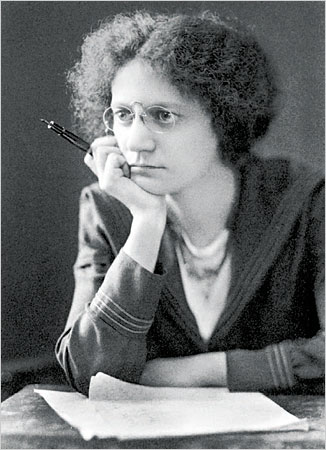
Mary Antin (1881 to 1949) was the author of this autobiography. Her life story, as she tells it, began in Polotzk, a town in the Russian Pale of Settlement, and continued in Boston after her family emigrated. The 1912 book was published by Houghton Mifflin, and parts appeared in the Atlantic Monthly. It is dedicated to the memory of Josephine Lazarus.
ABOUT THE WORK
The Promised Land
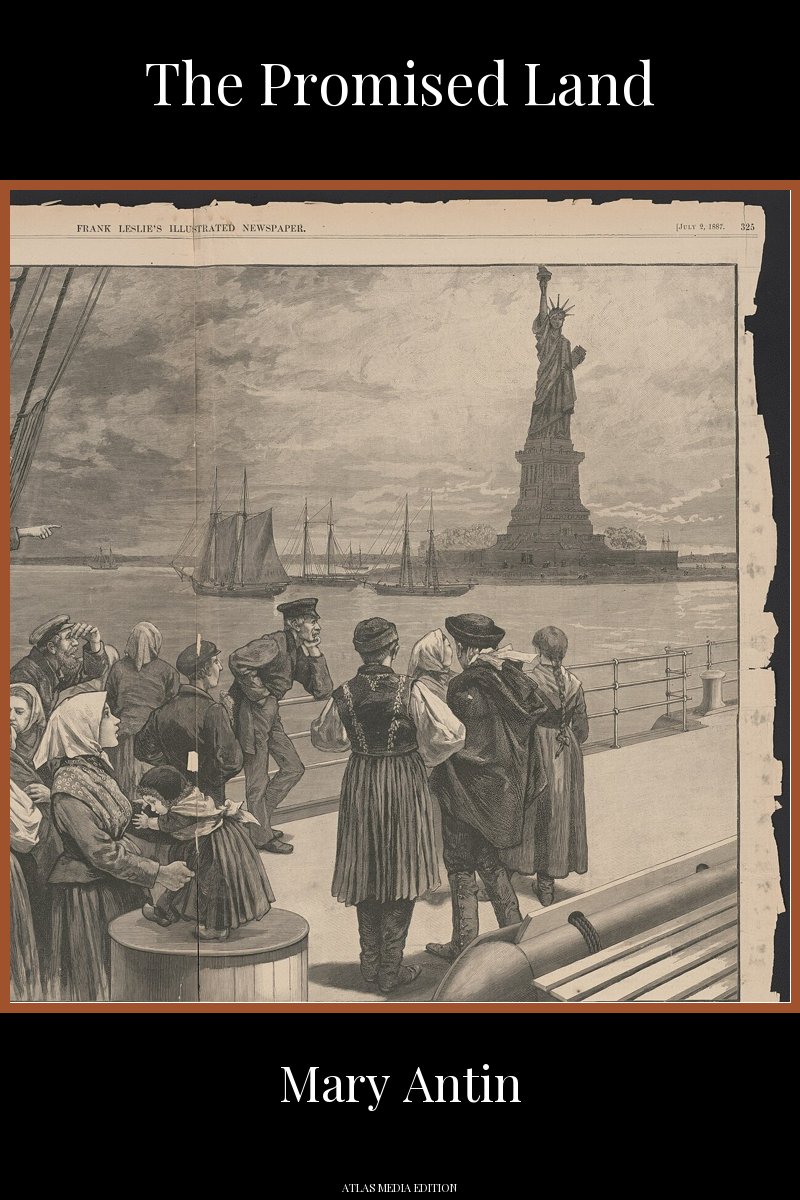
Mary Antin’s autobiography, published in 1912, tells how a Jewish girl grew up in Polotzk, a town within the Pale of Settlement in Russia, then emigrated with her family to Boston and became an American. It moves from childhood memories of religious life, trade and hardship, through the voyage of the exodus, to the slums of the South End and the public school, library and classroom that opened her future. It argues that her own story illustrates the experience of countless immigrants, and that America offered a second birth.
WHY IT MATTERS
Why read it
Few books let you feel immigration from the inside as this one does. Antin writes not as a sociologist but as a child who watched two worlds at once, and the result is a document of memory, hope and transformation that still reads with unusual force. You meet the market stalls of Polotzk, the Hebrew school, the Sabbath loaves, then the crowded streets of Boston and the astonishing gift of free public education. It gives a reader the texture of a vanished world and the intoxication of arrival, in one confident voice.
It also shows how a person builds a public self. Antin knows she is making a case, and watching her do so is part of the pleasure. For anyone curious about American identity, Jewish history, or how memoir shapes a life into a story, nothing else combines these so vividly.
Reading it closely
The introduction sets the method. Antin declares: “I was born, I have lived, and I have been made over.” She treats her earlier self as a separate person, almost a character, and claims her life is typical: “My life is a concrete illustration of a multitude of statistical facts.” Her personal story is offered as representative history, which gives the book its double aim, memoir and public argument.
The structure follows biblical patterns. Chapter titles such as “Children of the Law,” “The Exodus,” “The Promised Land,” “Manna” and “The Burning Bush” recast emigration as scripture, so that a personal journey takes on the weight of a people’s story. The opening chapter shows her gift for point of view: a child’s logic divides the world into Polotzk and a menacing place called Russia, and the humour and pathos arise from that innocent map.
Her language is buoyant and rhetorical, fond of metaphor, such as the immigrants as “strands of the cable that binds the Old World to the New.” She also invokes the Ancient Mariner, who tells his tale to be rid of it, hinting at an ambivalence beneath the triumph: she wants to forget, yet cannot. The tension between memory and assimilation drives the book.
Then and now
The book was published in 1912 by Houghton Mifflin, after appearing in part in the Atlantic Monthly, as the copyright page records. It became widely read and is now a standard text in American literature and immigration history courses. Modern readers tend to value it both as testimony and as a carefully shaped performance of Americanness, and critical attention has turned to what it emphasises and what it leaves out.
A way in
Start with the introduction, then read the Polotzk chapters for their vivid detail. Move on to the chapters on the crossing and arrival. Watch how Antin frames her story as typical, how biblical language shapes the telling, and where her enthusiasm for America sits beside traces of loss.
Edition Record
- First publication
- 1912
- Textual basis
- Source text: Project Gutenberg, https://www.gutenberg.org/ebooks/20885
- Atlas edition
- V1.3 ·
- Language
- English
Prepared from the recorded source and the reviewed Atlas working edition.
Accessibility: EPUB and PDF are offered where approved; accessibility features have not been independently certified.
Source & Rights
- Text source
- Project Gutenberg

The Promised Land by Antin, Mary. Source text prepared from Project Gutenberg ebook 20885.