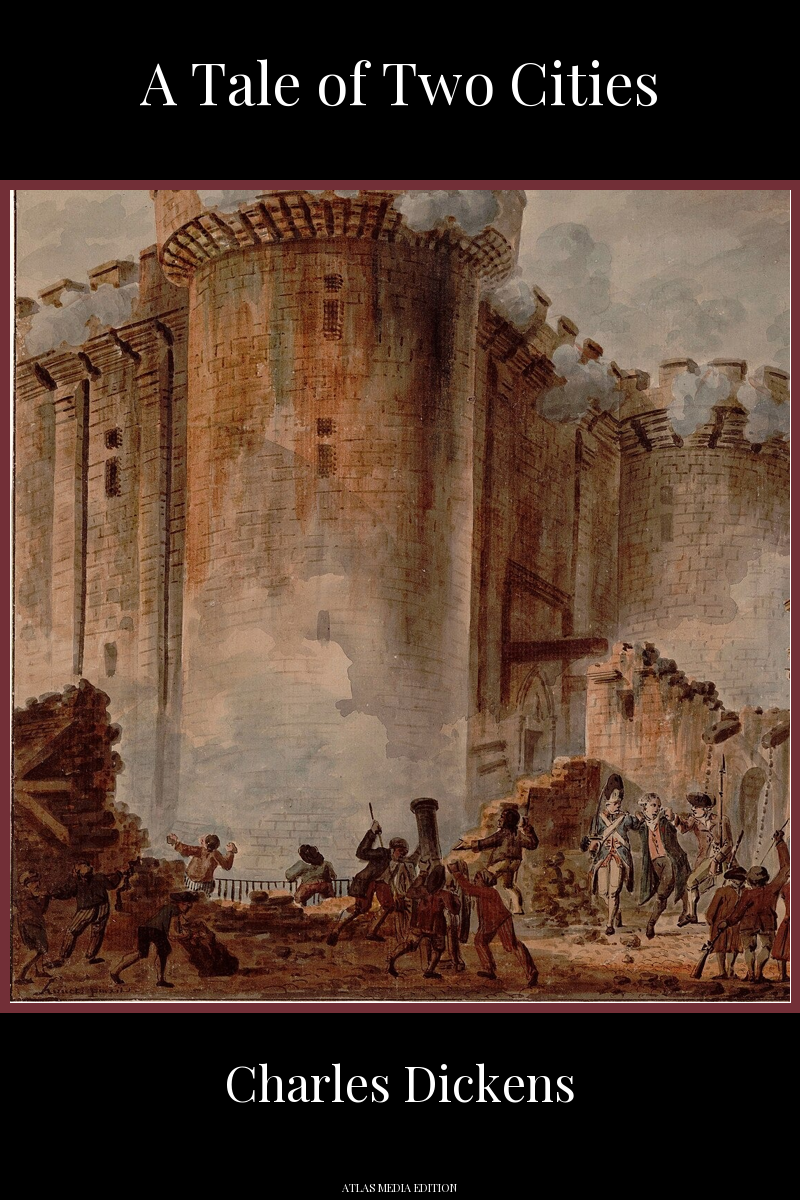
- Novel
A Tale of Two Cities
- Published: 1859
- Atlas edition: V1.3 ·
- Language: English
ABOUT THE AUTHOR
Charles Dickens
1812–1870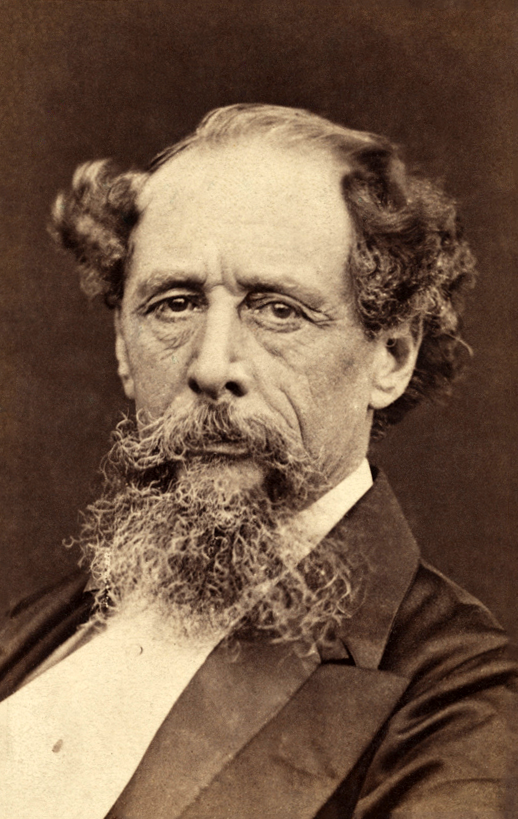
Charles Dickens (1812 to 1870) was an English novelist. Wikidata records his birth year as 1812 and his death year as 1870. He wrote this ghost story of Christmas, which was first published in London by Chapman and Hall in 1843 and illustrated by John Leech. The preface in the Standard Ebooks edition is signed C. D. and dated December, 1843.
ABOUT THE WORK
A Tale of Two Cities
A Tale of Two Cities is a historical novel by Charles Dickens, set in London and Paris before and during the French Revolution. It opens in 1775 on the Dover road, where a mail coach carries its passengers through fog and suspicion, and the story then moves between England and France.
The book follows a small group of characters whose private lives are drawn into public upheaval. Its subjects are oppression, resurrection, sacrifice and revolutionary violence, and it argues, through its plot, that society’s cruelties come back to haunt it.
WHY IT MATTERS
Why read it
This book gives the case for reading it in one image: history as a weather system that private people cannot escape.
Most novels about revolution ask you to watch a crowd. Dickens asks you to watch a few individuals, and he makes you feel the pressure of events on the quietest rooms. The result is a story of history that reads like a thriller.
It also offers one of the most famous openings in English, and a plot that rewards you for remembering the small details. Few novels make the French Revolution so immediate for a reader who knows nothing about it.
Reading it closely
The novel’s method is built on pairing, and the opening shows it at once.
The first chapter is a chain of balanced opposites: “it was the best of times, it was the worst of times.” The sentence is one long run of antitheses, and it sets the book’s habit of doubling: two cities, two countries, two kinds of injustice.
Dickens then compares the thrones, a king with a large jaw and a queen with a plain face in England, and a king with a large jaw and a queen with a fair face in France. The joke is deliberate, because it makes the two nations look alike.
The prose also builds symbols. The Woodman, Fate, and the Farmer, Death, work silently while the powerful insist that things are “settled forever.” The trees will become the guillotine, and the carts will become tumbrils. Dickens makes the future visible in the present, so the reader sees what the characters cannot.
The second chapter shifts from this overview to a single coach on a muddy hill. Everyone suspects everyone, and fog hides each traveller from the others. Dickens moves from the large view to the small one, and that movement is the structure of the whole novel.
Then and now
The novel appeared in 1859. In his preface, Dickens says the idea came while he was acting in Wilkie Collins’s drama The Frozen Deep, and he credits Carlyle’s book on the Revolution as a philosophy to which no one could add. He presents his own aim more modestly, as adding to the popular and picturesque means of understanding that time.
Its opening has since become one of the best known in English literature, widely quoted and imitated. The book remains a common school text and is often adapted. Readers continue to find it a powerful, if sometimes melodramatic, work.
A way in
Start with the first chapter and read it slowly, aloud if you can. Notice how the balanced phrases pile up, then how the coach scene in chapter two narrows the view to a few suspicious travellers. Keep track of names and small objects, since the plot returns to them. The reward is the ending.
Edition Record
- First publication
- 1859
- Textual basis
- Source text: Standard Ebooks, https://standardebooks.org/ebooks/charles-dickens/a-tale-of-two-cities
- Atlas edition
- V1.3 ·
- Language
- English
Prepared from the recorded source and the reviewed Atlas working edition.
Accessibility: EPUB and PDF are offered where approved; accessibility features have not been independently certified.
Source & Rights
- Text source
- Standard Ebooks

A Tale of Two Cities by Charles Dickens. Source text prepared from the Standard Ebooks edition (https://standardebooks.org/ebooks/charles-dickens/a-tale-of-two-cities).