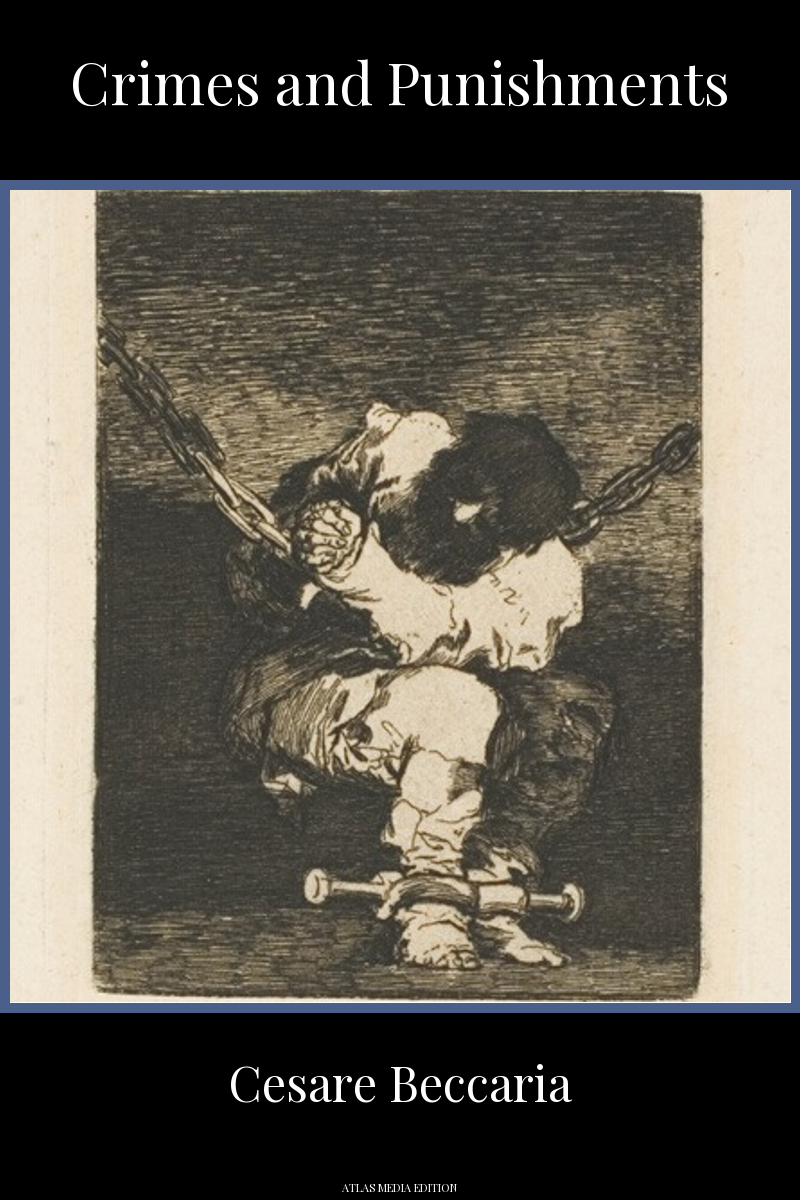
- Novel
Crimes and Punishments
- Published: 1764
- Atlas edition: V1.3 ·
- Language: Italian
ABOUT THE AUTHOR
Cesare Beccaria
1849–1925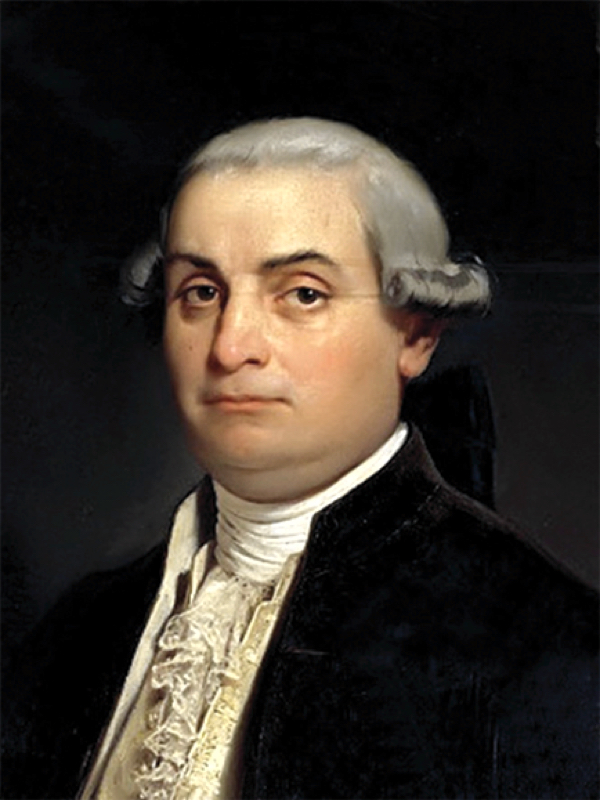
Cesare Beccaria wrote Dei Delitti e delle Pene, first published in 1764. The supplied text describes him as a native of Milan, then part of the Austrian dominions under Count Firmian, and as not a lawyer by profession. His circle included Pietro Verri and the periodical Il Caffè. The book was translated into French by the Abbé Morellet in 1766. The contents also mention his invitation to St. Petersburg and his later lectures on political economy.
ABOUT THE WORK
Crimes and Punishments
Crimes and Punishments, by Cesare Beccaria, is a short treatise on criminal law that argues for reform of the way states accuse, judge and punish. The edition supplied here is James Anson Farrer’s 1880 English volume, published in London by Chatto and Windus, which presents a new translation of Beccaria’s Italian work, Dei Delitti e delle Pene, together with four introductory chapters by the translator.
Farrer explains in his preface why he translated the book afresh. He calls it a classical work whose interest is far from merely historical. An older English translation existed, but the order of chapters and paragraphs changed so much before the work reached its final form that the old and new versions are effectively different books. Farrer says he aimed to combine clarity with fidelity, and he chose not to add criticism or commentary, leaving annotation to the reader.
The introductory chapters set the scene. The first describes Beccaria’s life and character. He was a native of Milan, then under Austrian rule and governed by Count Firmian, whose administration brought reforms to Lombardy. Yet the penal laws and the procedure of torture remained untouched. Farrer notes that the book was first published in 1764, ran through several editions, and was translated into French by the Abbé Morellet in 1766 before reaching most European languages. The contents list also points to Beccaria’s circle, including Pietro Verri, to Voltaire’s commentary, and to the author’s later invitation to St. Petersburg.
The second and third chapters trace the book’s influence on legislation, in Russia, France, Tuscany, Austria, Pennsylvania and especially England. The fourth discusses the wider problems of penology, including the purpose of punishment, proportion between crime and penalty, and the failure of repeated convictions to reform offenders.
The translated treatise itself follows in forty-two short chapters. It begins with the origin of punishments and the right to punish, then turns to the interpretation and obscurity of laws, imprisonment, proofs, witnesses, secret accusations, oaths and torture. Beccaria then considers the mildness, promptness and certainty of punishments, and the problem of capital punishment. Later chapters treat banishment, confiscation, infamy, pardons, proportion and measure in penalties, treason, violence, duels, theft, smuggling, debtors, suicide and crimes of difficult proof. The closing chapters examine false ideas of utility, family spirit, the treasury, and the prevention of crimes through knowledge, good magistrates and rewards.
Farrer prefaces the text with epigraphs from Thucydides, who doubted that terror can deter determined people, and from Montaigne, who lamented condemnations more criminal than the crimes. These set the tone of a work that questions the assumption that severity secures order. The volume therefore serves both as a translation and as a guide to the historical reception of Beccaria’s argument.
WHY IT MATTERS
Why Crimes and Punishments matters
Beccaria’s treatise matters because it treats punishment as something that must justify itself by its results rather than by tradition or vengeance. The contents of this edition show the method: each chapter asks what a penalty achieves, whether it is certain, whether it is prompt, and whether it is proportioned to the harm done. That habit of testing law against reason helped make criminal justice a subject for public argument.
Farrer’s introduction stresses the practical consequence. He presents Beccaria as the writer to whom the present inconceivability of torture is largely due, and as the first advocate of abolishing capital punishment. Whatever one thinks of those claims, they show why the book was read as a call to action and not only as theory. The chapter list on English reform, naming Blackstone, Romilly and the struggle with the House of Lords, shows how slowly such ideas turned into statute.
The book also remains worth reading for its tension between mercy and effectiveness. Beccaria does not ask for leniency out of sentiment alone. He argues that excessive cruelty hardens a society and that uncertain punishment teaches less than sure and moderate punishment. Farrer’s fourth chapter carries this into questions still debated, such as repeat offenders, the purpose of imprisonment and the indirect prevention of crime.
This edition adds a second layer of interest. Farrer’s preface admits that Beccaria sometimes wrote obscurely, and the contents note the author’s fear of ecclesiastical persecution. Readers therefore see a work shaped by the dangers of its time, and a translator who chose to preserve its shadows as well as its clarity.
For modern readers, the treatise offers a compact starting point for the history of human rights and legal reform. It shows how a short book by a non-lawyer could challenge entrenched institutions, and why its questions about proof, fairness and the limits of state power are still asked today.
Edition Record
- First publication
- 1764
- Textual basis
- Source text: Project Gutenberg, https://www.gutenberg.org/ebooks/58700
- Atlas edition
- V1.3 ·
- Language
- Italian
Prepared from the recorded source and the reviewed Atlas working edition.
Accessibility: EPUB and PDF are offered where approved; accessibility features have not been independently certified.
Source & Rights
- Text source
- Project Gutenberg
Crimes and Punishments by Farrer, James Anson. Source text prepared from Project Gutenberg ebook 58700.