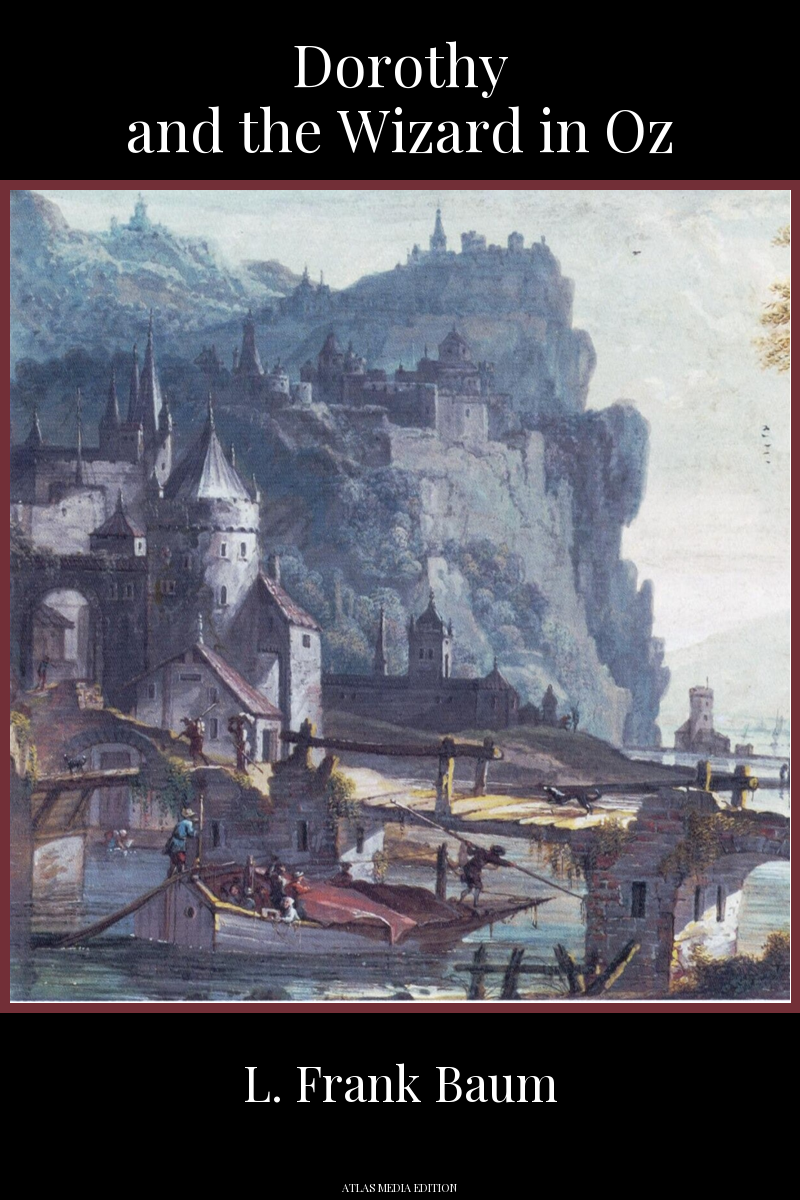
- Novel
Dorothy and the Wizard in Oz
- Published: 1908
- Atlas edition: V1.3 ·
- Language: English
ABOUT THE AUTHOR
L. Frank Baum
1856–1919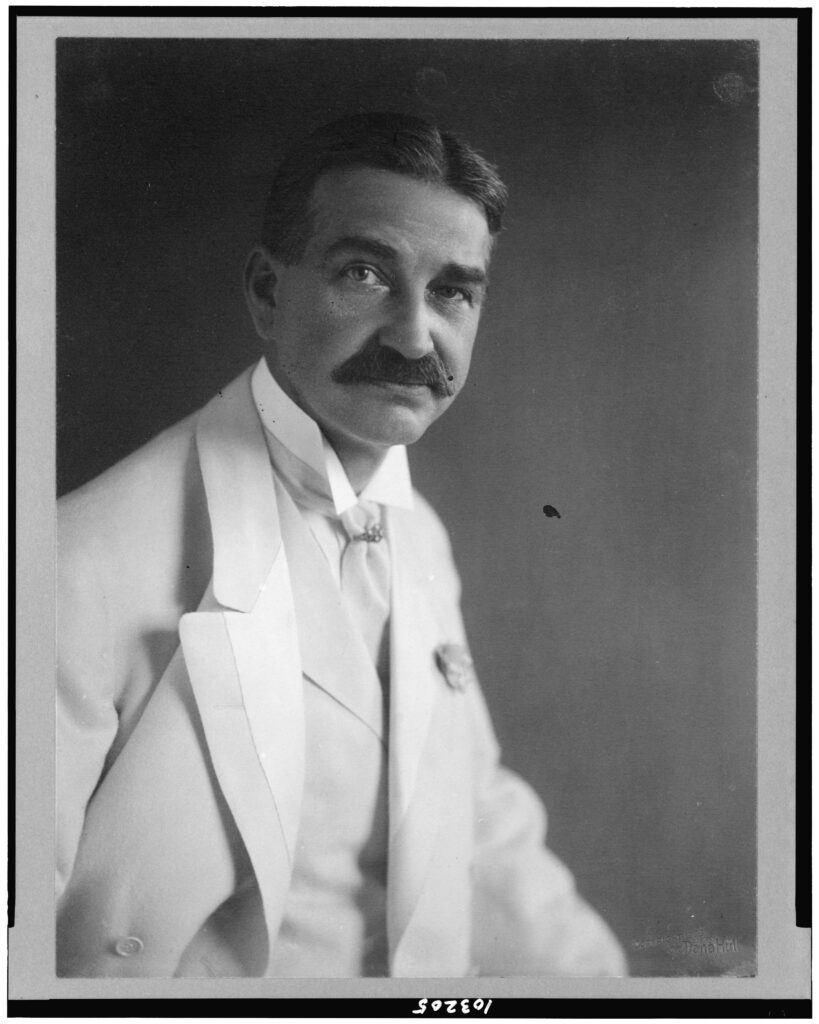
L. Frank Baum was an American author best known for creating the land of Oz. Before finding lasting success in children’s literature, he worked in theatre, journalism, retail and publishing, experiences that helped shape his interest in performance, popular entertainment and the possibilities of a distinctly American fairy tale.
The Wonderful Wizard of Oz appeared in 1900 with illustrations and colour design by W. W. Denslow. Baum returned to Oz across a long sequence of books, expanding its geography and characters while responding to generations of young readers. His work helped move children’s fantasy away from inherited European settings toward modern machinery, prairie landscapes and self-invented heroes. Baum’s legacy is also complicated by racist newspaper editorials attributed to him in the 1890s; those writings should be acknowledged rather than hidden when his life and cultural influence are discussed.
ABOUT THE WORK
Dorothy and the Wizard in Oz
Dorothy and the Wizard in Oz is a children’s fantasy novel by L. Frank Baum, the fourth of his Oz books. It opens in California, where Dorothy Gale, travelling to a ranch near Hugson’s Siding, is swallowed with a farm boy named Zeb and a cab-horse named Jim by a great earthquake.
They fall into the underground world of the Mangaboos and then journey on toward the Land of Oz. Along the way they meet the humbug Wizard, Dorothy’s kitten Eureka and the Nine Tiny Piglets, and face strange peoples and perils. It is a quest story of danger, rescue and homecoming.
WHY IT MATTERS
Why read it
This is the Oz book that begins with the ground itself giving way, and it never quite lets you stand still again.
Baum wrote it because children asked for it. His preface says they cried “Oz—Oz! more about Oz, Mr. Baum!” and wanted to know what became of the Wizard after his balloon rose into the sky. That is a rare thing to find at the foot of a classic: a living conversation between an author and his readers. Reading it, you can hear that bargain being kept. The adventure moves fast, the creatures are odd, and the tone is warm and a little mischievous.
It also gives you a gentler, funnier Oz than the film tradition suggests, with a cab-horse who has more sense than most heroes.
Reading it closely
The opening shows how Baum builds a scene from plain, concrete detail.
The first chapter is a small masterclass in controlled ordinariness. A late train, a wicker suitcase, a birdcage covered in newspapers, a parasol tucked under an arm: the particulars are domestic and exact. Then Jim appears, tall and bony, his harness mended with cords and bits of wire, and the horse is made lovable before anything marvellous happens. Dialogue does the characterising. Zeb’s cheerful remark that earthquakes do not scare Californians much is promptly answered by the ground opening beside the buggy.
The structure is episodic, a descent followed by a series of encounters, each with its own society and its own rule of logic. Baum’s method is to take one odd premise and follow it with straight-faced calm. Danger is real, yet the voice stays light, and that tension is the book’s chief effect.
The humbug Wizard returns as a figure of modest, self-aware trickery. His honesty about being a fraud is exactly what the preface says children loved in him.
The prose is clear and sociable, written to be read aloud, and it trusts its audience.
Then and now
The book appeared on June 18, 1908, and reunited Dorothy with the Wizard of The Wonderful Wizard of Oz (1900).
Its preface, dated Coronado, 1908, shows it arriving on a wave of demand after the success of Ozma of Oz. The evidence supplied here does not document detailed reviews, so the safest claim is that the author himself presented it as a response to a loyal young readership.
Today it is often read as part of the long Oz series rather than as a standalone, and it is freely available in public domain editions, including Standard Ebooks. Its reputation rests on its inventiveness and its affectionate cast.
A way in
Start with the preface, which tells you exactly why the book exists, then read the first chapter slowly.
Watch how Baum introduces Jim and Eureka before the earthquake, so that the strange world arrives through characters you already care about. Read it aloud if you can, since the style was made for the ear.
Edition Record
- First publication
- 1908
- Textual basis
- Source text: Standard Ebooks, https://standardebooks.org/ebooks/l-frank-baum/dorothy-and-the-wizard-in-oz
- Atlas edition
- V1.3 ·
- Language
- English
Prepared from the recorded source and the reviewed Atlas working edition.
Accessibility: EPUB and PDF are offered where approved; accessibility features have not been independently certified.
Source & Rights
- Text source
- Standard Ebooks

Dorothy and the Wizard in Oz by L. Frank Baum. Source text prepared from the Standard Ebooks edition (https://standardebooks.org/ebooks/l-frank-baum/dorothy-and-the-wizard-in-oz).