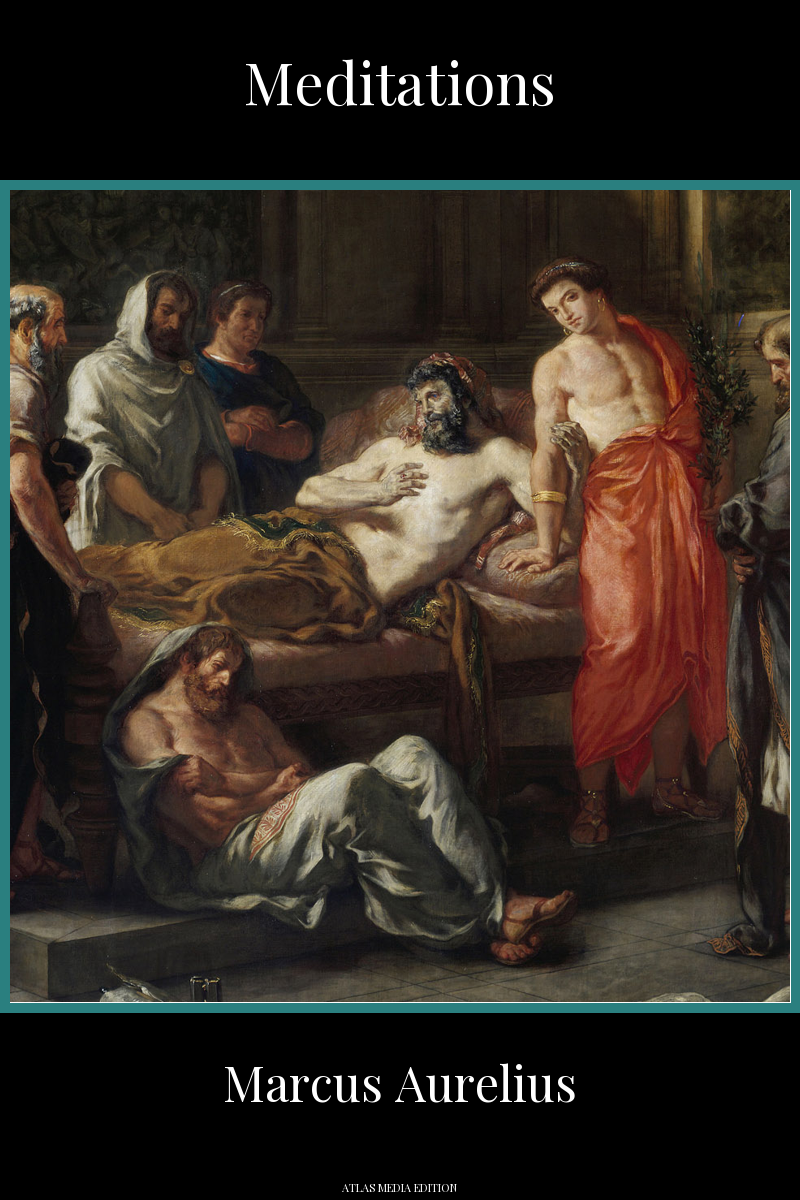
- Novel
Meditations
- Published: 1558
- Atlas edition: V1.3 ·
- Language: Koine Greek
ABOUT THE AUTHOR
Marcus Aurelius
121–180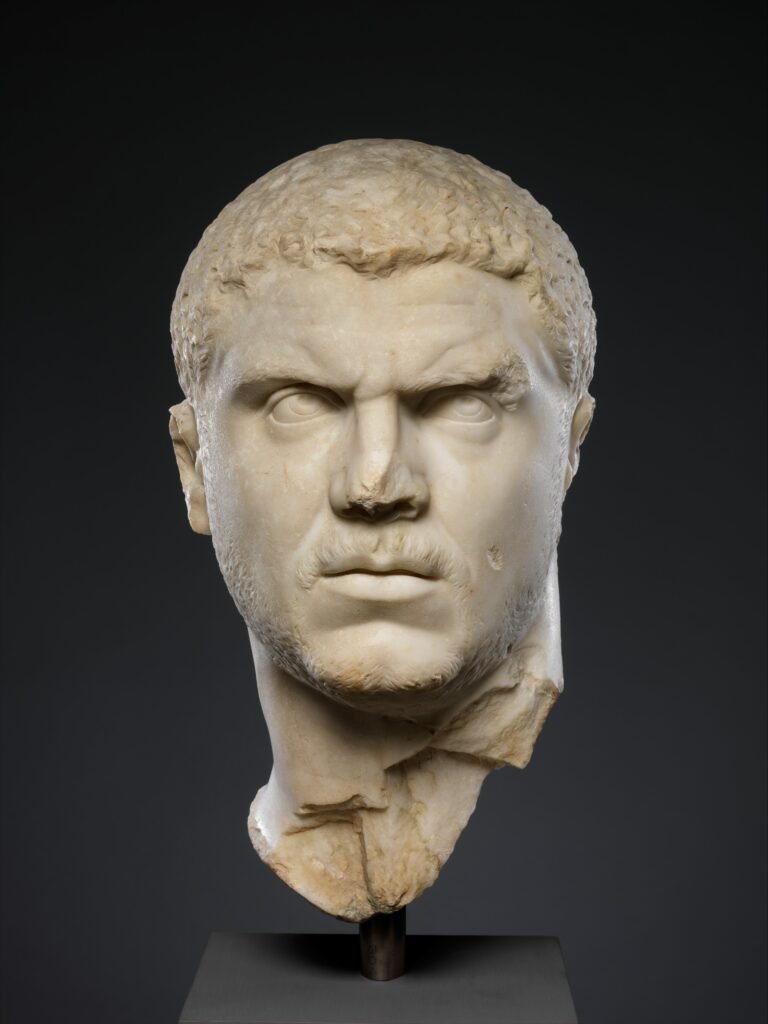
Marcus Aurelius (121 to 180 AD) was Roman emperor from 161 to 180 and a Stoic philosopher, the last of the rulers later known as the Five Good Emperors.
His reign saw long wars on the empire’s frontiers. While on campaign between 170 and 180 he wrote his Meditations in Greek, as private notes for his own guidance and self-improvement.
ABOUT THE WORK
Meditations
Meditations is the private notebook of Marcus Aurelius, Roman emperor from 161 to 180 AD, in which he wrote down reminders to himself about how to live well. Composed in Greek between about 170 and 180 AD, much of it while he was on military campaign, it is one of the best-known works of Stoic philosophy. This Atlas Media edition uses George Long’s English translation, published under the title Thoughts of Marcus Aurelius Antoninus.
Marcus probably never meant the book to be read by anyone else. It has no official title; Meditations is one of several names later given to it, and the oldest manuscripts call it, in Greek, “to himself”. It is made up of twelve books of short entries, some a single sentence, others a page or more, in no strict order.
The first book is different from the rest. In it Marcus lists what he learned from the people who shaped him: his grandfather, his mother, his tutors and his adoptive father, the emperor Antoninus Pius. From one he learned patience, from another to read carefully, from another to take criticism without anger. It is a portrait of gratitude.
The other books return again and again to a few great themes. Life is short, and everything passes quickly; emperors and slaves alike are soon forgotten. Death is natural and nothing to fear. What disturbs us is not events themselves but our judgements about them, and those judgements are within our power.
Marcus reminds himself to do his duty each day, even when he would rather stay in bed. He tells himself to expect to meet people who are meddling, ungrateful or unkind, and to remember that they act from ignorance and that he is bound to them as a fellow human being. Anger, he writes, does more harm than the things that cause it.
He also asks himself to see things from a cosmic perspective: to consider how small one life is within the whole of time and the universe, and to accept his place in the order of nature with calm.
The writing is plain and direct. Marcus is not lecturing others but arguing with himself, correcting his own faults, and encouraging himself to stay steady. That honesty gives the book much of its power.
Long’s Victorian translation is careful and slightly formal. He kept close to the Greek and added notes for readers unfamiliar with Stoic ideas.
WHY IT MATTERS
Why Meditations matters
Meditations matters because it shows a man with almost unlimited power trying, day by day, to be fair, patient and humble. Few books give such a direct view into the private thoughts of a ruler, and fewer still show one so concerned with his own shortcomings.
Stoic philosophy in Meditations
The book is one of the main sources for later Stoic thought. Its practical ideas, that we should attend to what is in our control, accept what is not, and judge events calmly, have shaped writers, thinkers and leaders for centuries. Many readers today come to Meditations through modern interest in Stoicism as a guide to resilience and clear thinking.
Reading Meditations today
The book also reflects its time. Marcus wrote as emperor of a vast state built on conquest and slavery, and he led long wars on the empire’s northern frontier while writing about calm and kindness. Readers can ask how his ideals sat with the realities of his power.
The book’s influence reaches well beyond philosophy. Its short, quotable entries have been read by soldiers, statesmen, writers and ordinary readers looking for steadiness in difficult times, and it remains one of the most widely read works to survive from ancient Rome.
Meditations survived almost by chance. The modern history of the work begins with its first printed edition, made by Wilhelm Xylander in 1558 from a manuscript later lost.
Because it is made of short entries, the book suits slow reading: a few lines a day, returned to over time. Its questions, how to act well, how to face loss and how to keep perspective, belong to everyone.
Edition Record
- First publication
- 1558
- Textual basis
- Source text: Project Gutenberg, https://www.gutenberg.org/ebooks/15877
- Atlas edition
- V1.3 ·
- Language
- Koine Greek
Prepared from the recorded source and the reviewed Atlas working edition.
Accessibility: EPUB and PDF are offered where approved; accessibility features have not been independently certified.
Source & Rights
- Text source
- Project Gutenberg

Meditations by Marcus Aurelius, Emperor of Rome; translated by Long, George. Source text prepared from Project Gutenberg ebook 15877.