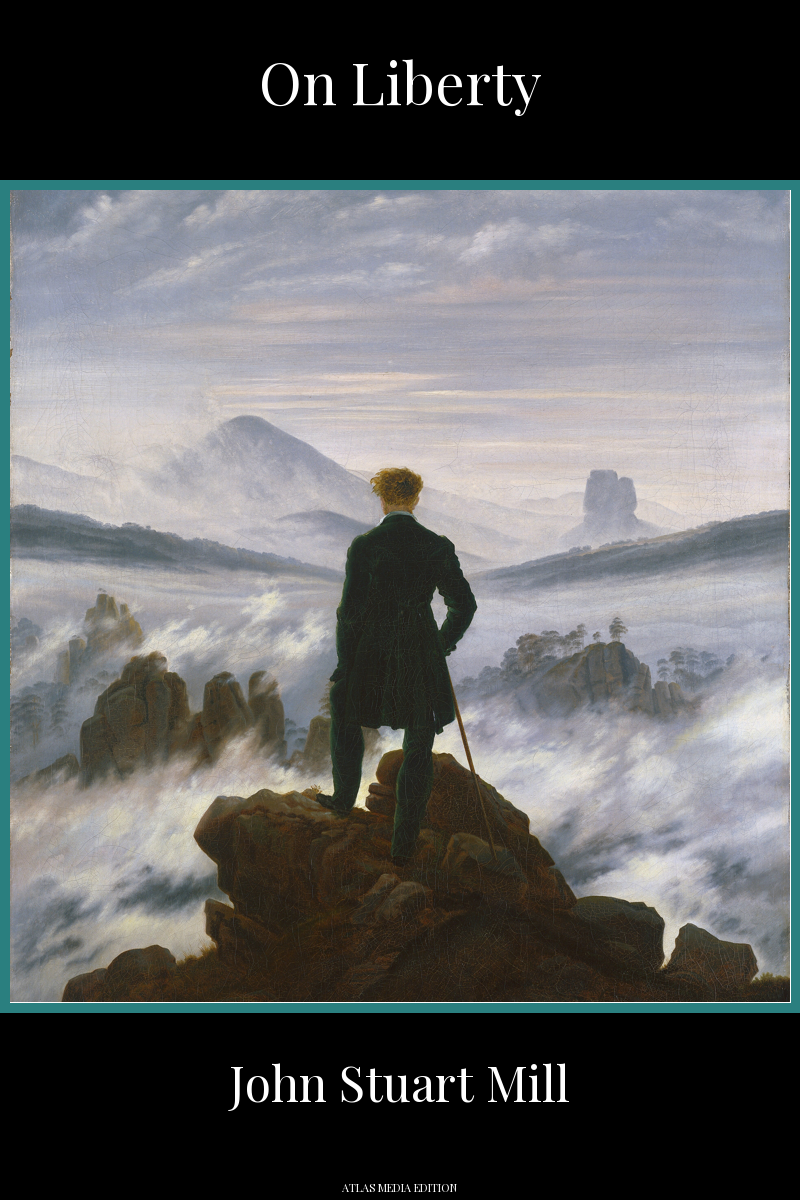
- Novel
On Liberty
- Published: 1859
- Atlas edition: V1.3 ·
- Language: English
ABOUT THE AUTHOR
John Stuart Mill
1806–1873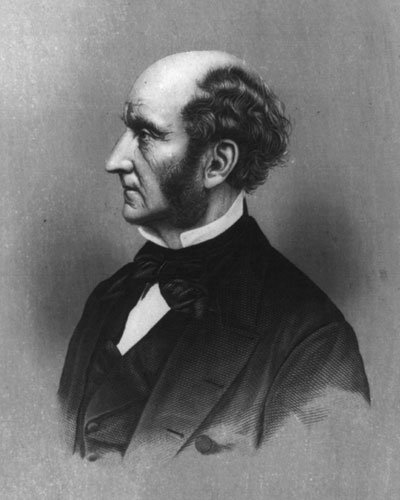
John Stuart Mill (1806 to 1873) was an English philosopher, political economist and politician, one of the most influential English-speaking philosophers of the nineteenth century.
He argued for the freedom of the individual against unlimited state and social control and formulated the harm principle. He also advocated proportional representation, the emancipation of women and the development of labour organisations and cooperatives. His major works include On Liberty (1859) and Utilitarianism.
ABOUT THE WORK
On Liberty
On Liberty is John Stuart Mill’s essay on the limits of the power that society may rightfully hold over the individual. Published in 1859, it argues for freedom of thought, discussion and personal life, and it remains one of the most influential works of liberal political thought.
Mill begins by noting that the old struggle between subjects and rulers has changed. Once people govern themselves, it might seem that liberty is safe. Mill warns otherwise: majorities can oppress minorities, and the pressure of social opinion can be more thorough than any law. He calls this the tyranny of the majority.
His answer is a single principle. The only purpose for which power can rightfully be exercised over any member of a civilised community, against his will, is to prevent harm to others. A person’s own good, physical or moral, is not enough. This idea is now usually called the harm principle.
The second chapter, on liberty of thought and discussion, is the most famous. Mill argues that silencing an opinion is wrong even if it is false. If the opinion is true, we lose the truth. If it is false, we lose the clearer understanding of truth that comes from its collision with error. Most often, he says, opinions are partly true and partly false, and only open debate can sort them.
The third chapter defends individuality. Mill admires people who make their own choices and develop their own characters, and he worries about a society in which custom and conformity crush originality. Experiments in living, he argues, benefit everyone.
Mill then considers where the authority of society should begin. Conduct that affects only oneself should be free; conduct that harms others may be regulated, by law or by opinion. Mill also defends people’s freedom to combine with others for any purpose that does not harm third parties, and he treats freedom of conscience, of tastes and pursuits, and of association as the core liberties of a free society.
The final chapter applies these ideas to practical questions, including trade, the sale of poisons, drunkenness, education and the role of the state.
Mill published the essay under his own name, but he described it as a joint production with his wife, Harriet Taylor Mill, who died in 1858 while the final draft was nearly complete. He dedicated it to her memory.
WHY IT MATTERS
Why On Liberty matters
On Liberty matters because its central questions are still argued over in parliaments, courts and newsrooms. How far may government or society interfere in private life? When does speech become harmful? What do we gain by protecting opinions we think are wrong?
The harm principle in On Liberty
Mill’s harm principle gives a clear test, and its clarity is what makes it useful and contested. Critics ask what counts as harm, whether offence can be harm, and how to treat actions that affect others only indirectly. Reading On Liberty in full shows how Mill himself handled these hard cases, and where he left them open.
Free speech and On Liberty
The case for open discussion in chapter two is one of the classic defences of free expression. Mill’s point is not only that people have a right to speak, but that everyone benefits when ideas are tested. That argument is often quoted in modern debates about censorship, the press and online speech.
The essay also reflects its time. Mill wrote about “civilised” and “backward” societies in ways that modern readers will question, and his discussion of colonial rule has drawn criticism. Recent scholarship has also given more attention to Harriet Taylor Mill’s share in the work.
Mill’s concern with social pressure, not just legal force, also feels current. He worried about people who conform out of habit or fear of disapproval, and asked what a society loses when nobody dares to be different.
The book has remained in print since 1859. For anyone thinking about liberty, democracy, tolerance and the role of the state, it is a short, clear and still provocative starting point.
Edition Record
- First publication
- 1859
- Textual basis
- Source text: Project Gutenberg, https://www.gutenberg.org/ebooks/34901
- Atlas edition
- V1.3 ·
- Language
- English
Prepared from the recorded source and the reviewed Atlas working edition.
Accessibility: EPUB and PDF are offered where approved; accessibility features have not been independently certified.
Source & Rights
- Text source
- Project Gutenberg

On Liberty by Mill, John Stuart. Source text prepared from Project Gutenberg ebook 34901.