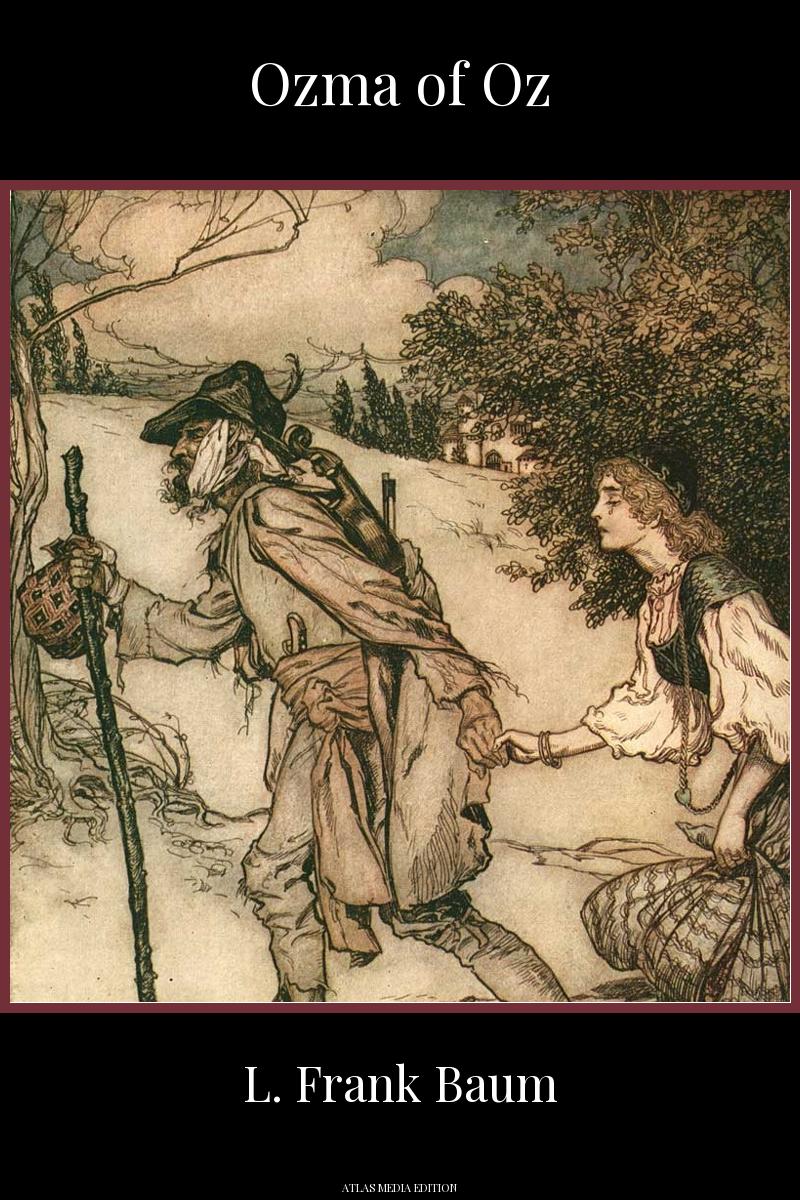
- Novel
Ozma of Oz
- Published: 1907
- Atlas edition: V1.3 ·
- Language: English
ABOUT THE AUTHOR
L. Frank Baum
1856–1919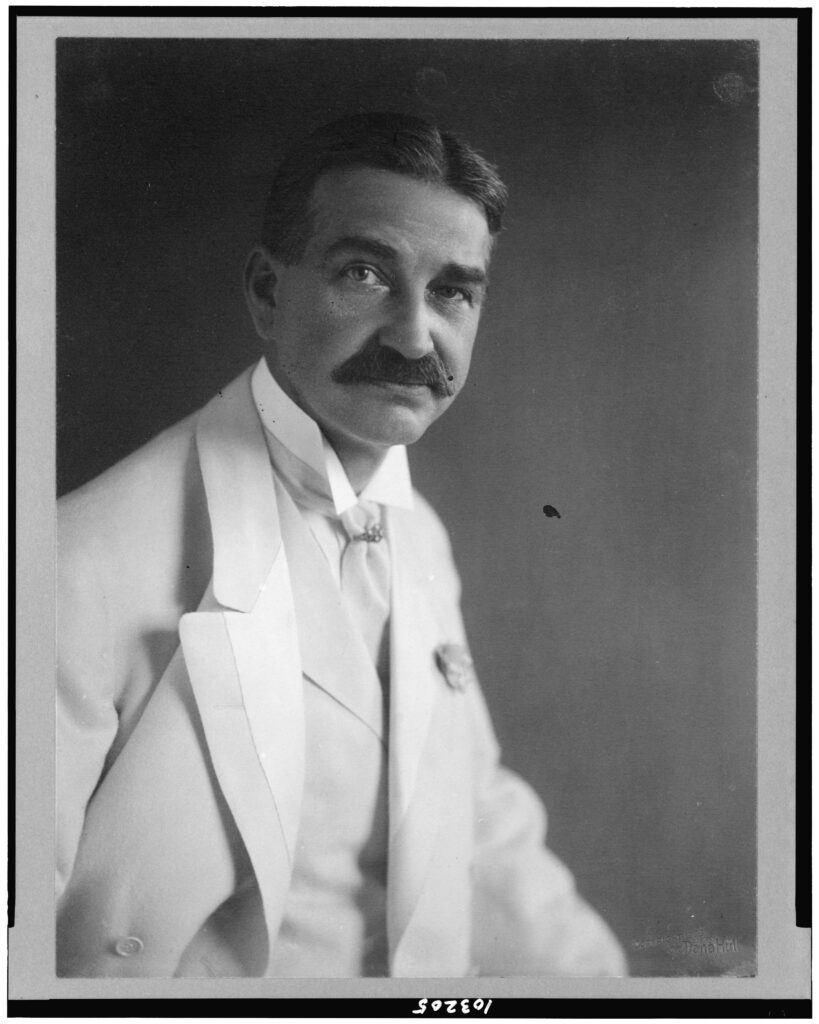
L. Frank Baum was an American author best known for creating the land of Oz. Before finding lasting success in children’s literature, he worked in theatre, journalism, retail and publishing, experiences that helped shape his interest in performance, popular entertainment and the possibilities of a distinctly American fairy tale.
The Wonderful Wizard of Oz appeared in 1900 with illustrations and colour design by W. W. Denslow. Baum returned to Oz across a long sequence of books, expanding its geography and characters while responding to generations of young readers. His work helped move children’s fantasy away from inherited European settings toward modern machinery, prairie landscapes and self-invented heroes. Baum’s legacy is also complicated by racist newspaper editorials attributed to him in the 1890s; those writings should be acknowledged rather than hidden when his life and cultural influence are discussed.
ABOUT THE WORK
Ozma of Oz
Ozma of Oz is a children’s fantasy novel, the third in L. Frank Baum’s Oz series. Dorothy Gale, the Kansas girl from the first book, sails for Australia with Uncle Henry. A storm sweeps her overboard on a chicken-coop, and she drifts to a strange shore.
She is joined by Billina, a talking yellow hen. Dorothy meets Tik-Tok, the clockwork man, and the Hungry Tiger, and is drawn toward Ozma, the young ruler of Oz. The book is a quest adventure, and it brings back old favorites from earlier Oz stories.
WHY IT MATTERS
Why read it
This is the book where Oz becomes a world rather than a single story.
Baum opens with a storm, a ship and a girl on a chicken-coop, and the book never loses that gleeful sense of danger taken lightly. It gives a reader something rare: an adventure in which a child is brave, practical and unimpressed, and in which the fantasy is plain-spoken rather than hushed. Dorothy talks to herself with cheerful good sense: “You’re in a pretty fix, Dorothy Gale, I can tell you!”
Readers who know only the famous first book will find a stranger, wider and funnier Oz here. It also shows how a series is born, because the author is answering his young readers in real time.
Reading it closely
The prose is the first thing to notice. Baum writes in a storyteller’s voice that addresses the reader directly: “you may be sure,” “you must know,” “I think.” The narrator is a companion who shares a joke and a worry, and that warmth makes the peril safe to enjoy.
The opening shows his method. The wind is given a personality, “mischievous” and then “enraged,” so the storm becomes a character with a grudge rather than an abstract threat. The chickens, blown about “like feather dusters without handles,” turn terror into comedy within a single image. Scale shifts as well: the great ship shrinks to a “toy boat” while the humble coop becomes “a ship of my own.” Dorothy’s mind makes that second change, and it is her resilience that the book celebrates.
Structure follows a quest pattern. Characters are collected, obstacles meet them, and old friends return. The Author’s Note shows the design, since readers’ letters asked about Dorothy, the Cowardly Lion and Ozma. Baum even reports that a young reader called Billina “real Ozzy,” which reveals that Oz was already becoming a defined imaginative place with its own rules.
Then and now
Ozma of Oz was published in 1907, with the author’s note dated Macatawa, 1907. Baum presents it as a response to children’s letters, so its first audience was clearly a devoted one that wanted the series to continue.
Its reputation has settled as a key early sequel. Readers of the series value it for introducing Ozma, Tik-Tok and Billina, and for widening the geography of Oz beyond the first book. It sits in the shadow of the first Oz novel, yet it is often the one that persuades readers the series is more than a single success.
A way in
Start with the opening chapter, which works on its own as a small sea adventure. Notice how Baum switches between humor and danger, and how Dorothy’s calm sets the tone. Read the Author’s Note too: it explains why the book exists. If you haven’t read the earlier Oz books, you can still follow the story easily.
Edition Record
- First publication
- 1907
- Textual basis
- Source text: Standard Ebooks, https://standardebooks.org/ebooks/l-frank-baum/ozma-of-oz
- Atlas edition
- V1.3 ·
- Language
- English
Prepared from the recorded source and the reviewed Atlas working edition.
Accessibility: EPUB and PDF are offered where approved; accessibility features have not been independently certified.
Source & Rights
- Text source
- Standard Ebooks

Ozma of Oz by L. Frank Baum. Source text prepared from the Standard Ebooks edition (https://standardebooks.org/ebooks/l-frank-baum/ozma-of-oz).