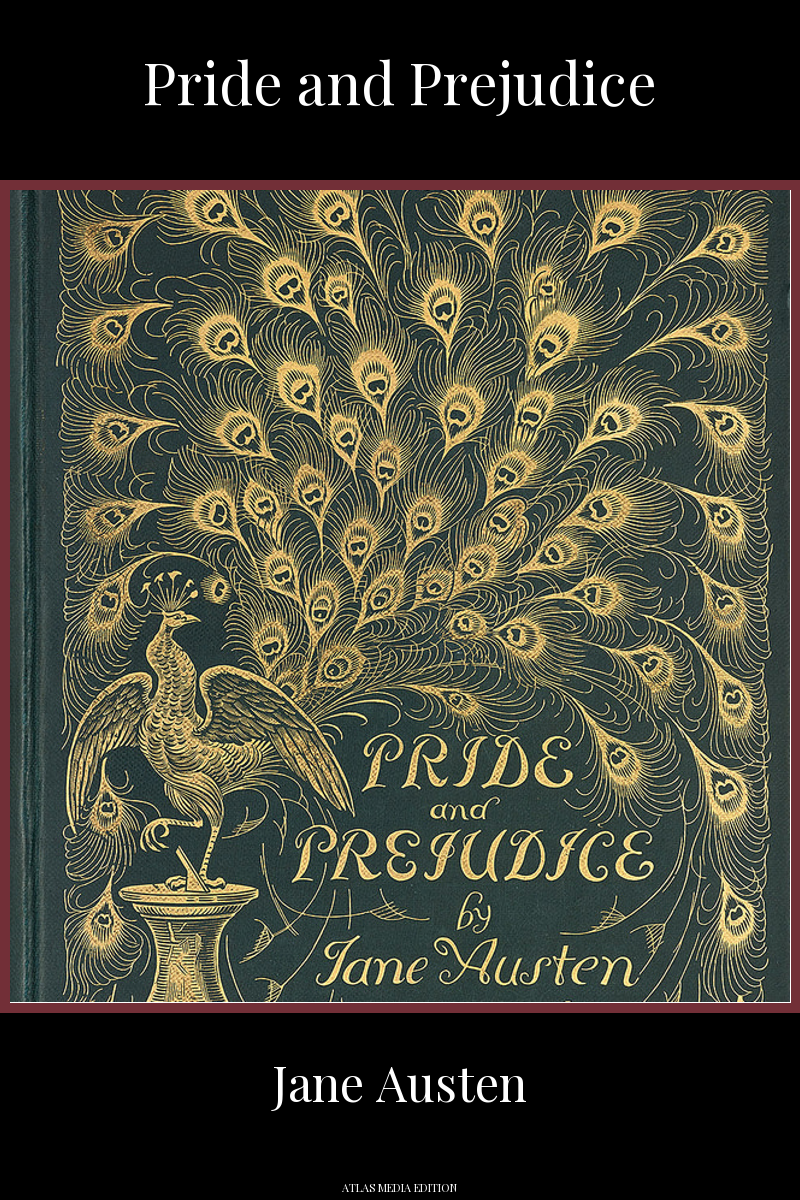
- Novel
Pride and Prejudice
- Published: 1813
- Atlas edition: V1.3 ·
- Language: English
ABOUT THE AUTHOR
Jane Austen
1775–1817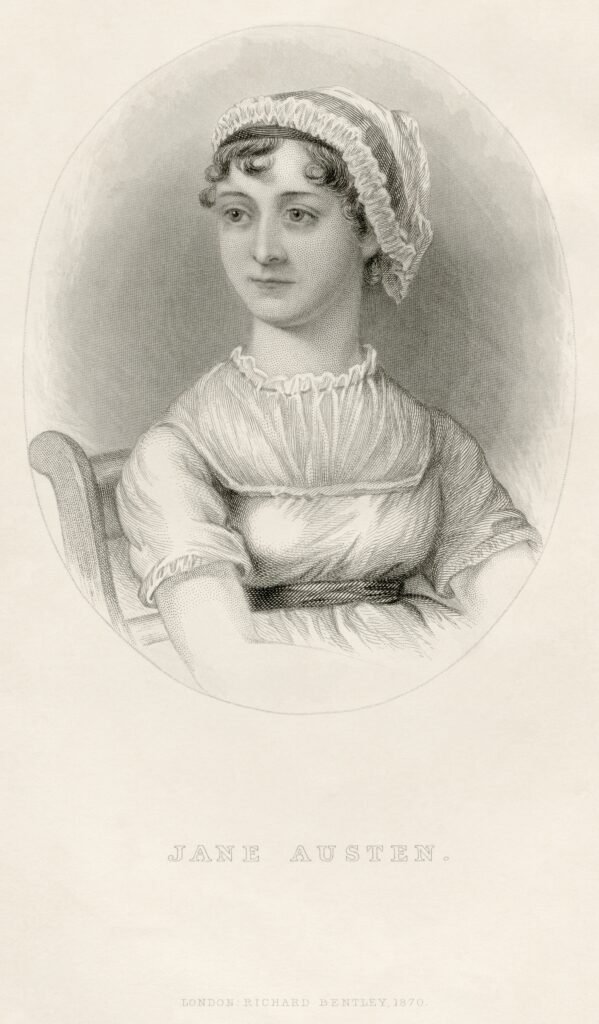
Jane Austen (1775 to 1817) was an English novelist known for six major novels that observe and comment on the English landed gentry at the end of the eighteenth century.
Her novels, published anonymously in her lifetime, include Sense and Sensibility (1811), Pride and Prejudice (1813), Mansfield Park (1814) and Emma (1815). Northanger Abbey and Persuasion were published after her death in 1817. Her wit, irony and realism have earned her lasting acclaim from critics and readers.
ABOUT THE WORK
Pride and Prejudice
Pride and Prejudice is Jane Austen’s comedy of manners about love, money and misjudgement in English country society. Published in 1813, it follows Elizabeth Bennet, the second of five daughters, as she learns how far first impressions can mislead.
The Bennets live at Longbourn in Hertfordshire. The estate is entailed, so it must pass to a male heir, a distant cousin, and the daughters will have little to live on unless they marry well. Mrs Bennet’s urgent hopes and Mr Bennet’s dry detachment frame the comedy from the opening line.
The arrival of the wealthy Mr Bingley at nearby Netherfield sets the story moving. Bingley is quickly drawn to Jane, the eldest Bennet sister. His friend Mr Darcy, richer still, offends Elizabeth at a local ball by refusing to dance with her and remarking that she is not handsome enough to tempt him.
Elizabeth’s dislike deepens when the charming officer George Wickham tells her that Darcy cheated him of an inheritance. Meanwhile Bingley leaves Netherfield abruptly, and Jane is left hurt and puzzled. The pompous clergyman Mr Collins, heir to Longbourn, proposes to Elizabeth and is refused, then marries her practical friend Charlotte Lucas instead.
Darcy’s own proposal comes as a shock. He declares his love while making plain how far beneath him he considers her family, and Elizabeth rejects him with spirit. His letter the next day changes everything: it explains his part in separating Bingley from Jane and reveals the truth about Wickham’s past.
Elizabeth begins to see that her judgement has been shaped by her own pride and prejudice. A visit to Pemberley, Darcy’s estate in Derbyshire, shows her a gentler man, respected by those who know him best.
The crisis comes when her youngest sister, Lydia, runs away with Wickham, threatening the whole family’s reputation. Darcy quietly arranges their marriage at his own expense. In the closing chapters Jane and Bingley are reunited, and Elizabeth and Darcy, each changed by the other, come to an understanding.
Around the central couple, Austen builds a crowd of memorable minor characters. Lady Catherine de Bourgh, Darcy’s overbearing aunt, tries to forbid the match and only hastens it. Mr Collins flatters his patroness at every turn. Mary Bennet moralises, Kitty follows Lydia, and Mrs Bennet’s nerves are a running joke.
Austen wrote an early version of the novel in her early twenties, under the title First Impressions, and revised it before publication. The finished book was published anonymously, as the work of “the author of Sense and Sensibility”.
Austen tells the story with sharp irony and much of it through dialogue. Her narrator rarely lectures; instead, readers watch characters reveal themselves through what they say and what they overlook.
WHY IT MATTERS
Why Pride and Prejudice matters
Pride and Prejudice matters because it showed how much a novel could say about society through the small events of ordinary life. Dances, visits, letters and conversations carry questions about class, money, marriage and independence that were serious for women of Austen’s time.
Money and marriage in Pride and Prejudice
The entail on Longbourn is not background detail. It explains why marriage was a financial question for the Bennet sisters, and why Charlotte Lucas accepts Mr Collins. Reading Pride and Prejudice with this in mind, its comedy also becomes a clear-eyed account of how limited women’s choices were.
Why readers return to Pride and Prejudice
The book is also a study of judgement. Elizabeth is clever and confident, yet she is wrong about the people around her, and she has to admit it. That arc, from certainty to self-knowledge, gives the novel a moral depth beneath its wit.
Austen’s style has been widely admired and imitated. Her use of free indirect speech, in which the narration slips into a character’s own thoughts, influenced the development of the modern novel. The book has remained in print since 1813 and has inspired many adaptations for stage, film and television.
The novel also asks what makes a good marriage. Elizabeth’s parents are a warning: a match made on looks and youth has left them with little respect for each other. Against that, Pride and Prejudice sets a partnership founded on honesty, mutual correction and esteem.
Reading the original lets readers hear Austen’s voice directly: the irony of the narrator, the precision of the dialogue, and the slow, satisfying correction of first impressions.
Edition Record
- First publication
- 1813
- Textual basis
- Source text: Project Gutenberg, https://www.gutenberg.org/ebooks/1342
- Atlas edition
- V1.3 ·
- Language
- English
Prepared from the recorded source and the reviewed Atlas working edition.
Accessibility: EPUB and PDF are offered where approved; accessibility features have not been independently certified.
Source & Rights
- Text source
- Project Gutenberg

Pride and Prejudice by Austen, Jane. Source text prepared from Project Gutenberg ebook 1342.