- Novel
Rights of Man
- Published: 1791
- Atlas edition: V1.3 ·
- Language: English
ABOUT THE AUTHOR
Thomas Paine
1737–1809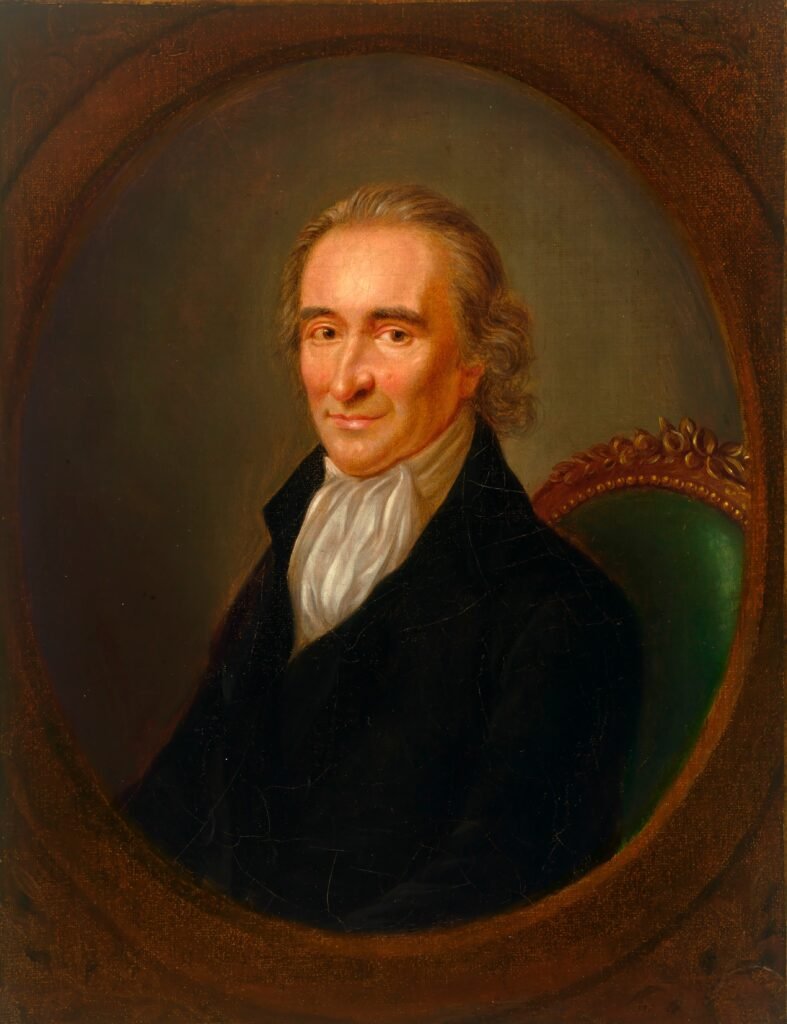
Thomas Paine (1737–1809) was an English-born writer and political thinker whose pamphlets helped shape the American and French revolutions. Born in Thetford, Norfolk, he worked as a corset-maker and an excise officer before emigrating to Philadelphia in 1774 with a letter of introduction from Benjamin Franklin. Common Sense, published in January 1776, made him one of the most widely read writers in America.
His American Crisis essays followed during the war. In Rights of Man (1791–92) he defended the French Revolution, and he was elected to France’s National Convention, then imprisoned during the Terror. The Age of Reason (1794–1807) criticised organised religion and damaged his reputation in America. He died in New York in 1809.
ABOUT THE WORK
Rights of Man
Rights of Man is Thomas Paine’s defence of the French Revolution and of the right of every generation to govern itself. Published in two parts, in 1791 and 1792, it argues that rights belong to people by nature, that governments exist only to protect them, and that a nation may change a government that fails to do so. This Atlas Media edition comes from the second volume of Paine’s collected writings, edited by Moncure Daniel Conway, which contains both parts in full with Conway’s introduction.
Paine wrote Part One in reply to Edmund Burke’s Reflections on the Revolution in France (1790). Burke had attacked the revolution and defended inherited institutions, tradition and the British constitution as the wisdom of past generations.
Paine answers that no generation can bind those that come after it. The dead have no authority over the living, and every age must be free to act for itself. He mocks Burke’s lament for Marie Antoinette, saying Burke “pities the plumage, but forgets the dying bird”: he grieves for royalty while ignoring the suffering of ordinary people.
Natural rights, Paine argues, come before any law or charter. People enter society not to give up their rights but to secure them. A charter that grants rights to some, he says, in fact takes them away from the rest. Hereditary government is absurd: wisdom is not inherited, so why should power be?
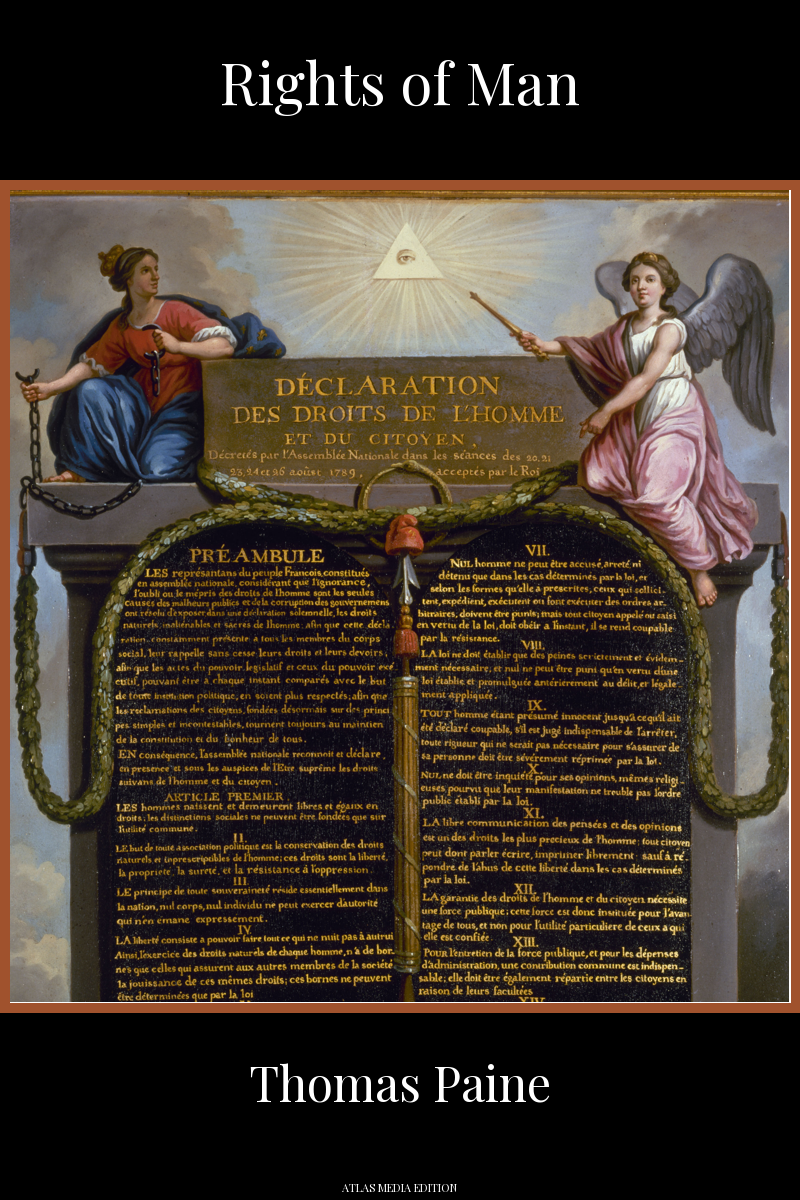
Part One also gives Paine’s account of events in France, from the fall of the Bastille onward, and includes the text of the French Declaration of the Rights of Man and of the Citizen, with his comments.
Part Two, published in February 1792, turns from argument to proposals. Paine compares the old governments of Europe, founded on conquest and inheritance, with the new systems of representative government in America and France. He praises written constitutions made by the people, and representative democracy as the form suited to large nations.
The closing chapters set out a detailed plan of social reform for Britain. Paine proposes cutting military spending and abolishing the poor laws, and using the money for payments to poor families with children, pensions for the elderly, help for the education of children, and support for workers and newly married couples, funded in part by a progressive tax on large estates. Welfare, he insists, is a right, not charity.
The book sold in enormous numbers and alarmed the British government. Paine was charged with seditious libel and convicted in his absence in 1792, by which time he had left for France.
WHY IT MATTERS
Why Rights of Man matters
Rights of Man matters because it set out, in plain and forceful language, ideas that have shaped modern democracy: that rights are universal, that government rests on the consent of the governed, and that constitutions should be made and remade by the people.
Rights of Man and the debate with Burke
The exchange between Paine and Burke is one of the great political arguments in English. Burke defended tradition, gradual change and the inherited order; Paine defended reason, equal rights and the freedom of each generation to choose. Readers still use the two books to think through the tension between continuity and reform. Reading Rights of Man alongside Burke’s Reflections shows both sides at full strength.
Welfare in Rights of Man
Part Two’s social proposals are remarkably early. Paine argued for public support for the young and the old, for children’s education and for progressive taxation, more than a century before such ideas became law in many countries. They are often cited in histories of the welfare state.
The book was also a publishing event. It sold in huge numbers, was read by craftsmen, factory hands and reformers, and helped make politics a subject for ordinary readers. The government’s response, prosecution and hostile campaigns, shows how dangerous its ideas seemed at the time.
Paine wrote for a wide public, with wit, short sentences and memorable phrases. Readers who know him from Common Sense, already in the Librarium, will find here the same voice applied to a larger argument about the rights of all people.
Edition Record
- First publication
- 1791
- Textual basis
- Source text: Project Gutenberg, https://www.gutenberg.org/ebooks/3742
- Atlas edition
- V1.3 ·
- Language
- English
Prepared from the recorded source and the reviewed Atlas working edition.
Accessibility: EPUB and PDF are offered where approved; accessibility features have not been independently certified.
Source & Rights
- Text source
- Project Gutenberg

Rights of Man by Paine, Thomas. Source text prepared from Project Gutenberg ebook 3742.