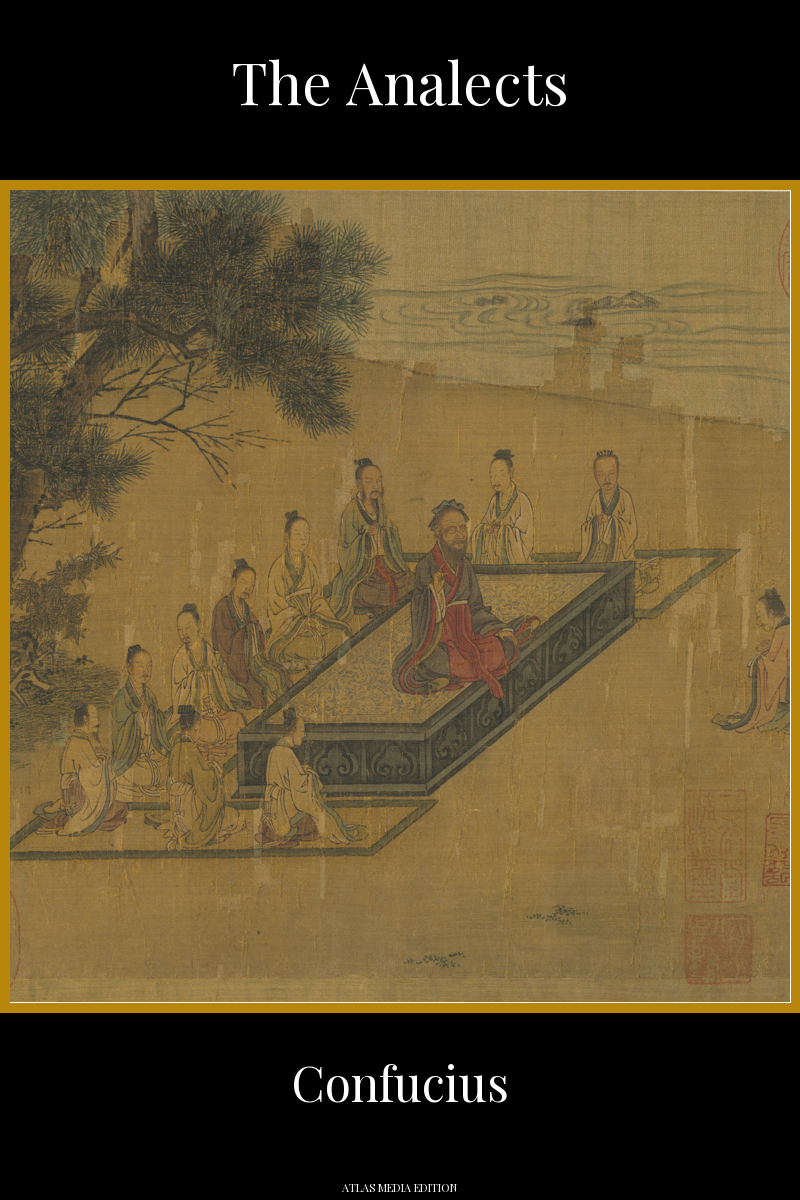
- Novel
The Analects
- Published: c. 479 BC
- Atlas edition: V1.3 ·
- Language: Classical Chinese
ABOUT THE AUTHOR
Confucius
-551–-479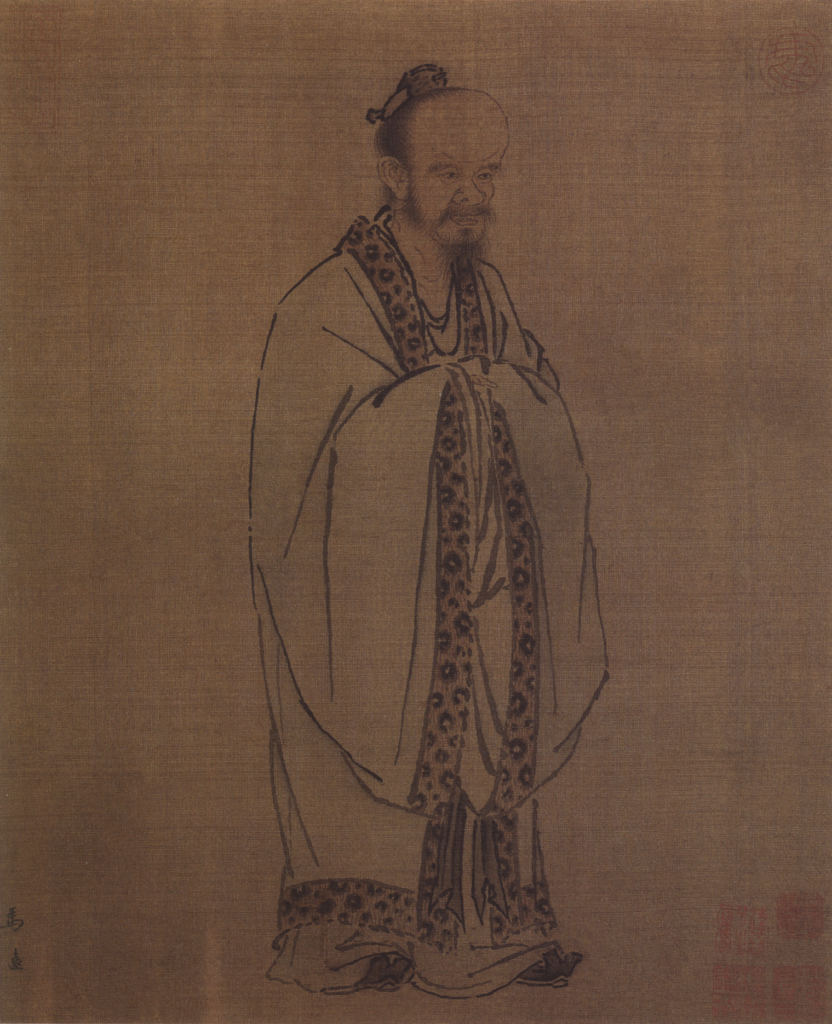
Confucius (551 to 479 BC), born Kong Qiu, was a Chinese philosopher of the Spring and Autumn period, traditionally considered the paragon of Chinese sages. He was born in Zou, in modern Qufu in Shandong, in the state of Lu, and much of the shared cultural heritage of East Asia originates in his philosophy and teachings. His sayings were collected by his followers after his death as The Analects.
ABOUT THE WORK
The Analects
The Analects is the collection of sayings and conversations of Confucius, the Chinese teacher and philosopher, gathered by his followers. Also known as the Sayings of Confucius, it has been one of the most widely read and studied books in China for more than two thousand years. This Atlas Media edition uses James Legge’s English translation from his series The Chinese Classics.
The Analects is not a continuous argument. It is made of hundreds of short passages arranged in twenty books: brief remarks by the Master, exchanges with his disciples, and observations about how a person should live and how a state should be governed. A large number of passages begin with the words “The Master said”.
According to the Han dynasty historian Ban Gu, the book began as records kept by Confucius’s disciples of their conversations with him, which were collected and edited after his death in 479 BC. Modern scholars believe the work was compiled over roughly two centuries during the Warring States period and reached its final form under the Han dynasty. Its Chinese title, Lunyu, may mean “edited conversations” or “selected sayings”.
Several versions circulated in the early Han dynasty: one from the state of Lu, one from Qi, and an “Old Text” version said to have been found hidden in a wall of the house believed to have been Confucius’s own. The text read today comes from a combination of the Lu and Qi versions made by Zhang Yu, tutor to Emperor Cheng of Han.
At the centre of the book is ren, often translated as humaneness or benevolence: a complete virtue that a person cultivates over a lifetime. Confucius taught that the most basic step towards ren is filial piety, devotion to one’s parents and older siblings.
Ren grows through li, the rituals and forms of propriety by which people show respect for one another and take up their responsible roles in society. For Confucius this did not mean suppressing one’s desires, but learning to reconcile them with the needs of family and community.
Government is a constant theme. Confucius believed that the welfare of a country depended on the moral cultivation of its people, beginning with its leaders, and that a ruler’s virtue, de, was the first requirement for leadership.
The book also gives one of the oldest statements of what is now called the Golden Rule, in its inverted form: “Do not do to others what you would not like done to yourself.”
Confucius’s aim as a teacher, as the Analects presents it, was to produce people of good character who would carry themselves with gravity, speak correctly and show integrity in all things.
WHY IT MATTERS
Why The Analects matters
The Analects matters because few books have shaped how so many people think about family, learning, leadership and character. Its ideas continue to have a substantial influence on East Asian thought and values, and much of the shared cultural heritage of the region traces back to Confucius’s teachings.
How The Analects became a classic
The book’s standing grew over many centuries. In the early Han dynasty it was treated as a commentary on the older Five Classics, but by the end of the dynasty it had become a central text of Confucianism.
Under the Song dynasty its importance rose above that of the Five Classics themselves, and it was recognised as one of the Four Books, the core texts that generations of students learned by heart.
Reading The Analects today
Because it is a collection of short sayings, The Analects can be read in any order, a few passages at a time. Many readers find that a single remark, such as the inverted Golden Rule, repays a day of thought.
Scholars still debate how much of the text records Confucius’s own words. The traditional account of disciples writing down their master’s teaching has been challenged by Chinese, Japanese and Western scholars, some of whom see layers added over two centuries. Reading the book with that history in mind helps separate the teacher from the tradition that grew around him.
Its questions remain open. What do we owe to our parents and our communities? Can good government rest on the character of leaders rather than on rules and punishments? How does a person become good, and how would anyone know?
Edition Record
- First publication
- c. 479 BC
- Textual basis
- Source text: Project Gutenberg, https://www.gutenberg.org/ebooks/3330
- Atlas edition
- V1.3 ·
- Language
- Classical Chinese
Prepared from the recorded source and the reviewed Atlas working edition.
Accessibility: EPUB and PDF are offered where approved; accessibility features have not been independently certified.
Source & Rights
- Text source
- Project Gutenberg

The Analects by Confucius; translated by Legge, James. Source text prepared from Project Gutenberg ebook 3330.