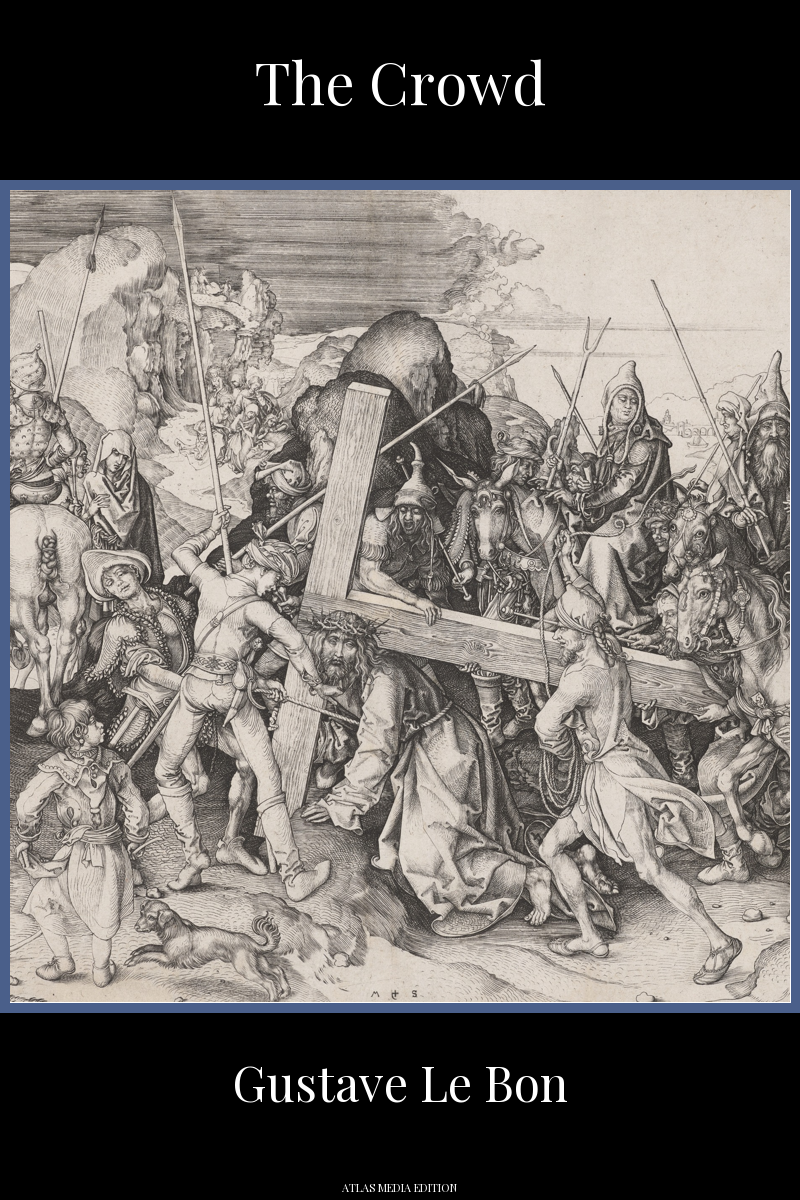
- Novel
The Crowd
- Published: 1895
- Atlas edition: V1.3 ·
- Language: French
ABOUT THE AUTHOR
Gustave Le Bon
1841–1931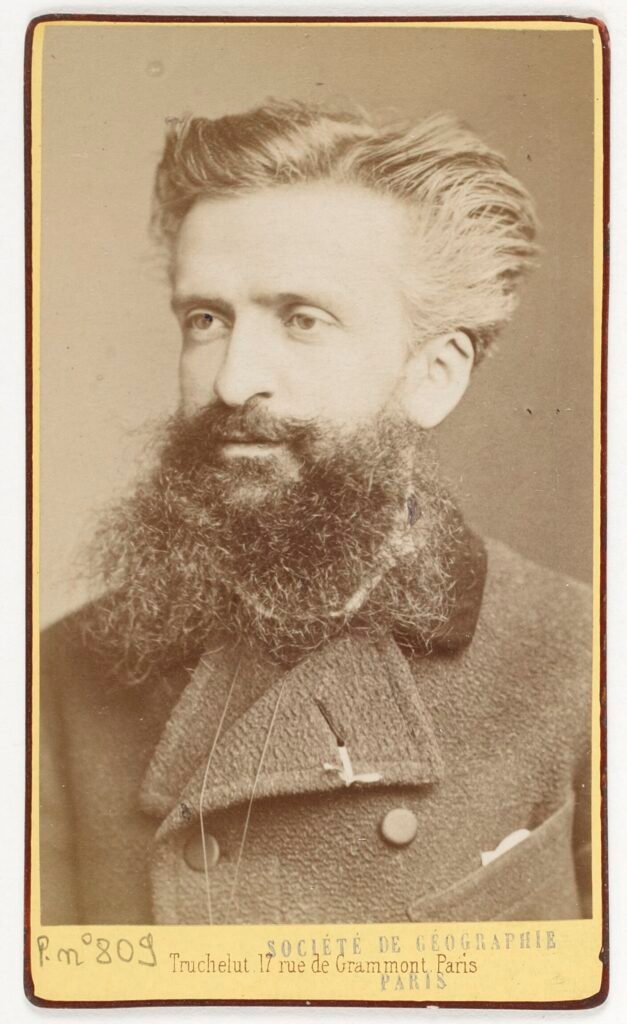
Gustave Le Bon was born on May 7, 1841, and died on December 13, 1931. The supplied evidence identifies him as the author of The Crowd: A Study of the Popular Mind, which is a translation of his French work Psychologie des foules. In his preface he describes himself as belonging to none of the contemporary schools of thought and as aiming to treat the problem of crowds in a scientific manner.
ABOUT THE WORK
The Crowd
The Crowd: A Study of the Popular Mind, by Gustave Le Bon, is an account of the characteristics of crowds and of the psychology that takes hold of individuals when they gather together. The English text is a translation of Psychologie des foules. Le Bon begins from the idea that the common traits which heredity gives the members of a race make up what he calls the genius of the race. When a number of these individuals are assembled for action, he argues, observation shows that new psychological characteristics appear. These are added to the racial ones and can differ from them considerably.
In his preface Le Bon says he approaches the problem in a purely scientific manner, trying to proceed with method and without being swayed by opinions, theories or doctrines. He notes that a thinker had remarked that, belonging to no contemporary school, he sometimes opposes the conclusions of all of them, and he hopes this book will earn the same remark. He claims that a man of science verifying a phenomenon need not worry about the interests his findings may hurt.
One of the preface’s central puzzles is why he can note the extreme mental inferiority of crowds, even picked assemblies, and still insist that it would be dangerous to meddle with their organisation. His answer is that social organisms are as complicated as living beings, and cannot be forced through sudden, far-reaching change. Nothing is more fatal to a people, he says, than the mania for great reforms, because only time can alter the genius of a nation. Men are ruled by ideas, sentiments and customs, and institutions and laws are an outward expression of character, so they cannot change it.
He also distinguishes the absolute value of social phenomena from their practical value, using the example of a cube or circle that changes shape with perspective. For the evolution of civilisation, he holds, practical value is what counts. He adds that visible social facts seem to be the surface waves of deep, unconscious disturbances beyond our analysis. Crowds act with an inferior mentality in most respects, yet he credits the unconscious genius of crowds with creations such as language, which scholars can describe but never invent.
The contents show the plan. An introduction, The Era of Crowds, argues that great historical upheavals rest on profound changes in the ideas of peoples, and that the present age is such a moment, marked by the destruction of old religious, political and social beliefs and by new conditions created by science and industry. Book I treats the mind of crowds: their mental unity, sentiments and morality, ideas, reasoning and imagination, and the religious shape their convictions take. Book II covers opinions and beliefs, including remote and immediate factors, the leaders of crowds and their means of persuasion, and limits on the variability of belief. Book III classifies kinds of crowds, with chapters on criminal crowds, criminal juries, electoral crowds and parliamentary assemblies.
WHY IT MATTERS
Why The Crowd matters
The Crowd belongs to the founding literature of social psychology and of the study of mass behaviour. Its reach comes less from the soundness of its method than from the questions it makes unavoidable: how individuals change in a group, why shared emotion can override reasoning, and how beliefs spread and harden.
The preface shows the book’s tone. Le Bon presents himself as a detached observer, yet his claims are broad, confident and often sweeping. Readers should treat his generalisations about races and about the inferiority of crowds as assertions of his time and outlook, not as established findings. Reading him critically is part of the value, because the text shows how a late nineteenth century writer framed democracy, mass politics and social change.
The book also matters for its stress on the unconscious. Le Bon holds that the unconscious plays an immense part in our acts and reason a very small one. That emphasis, together with his interest in leaders and persuasion, made the work a reference point for later discussion of propaganda, advertising, political rhetoric and public opinion.
Its conservative argument about reform is another reason to read it. He warns against the mania for great reforms and says laws cannot change character. Whether one accepts that or not, it is a clear statement of a view that still shapes debates about how far institutions can reshape societies.
Finally, the book is a useful primary source for the intellectual climate in which fears and hopes about the masses took shape. Students of history, politics, sociology and psychology can read it as both a theory and a document of its era, and weigh its insights against its evident prejudices.
Edition Record
- First publication
- 1895
- Textual basis
- Source text: Project Gutenberg, https://www.gutenberg.org/ebooks/445
- Atlas edition
- V1.3 ·
- Language
- French
Prepared from the recorded source and the reviewed Atlas working edition.
Accessibility: EPUB and PDF are offered where approved; accessibility features have not been independently certified.
Source & Rights
- Text source
- Project Gutenberg
The Crowd by Le Bon, Gustave. Source text prepared from Project Gutenberg ebook 445.