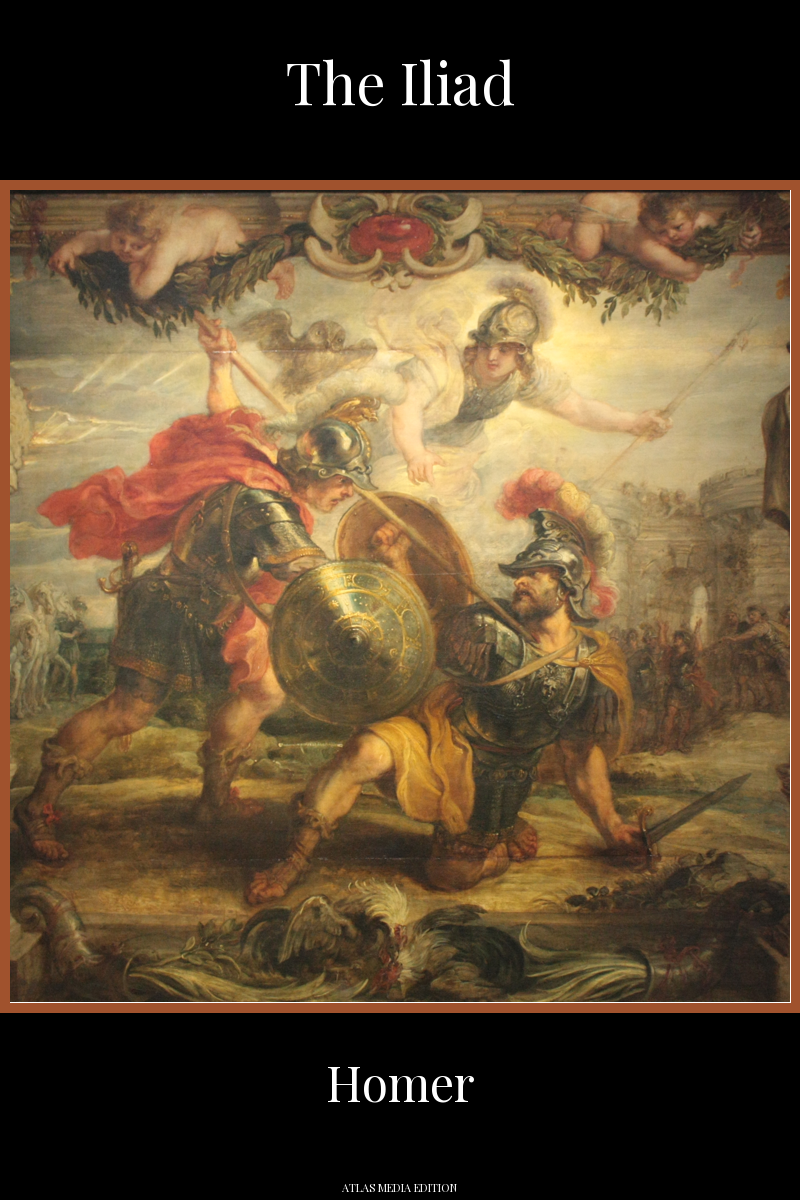
- Novel
The Iliad
- Published: c. 8th century BC
- Atlas edition: V1.3 ·
- Language: Ancient Greek
ABOUT THE AUTHOR
Homer
c. 8th century BC (traditional dating; historicity and dates contested)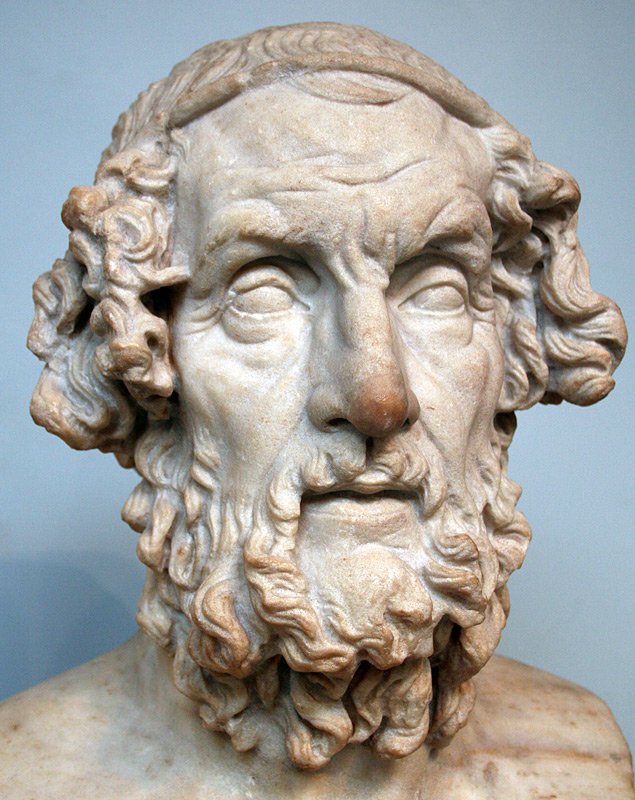
Homer is the name the ancient Greeks gave to the poet of the Iliad and the Odyssey, the two oldest surviving works of Greek literature. Later tradition pictured him as a blind singer from Ionia, on the coast of what is now Turkey, but nothing certain is known of his life.
Most scholars think the poems took shape around the late eighth or early seventh century BC from a long tradition of oral poetry, and they still debate whether one poet, several, or generations of singers created them. Whoever made them, the poems became the foundation of Greek education and of much of the literature that followed.
ABOUT THE WORK
The Iliad
The Iliad is the ancient Greek epic of the anger of Achilles during the last weeks of the Trojan War. Attributed to Homer and probably composed around the eighth century BC, it is one of the oldest works of literature still widely read. This Atlas Media edition uses Samuel Butler’s English prose translation.
The war has lasted nine years. The Greek armies, led by King Agamemnon, are camped on the shore before Troy, where they have come to recover Helen, wife of Agamemnon’s brother Menelaus, taken by the Trojan prince Paris.
The poem opens with a quarrel. Agamemnon is forced to give up a captive woman to end a plague sent by the god Apollo, and takes Briseis, the prize of Achilles, in her place. Achilles, the greatest Greek warrior, withdraws from the fighting in fury and asks his mother, the sea goddess Thetis, to persuade Zeus to let the Trojans win until the Greeks honour him again.
Without Achilles, the Greeks suffer. The poem moves between vast battle scenes and close encounters: duels between heroes, councils of war, and the gods taking sides and intervening on the battlefield. Hector, the eldest son of King Priam and the chief defender of Troy, drives the Greeks back to their ships.
One of the most moving scenes takes place inside the city. Hector says goodbye to his wife Andromache and their baby son, who is frightened by the plume on his father’s helmet. Hector knows Troy may fall, but he returns to the fight.
When the Trojans threaten to burn the Greek ships, Achilles lets his close friend Patroclus fight in his armour. Patroclus drives the Trojans back but is killed by Hector. Grief turns Achilles’ anger against Hector. He returns to battle in new armour made by the god Hephaestus, kills many Trojans, and finally kills Hector outside the walls, dragging his body behind his chariot.
In the last book, old King Priam goes secretly by night to Achilles’ tent to beg for his son’s body. The two enemies weep together, Achilles for his father and Patroclus, Priam for Hector. Achilles returns the body, and the poem ends with Hector’s funeral.
The Iliad does not tell the story of the wooden horse or the fall of Troy; those come from later sources.
WHY IT MATTERS
Why The Iliad matters
The Iliad matters because it stands near the beginning of European literature and still speaks directly about war, honour, grief and mortality. The ancient Greeks treated it as a foundation of their education, and it has been read and argued over ever since.
War and its cost in The Iliad
The poem celebrates courage, yet it never hides what war does. Warriors die in exact and terrible detail, families wait in the city, and the gods treat human suffering as part of their own quarrels. Many readers find in it one of the most honest portraits of violence and loss ever written.
Achilles and Priam in The Iliad
The poem’s subject is a single emotion, the wrath of Achilles, and its arc runs from pride and fury to an act of shared humanity. The meeting between Achilles and Priam, the killer and the father of the man he killed, is one of the great scenes of world literature.
Its style is part of its power. Homer uses repeated phrases and epithets, such as swift-footed Achilles or Hector of the shining helmet, and long similes that compare warriors to lions, storms and falling trees, often drawing on scenes of peaceful farming and herding far from the battlefield.
The Iliad also raises questions scholars still debate. Who was Homer? Was the poem composed by one poet, written down or passed on orally? These questions, known as the Homeric Question, remain open.
Butler’s prose translation aims for plain, readable English rather than verse. Reading The Iliad alongside The Odyssey, already in the Librarium, shows the two great poems of the Greek tradition: one of war, one of the long journey home.
Edition Record
- First publication
- c. 8th century BC
- Textual basis
- Source text: Project Gutenberg, https://www.gutenberg.org/ebooks/2199
- Atlas edition
- V1.3 ·
- Language
- Ancient Greek
Prepared from the recorded source and the reviewed Atlas working edition.
Accessibility: EPUB and PDF are offered where approved; accessibility features have not been independently certified.
Source & Rights
- Text source
- Project Gutenberg

The Iliad by Homer; translated by Butler, Samuel. Source text prepared from Project Gutenberg ebook 2199.