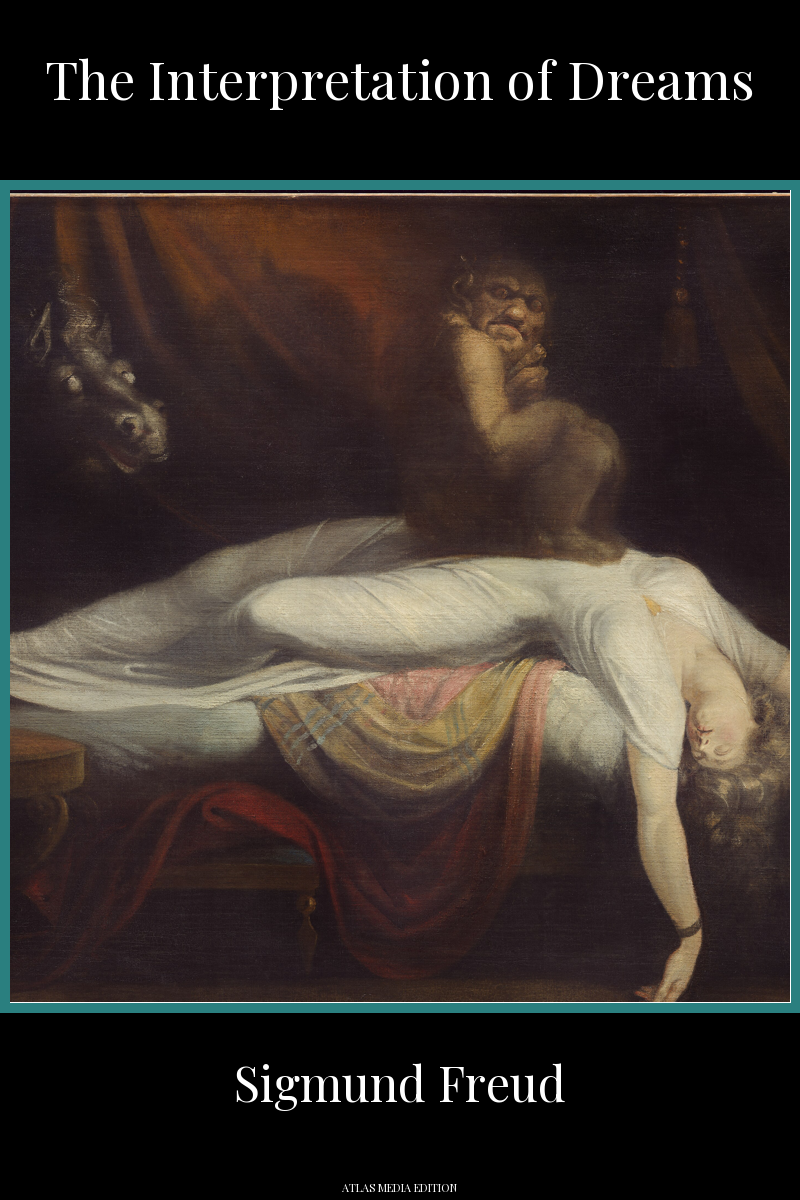
- Novel
The Interpretation of Dreams
- Published: 1899
- Atlas edition: V1.3 ·
- Language: German
ABOUT THE AUTHOR
Sigmund Freud
1856–1939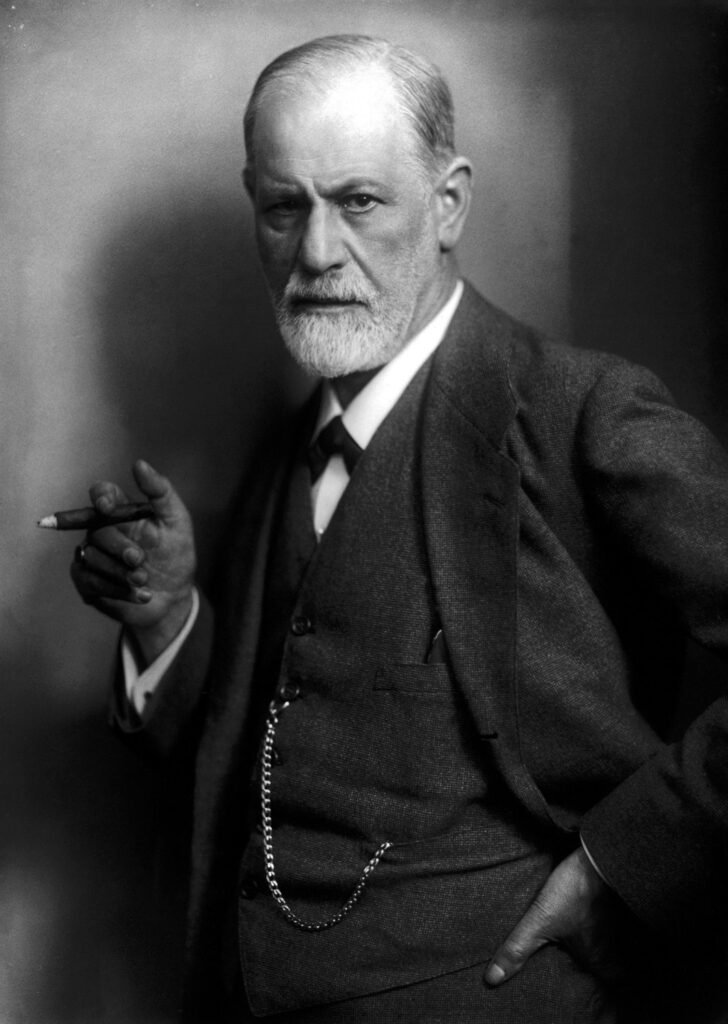
Sigmund Freud (1856 to 1939) was an Austrian neurologist and the founder of psychoanalysis, a clinical method for treating psychological conflicts through dialogue between patient and analyst.
He introduced methods such as free association and the interpretation of dreams, and developed influential theories of the unconscious mind. His ideas, though widely debated, have shaped psychology, medicine and twentieth-century culture.
ABOUT THE WORK
The Interpretation of Dreams
The Interpretation of Dreams is Sigmund Freud’s book arguing that dreams have meaning and can be interpreted. Completed in 1899 and dated 1900 on its title page, it introduced his theory of the unconscious and became one of the founding works of psychoanalysis. This Atlas Media edition uses A. A. Brill’s authorised English translation of the third edition.
Freud begins with a long survey of what earlier writers had said about dreams, from ancient dream books to the scientific psychology of his own century. Most, he says, treated dreams either as prophecy or as meaningless by-products of sleep.
His own method starts from a single claim: a dream is the fulfilment of a wish. To show this, he analyses one of his own dreams, known as the dream of Irma’s injection, in which he reproached himself over a patient’s treatment. Breaking the dream into its parts and following his associations, he concludes that it expressed his wish not to be blamed.
Many dreams, Freud admits, seem painful or anxious rather than wishful. He explains this through the idea of disguise. The dream as remembered, the manifest content, hides a latent content of thoughts and wishes that the dreamer’s own mind would find unacceptable. A kind of inner censor forces these thoughts into disguised forms.
The middle chapters describe how this disguise works, which Freud calls the dream-work. Condensation packs many ideas into one image. Displacement shifts emotional weight from what matters to something trivial. Ideas are turned into pictures, and the dream is given a surface of sense by secondary revision.
Freud also discusses the sources of dreams: recent events of the previous day, childhood memories, and bodily sensations during sleep. In this context he introduces ideas that later became central to his work, including the theory he would call the Oedipus complex, illustrated by the plays Oedipus Rex and Hamlet.
The final chapter is the most theoretical. Freud sets out a model of the mind with conscious, preconscious and unconscious systems, and argues that studying dreams opens a path to understanding mental life in general. He called dream interpretation the royal road to a knowledge of the unconscious.
Freud revised the book many times. The third edition, translated here, includes additions on dream symbolism.
WHY IT MATTERS
Why The Interpretation of Dreams matters
The Interpretation of Dreams matters because it changed how the twentieth century thought about the mind. The idea that people are driven by wishes and memories they are not aware of, and that these show themselves in dreams, slips of the tongue and symptoms, spread far beyond medicine into literature, art, film and everyday speech.
Reading The Interpretation of Dreams today
Many of Freud’s specific claims have been challenged. Modern sleep and dream research does not support his idea that every dream fulfils a wish, and critics have questioned whether his method can be tested. Readers can treat the book as a landmark in the history of psychology and as an argument to examine, rather than as settled science.
The influence of The Interpretation of Dreams
Even critics acknowledge the book’s importance. It introduced ways of thinking about hidden motives, symbolism and the meaning of mental life that shaped psychotherapy, literary criticism and the surrealist movement in art. Words such as unconscious, repression and wish fulfilment owe much of their everyday use to Freud.
Freud’s own dreams fill much of the book, which makes it unusually personal for a scientific work. He reveals ambitions, rivalries and memories from his childhood and career in Vienna, and the reader watches him interpret himself.
The book had a slow start. The first edition of 600 copies took eight years to sell out, yet seven more editions followed in Freud’s lifetime. Freud himself wrote that insight of this kind falls to one’s lot but once in a lifetime.
Reading the original lets readers follow Freud’s own dreams and reasoning step by step, and judge for themselves how persuasive his method is.
Edition Record
- First publication
- 1899
- Textual basis
- Source text: Project Gutenberg, https://www.gutenberg.org/ebooks/66048
- Atlas edition
- V1.3 ·
- Language
- German
Prepared from the recorded source and the reviewed Atlas working edition.
Accessibility: EPUB and PDF are offered where approved; accessibility features have not been independently certified.
Source & Rights
- Text source
- Project Gutenberg

The Interpretation of Dreams by Freud, Sigmund; translated by Brill, A. A. (Abraham Arden). Source text prepared from Project Gutenberg ebook 66048.