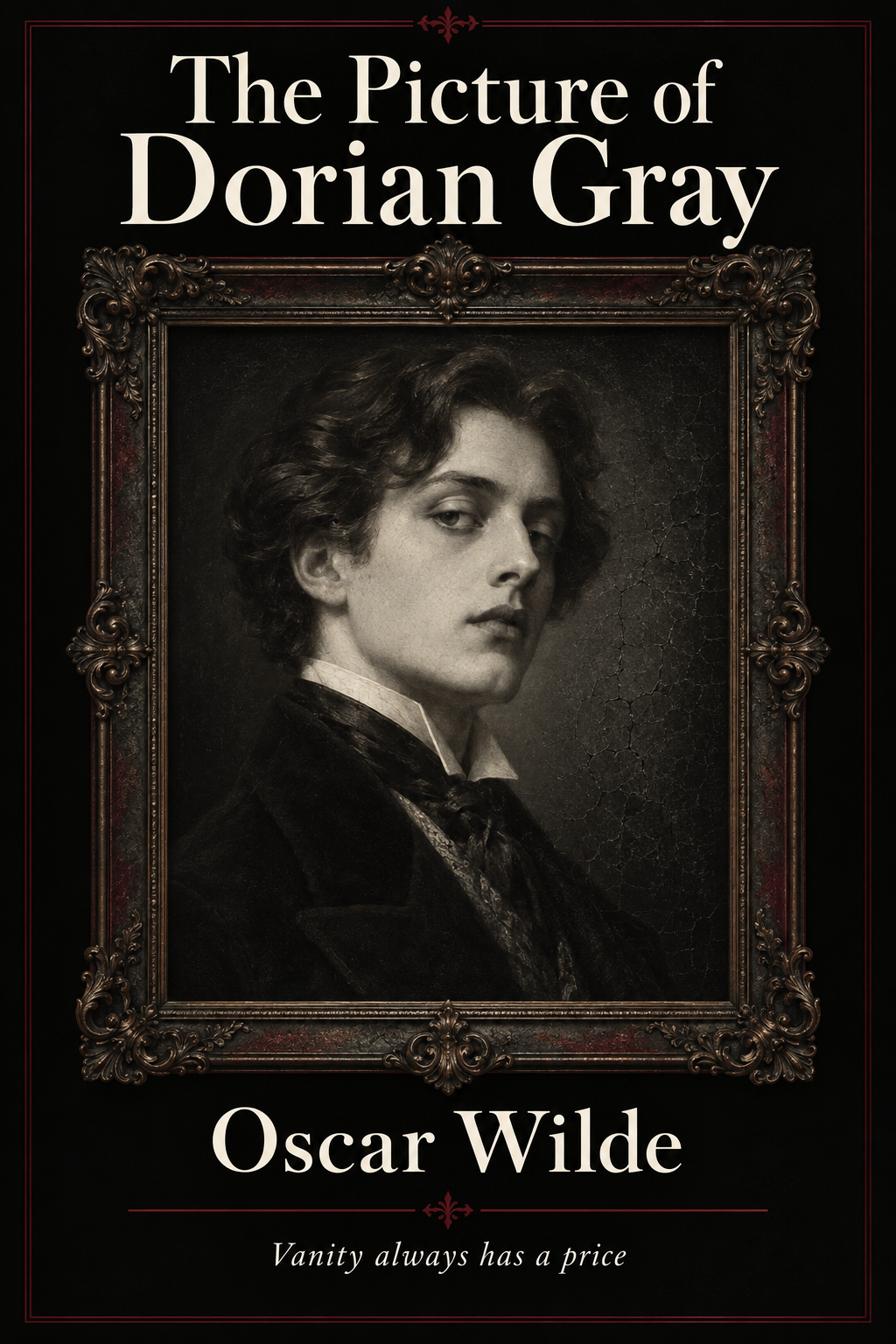
- Novel
- Gothic Fiction
The Picture of Dorian Gray
- Published: 1891
- Atlas edition: V1.8 · 2026
- Language: English
ABOUT THE AUTHOR
Oscar Wilde
1854–1900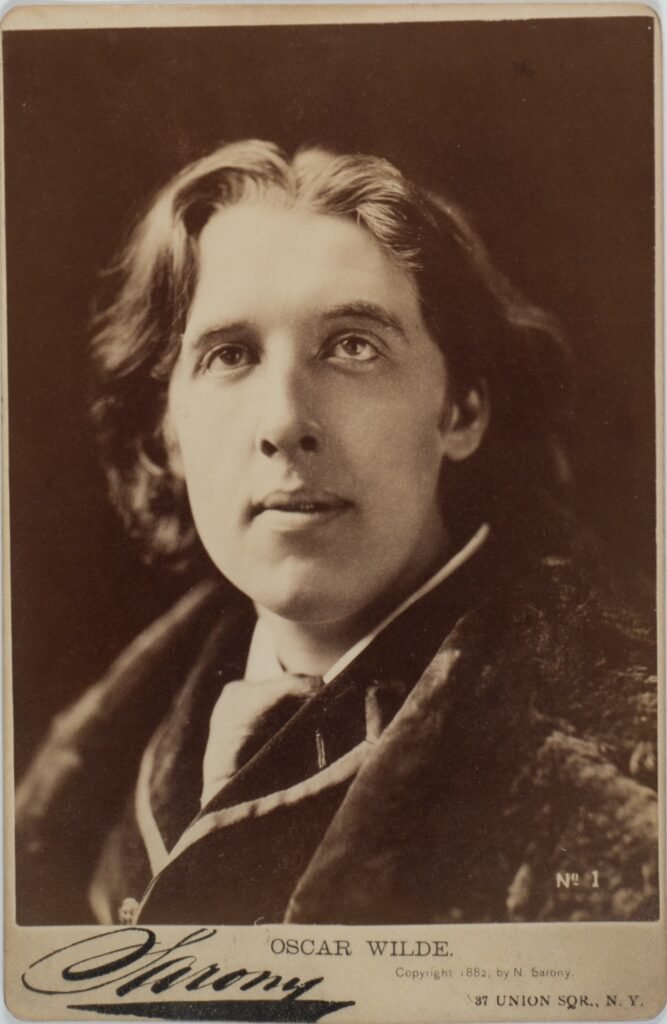
Oscar Wilde was an Irish novelist, playwright, poet and critic closely associated with the aesthetic movement. Celebrated for his wit, theatrical comedies and arguments about art and individuality, he wrote across fiction, drama, poetry, fairy tales and criticism. The Picture of Dorian Gray was his only novel; its treatment of beauty, influence, secrecy and moral consequence remains central to his reputation. Wilde’s later imprisonment under laws criminalising relations between men devastated his career and health. His work nevertheless endured, and his life has become inseparable from histories of censorship, sexuality and the social costs imposed on queer people.
ABOUT THE WORK
The Picture of Dorian Gray
The Picture of Dorian Gray follows a beautiful young man whose portrait begins to bear the visible consequences of a life shaped by vanity, influence and concealed cruelty. Encouraged by Lord Henry Wotton’s seductive philosophy of sensation and youth, Dorian pursues experience while preserving an outward appearance of innocence. The altered portrait records what society cannot see. Through drawing-room comedy, Gothic unease and moral fable, Oscar Wilde examines the distance between appearance and character, the power people exercise over one another, and the cost of treating life itself as a work of art.
WHY IT MATTERS
Why The Picture of Dorian Gray Matters
The Picture of Dorian Gray remains compelling because its supernatural premise turns an ordinary human habit into something visible. People cultivate appearances, conceal damage and hope that consequences can be kept somewhere out of sight. Dorian’s portrait makes that division literal: his public face remains untouched while the hidden image records what his choices have made of him.
The novel is equally concerned with influence. Lord Henry rarely commands Dorian to act, yet his phrases give glamour and intellectual cover to impulses that Dorian might otherwise resist. Wilde asks whether an idea can corrupt, whether the speaker bears responsibility for the listener, and how easily elegant language can disguise indifference to other people’s suffering. These questions extend beyond the world of Victorian salons. Advertising, celebrity culture and social media all reward the careful construction of a surface while obscuring the labour, compromise or harm behind it.
At the same time, the book resists reduction to a simple warning against pleasure or beauty. Its famous preface insists upon the autonomy of art, while the narrative repeatedly invites moral judgment. That tension is part of the design. Wilde allows readers to experience the attraction of style, wit and sensation even as the story exposes the emptiness that can follow when aesthetic experience is severed from sympathy and responsibility.
The novel also belongs to the history of censorship and queer reading. Contemporary hostility toward Wilde’s life and writing shaped how the work was published and received, while secrecy, coded desire and social surveillance remain important to its afterlife. The Picture of Dorian Gray matters because it offers no comfortable boundary between beauty and corruption, freedom and influence, art and ethics. It asks readers not merely what a person appears to be, but what their choices would reveal if every hidden consequence could be seen.
Why The Picture of Dorian Gray Still Matters
The Picture of Dorian Gray remains compelling because it examines the distance between outward appearance and inner character. Dorian’s portrait bears the visible consequences of his choices while his face remains young and apparently innocent. Through this supernatural device, Oscar Wilde asks whether beauty can conceal corruption and whether a person can escape responsibility simply because others cannot see the harm being done.
The novel also explores the danger of treating life as an aesthetic performance. Dorian becomes increasingly concerned with sensation, novelty and appearances, while empathy and moral responsibility recede. His tragedy does not arise from beauty itself, but from allowing beauty and pleasure to become substitutes for conscience, honesty and meaningful human connection.
Identity and Influence in The Picture of Dorian Gray
Influence is one of the novel’s central concerns. Lord Henry’s clever observations encourage Dorian to view youth as his greatest possession and ageing as a catastrophe. Yet Wilde does not present Dorian as merely a passive victim. Dorian chooses how to interpret those ideas and repeatedly decides to protect his reputation rather than confront the consequences of his behaviour.
This tension gives The Picture of Dorian Gray much of its psychological depth. People are shaped by friends, culture and social expectations, but they also remain responsible for their choices. The novel asks where influence ends and personal accountability begins—a question that remains relevant in an age of advertising, celebrity culture and social media.
Society and Secrecy in The Picture of Dorian Gray
Victorian respectability often depended upon maintaining an acceptable public image. Dorian exploits this system because his appearance seems to confirm his innocence. Rumours follow him, but many people continue to trust the evidence of his youthful face. The portrait becomes a private archive of everything society cannot—or refuses to—see.
The story therefore exposes the limitations of judging character through status, beauty or reputation. A polished exterior may conceal exploitation, cruelty or despair, while social conventions can help preserve that concealment.
The Enduring Legacy of The Picture of Dorian Gray
The Picture of Dorian Gray combines Gothic fiction, philosophical inquiry, social satire and psychological drama. Its themes continue to resonate because modern culture still places enormous value on youth, visibility and carefully constructed identities.
The novel offers no simple rejection of art, pleasure or beauty. Instead, it warns against pursuing them without responsibility. Dorian’s portrait ultimately records what his public image excludes, making the book a lasting meditation on secrecy, self-deception and the cost of living only for appearances.
Edition Record
- First publication
- 1891 · Ward, Lock and Company, London
- Textual basis
- The revised and expanded 1891 book text, derived from the Standard Ebooks edition produced by Alex Cabal from the Project Gutenberg transcription by Judith Boss and Al Haines and scans held by the Internet Archive
- Atlas edition
- V1.8 · 2026
- Language
- English
This Atlas edition presents the revised and expanded book text published in 1891. The shorter version first printed in Lippincott’s Monthly Magazine in 1890 is recorded in the publication history but is not silently combined with this text. Standard Ebooks packaging and its former cover have been replaced, while the textual source and its contributors remain acknowledged.
Accessibility: Reflowable EPUB with semantic navigation and reader-controlled typography. A visually checked A5 PDF is also provided for print and fixed-layout reading. The principal navigation includes the preface and all twenty chapters.
Source & Rights
- Text source
- Standard Ebooks-derived edition
Text derived from the Standard Ebooks edition. Cover design and principal artwork: Atlas Media, created with AI assistance.