Science, Nature & Reality
Science is not a collection of facts. It is a method, a set of practices for being systematically wrong in increasingly productive ways until something true emerges. The science, nature & reality wing collects the foundational texts, the great popular science works, and the philosophical investigations into the nature of scientific knowledge itself. It is here because the scientific revolution is the most consequential intellectual event in human history, and because scientific literacy is not optional for anyone who wants to understand the world they live in.
The Origins of Everything - Cosmology & Physics
The universe is approximately 13.8 billion years old, incomprehensibly vast, and almost entirely empty. That we know this at all is one of the stranger achievements of a small primate on an unremarkable planet. This shelf collects the essential works of physics and cosmology, from Newton to Einstein to the contemporary physicists still working on the questions that remain.
The Living World - Biology & Evolution
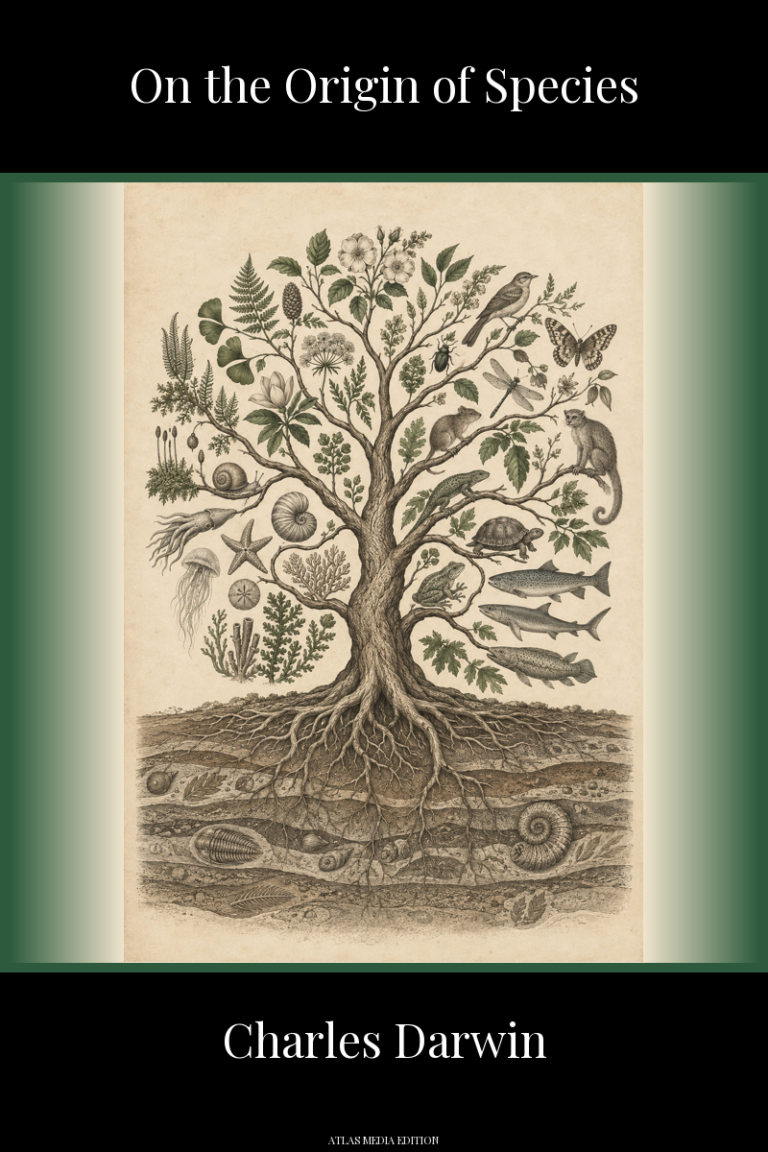
Darwin’s idea is the most powerful in the history of science, not because it explained where life came from, but because it provided a mechanism that made the entire diversity of life comprehensible without invoking anything supernatural. This shelf collects the foundational works of biology and evolutionary theory, from Darwin’s own writing to the contemporary biologists extending and complicating his framework.
The Mathematical Imagination
Mathematics is the only human activity where it is possible to be completely certain of something. This is either its greatest virtue or its greatest limitation, depending on what you think knowledge is for. This shelf collects the essential works of mathematics and mathematical thinking, from Euclid to Gödel to the contemporary mathematicians and the writers who have tried to explain what they are actually doing.
The Natural World - Ecology & Environment
Rachel Carson’s Silent Spring did not just describe the damage that pesticides were doing to bird populations. It invented the modern environmental movement. This shelf collects the essential works of ecology, natural history, and environmental writing, the scientists and naturalists who have spent their lives paying close attention to the non-human world.
The History of Science
Science does not progress smoothly. It lurches, stalls, reverses, and occasionally makes a leap so large that everything before it becomes incomprehensible from the other side. This shelf collects the histories of scientific revolutions, how ideas displaced other ideas, what the resistance looked like, and what it cost the people whose careers were built on the paradigm that was about to change.
The Philosophers of Science
What is a scientific theory? What makes one explanation better than another? What does it mean to say that science has proved something? These are not scientific questions; they are philosophical ones, and the answers matter enormously for how science is practiced and how its conclusions are understood. This shelf collects the essential works of philosophy of science.
The Technological Imagination
Every technology is an argument about what human life should be. The printing press argued that information should be widely distributed. The factory argued that human labour should be standardised. The internet argued, and is still arguing, something we have not yet fully understood. This shelf collects the essential works on technology, its history, and its consequences.
The Universe Within - Quantum & Relativity
Quantum mechanics is the most precisely tested theory in the history of science. Nobody fully understands it. This is not a scandal, it is an invitation. This shelf collects the essential works on quantum physics, relativity, and the genuinely strange picture of reality that modern physics has produced.
Science & Its Consequences
Science is not neutral. Every discovery creates new possibilities for both benefit and harm, and the history of science is also a history of the choices, sometimes heroic, sometimes catastrophic, that were made about how to use what was learned. This shelf collects the works that examine science in its social, political, and ethical context.
Science, Nature & Reality
Science is the only human endeavour with a built-in mechanism for admitting it was wrong. Every other system of knowledge, political, religious, or philosophical, has to be argued out of its errors from the outside. Science, at its best, does it from within. That discipline, that willingness to be corrected by evidence, is what makes the works on these shelves different from everything else in the Librarium, and what makes scientific literacy not a specialist interest but a civic necessity. Browse the full collection at the Librarium, or explore the open-access science resources at PubMed Central, one of the world’s largest repositories of freely available scientific research.